

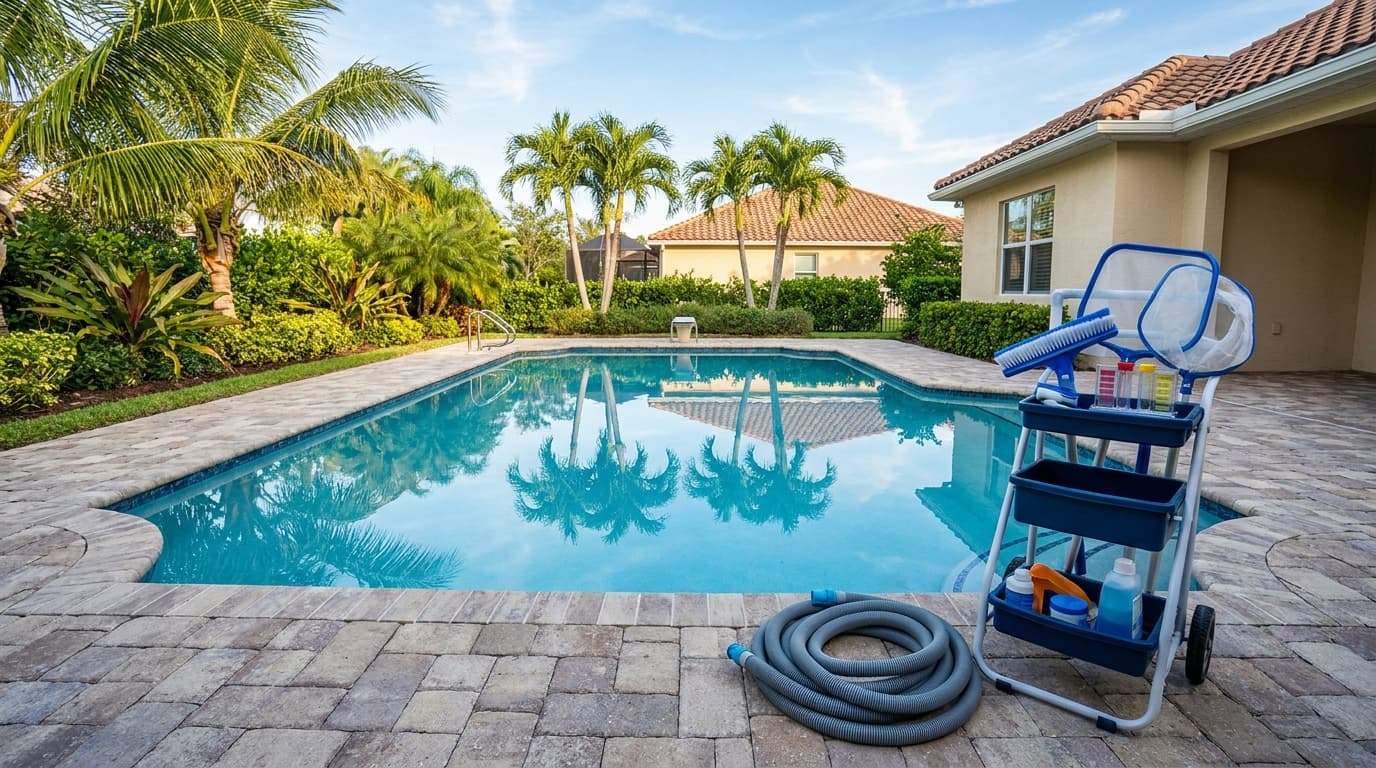

Pool service permit compliance isn't sexy—but it's incredibly profitable. While most pool contractors chase routine maintenance and repairs, a growing number of savvy operators in Pinellas County are carving out a specialized niche: helping homeowners fix unpermitted pool work, navigate county violations, and bring non-compliant installations into code. These jobs command premium rates, reduce competition, and build long-term customer relationships. In Pinellas County specifically, where residential pool violations have increased 28% since 2021 (per county permit data), homeowners are desperate for contractors who understand both the technical work and the permit pathway. This guide walks you through the exact steps to position yourself as a permit-compliance specialist and win consistent work in this high-margin segment.
The Business Case for Pool Permit Compliance Work
Before diving into tactics, understand why this matters to your bottom line.
Standard pool maintenance and repairs are commoditized. Homeowners comparison-shop on price, and margins compress. Permit compliance work is different:
In Pinellas County, the regulatory environment is tight. The county enforces Florida Statute 553 (Florida Building Code) rigorously, and pool installations fall under Chapter 6 of the Building Code. Non-compliance penalties range from $500–$5,000 per violation, plus liens. That pain point is your entry point.
Understanding Pinellas County Pool Code Requirements
Florida Statute 553 and Local Enforcement
Pinellas County Building Department enforces Florida Statute 553, which incorporates the Florida Building Code. For pools, the critical standards are:
The county's online permit portal (Pinellas County Building Department, pinellascounty.org) allows you to pull historical records. Smart contractors review violation notices filed against properties—these are public records and show you where future compliance jobs are hiding.
Pinellas County Specific Violations and Trends
Data from Pinellas County Building Department shows the most common pool violations:
| Violation Type | Frequency (2022–2024) | Primary Cause | Typical Remediation Cost |
|---|---|---|---|
| Missing or improper barrier (fence/gate) | 41% | Pre-2004 installations, fence deterioration | $3,500–$8,000 |
| Unpermitted equipment upgrades | 28% | Pump/filter replacements without permits | $1,200–$3,500 |
| Non-compliant drain systems | 18% | Pre-VGBA standards, missing anti-entrapment covers | $2,500–$6,000 |
| Electrical code violations | 9% | Inadequate bonding, improper GFCI protection | $1,500–$4,000 |
| Chemical storage violations | 4% | Unsafe storage near pool or living spaces | $500–$1,500 |
These violations create your pipeline. A contractor who positions themselves as a "Barrier Compliance Specialist" or "Unpermitted Pool Retrofit Expert" becomes the go-to name for homeowners facing these exact issues.
Watch Related Videos on YouTube
pool service permit compliance jobs Pinellas County how to fix guide
Step 1: Build Your Pinellas County Code Expertise
You cannot win permit compliance work if you don't know the code cold. This isn't optional.
Get Certified in Florida Pool Code
Pinellas County building officials respect contractors with formal credentials. Invest in:
Do not skip this step. When a homeowner calls the Pinellas County Building Department asking for a "code-compliant contractor," county staff frequently refer by name. Being on the referral list requires visibility and credibility.
Subscribe to Pinellas County Building Department Updates
Sign up for the county's permit change notifications at pinellascounty.org/building. New amendments, clarifications, and enforcement focus areas are posted quarterly. Contractors who cite recent code changes during consultations build trust immediately.
Join Local Associations
The Florida Pool Contractors Association (FPCA) and Pinellas County chapters of the Home Builders Association (HBA) are gold. Attend monthly meetings, network with inspectors and other contractors, and stay current on local enforcement priorities. Many inspectors attend these meetings—building relationships now pays dividends when your work is under review.
Key Tip: Request a one-on-one meeting with the Pinellas County Building Department's pool inspector. Ask what violations they see most, what contractors they trust, and what remediation processes they prefer. This 30-minute conversation becomes your competitive advantage.
Step 2: Create a Targeted Marketing Message
Position Yourself as the Permit Compliance Specialist
Generic pool contractor messaging doesn't work. Homeowners facing violations are scared and confused. They don't search for "pool service"—they search for solutions to their specific problem.
Your messaging should address pain points directly:
Instead of: "Professional pool maintenance and repairs" Use: "Pool Permit Violations? We Fix Unpermitted Pools & Get County Approval. Barrier, Electrical, Drain Compliance in Pinellas County."This specificity does two things:
Create County-Specific Landing Pages
Build a dedicated landing page on your website targeting Pinellas County permit compliance. Include:
Optimize for the keyword phrase "pool service permit compliance jobs Pinellas County" and related long-tail variations: "unpermitted pool fix Pinellas," "pool barrier compliance Pinellas County," "pool permit violation Pinellas."
Leverage Google Local Services
Google Local Services Ads (LSA) appear at the top of search results for service categories in your area. For pool services in Pinellas County, LSA can drive 15–30 qualified leads per month if managed well. Requirements:
Set your LSA budget to $1,000/month initially, focusing on "pool inspection" and "pool compliance" keywords rather than generic "pool service."
Step 3: Build Your Pinellas County Contractor Network
Permit compliance work often requires collaboration. Building relationships now prevents bottlenecks later.
Network with Licensed Pool Electricians
Many barrier and drain violations resolve quickly, but electrical issues require a licensed electrician. Identify 2–3 licensed electricians in Pinellas County who understand pool code and have availability. Negotiate a referral rate (typically 10–15% of their job) or profit-share arrangement.
Connect with General Contractors and Builders
GCs handling pool restorations or new installations sometimes encounter code issues mid-project. Position yourself as the compliance troubleshooter they can call when work doesn't pass inspection. These relationships lead to larger, longer-term contracts.
Build Relationships with County Inspectors (Ethically)
Do not attempt to influence inspectors—that's a violation. Do introduce yourself professionally, ask their guidance on common remediation paths, and demonstrate your commitment to code compliance. When your work is inspected, responsiveness and professionalism earn respect. Inspectors talk; good contractors get recommended.
Step 4: Develop a Permit Compliance Service Offering
Create a Tiered Service Menu
Structure your compliance work into clear packages:
Tier 1: Compliance Audit ($150–$250)This tiering allows you to capture price-conscious homeowners at the audit level, then convert them to larger remediation projects.
Key Warning: Never promise permit approval. Inspectors make final decisions. Your promise is professional remediation per code standards and permit filing—approval is the inspector's determination. Overpromising leads to disputes and refund demands.
Step 5: Streamline Your Permit Filing and Inspection Process
Learn Pinellas County Permit Portal
Familiarize yourself with the county's online permit system. You should be able to:
The county allows contractors to file on behalf of homeowners if you have a written authorization. This increases your value—homeowners don't have to navigate the system themselves.
Create a Proprietary Inspection Checklist
Build a detailed Pinellas County pool compliance checklist that mirrors the county's inspection criteria. Use it during your initial audit to identify violations consistently. When homeowners see your checklist, it demonstrates competence and reduces perceived risk.
Establish a Standard Remediation Timeline
Homeowners want to know how long violations take to fix. Create realistic timelines:
Communicate these timelines upfront. When you hit them consistently, referrals multiply.
Step 6: Capture Jobs Through Multiple Channels
Partner with Pinellas County Real Estate Agents
Real estate transactions in Pinellas County often surface pool violations during inspection. The agent needs a trusted contractor to fix issues before closing. Build relationships with 10–15 agents in your service area. Offer them:
This single channel can generate 3–5 reliable jobs per month.
Advertise in Pinellas County Homeowner Facebook Groups
Join Pinellas County neighborhood Facebook groups (organized by neighborhood/zip code). Monitor for homeowners mentioning pool violations or county notices. Comment helpfully, offer free audits, and collect leads. Post monthly educational content: "3 Pool Violations Pinellas County Inspectors Always Find in Older Pools," etc.
Create an Email Campaign for Past Clients
If you've done pool work for homeowners in Pinellas County, they're candidates for compliance audits. Send quarterly emails:
Past clients convert at 3–4x the rate of cold leads.
Leverage Inspection Report Notifications
When homeowners receive violation notices from Pinellas County, they're motivated immediately. Set up Google Alerts for "Pinellas County pool violation," "unpermitted pool," and similar terms. Contact homeowners within 48 hours of violation filing with an offer to help (but don't be pushy—many will reach out to you).
Step 7: Build Trust Through Third-Party Verification
Homeowners facing violations are wary. A contractor who claims to know the code is less trustworthy than one with proof.
Get Verified Through HomeProBadge
HomeProBadge is a trust platform for home service professionals in Florida. The verification process includes identity confirmation and background checks—exactly what anxious homeowners need to see. Creating a free verified contractor profile at HomeProBadge accomplishes multiple things:
A HomeProBadge profile specifically addresses the homeowner's fear: "Is this contractor legit?" You're answering that question with proof.
Maintain Stellar Online Reviews
With 3–5 Pinellas County permit compliance jobs per month, you can accumulate 15+ reviews per quarter. Each positive review is a trust signal. Actively request reviews after every successful compliance job:
Target a minimum 4.8-star average across all platforms.
Step 8: Price for Profit
Permit compliance work is not commodity work. Price accordingly.
Audit Pricing
Charge $150–$250 per audit. This is not a loss leader. You're providing professional inspection, written documentation, and code guidance. Most audits convert to remediation work—if a homeowner doesn't move forward, they're not your target customer anyway.
Remediation Pricing
Price based on scope, not hourly rate. A barrier violation remediation that takes 30 labor hours should be $3,500–$5,000, not $30–$40/hour. Examples:
These prices reflect the risk you're taking (code compliance guarantee), the expertise required, and the outcome value to the homeowner (avoiding fines, property holds, insurance issues).
Guarantee Your Work
Offer a simple guarantee: "If your pool fails the county inspection due to work we performed, we'll re-do the work at no charge." This removes homeowner risk and justifies higher pricing. Your code expertise means failures are rare—maybe 1 in 30 jobs requires rework. That's built into your margin.
Step 9: Systematize and Scale
Create a Standard Operating Procedure (SOP) for Compliance Projects
As you handle more projects, document every step:
Once you've done 10 compliance jobs, you have enough pattern data to optimize timing, labor, and cost. Document that optimization in your SOP.
Hire a Compliance Project Coordinator
Once you're consistently closing 4+ jobs per month, hire a part-time project coordinator (15–20 hours/week) to handle:
This frees you to focus on technical work and sales. Salary: ~$18–$22/hour. Return: ~$4,000–$6,000/month additional profit from faster project throughput.
Track Key Metrics
Measure what matters:
FAQ: Pool Service Permit Compliance Jobs in Pinellas County
Q1: Do I need a contractor's license to do permit compliance work in Pinellas County?
A: Yes. Pool work in Florida requires a Florida Contractor's License (state) and, in many cases, a county-specific license. Specifically:If you don't hold the required license, subcontract the work to licensed professionals and manage the project. Your value is code knowledge and coordination, not just labor.
Q2: How do I get paid if a homeowner backs out mid-project?
A: Always use a written contract that specifies:Most compliance projects are low-cancellation because homeowners are driven by county enforcement. Still, protect yourself contractually.
Q3: What if the county inspector finds additional violations during inspection that we didn't catch?
A: This happens occasionally. Your contract should state: "We guarantee remediation of violations identified in our written audit report. Additional violations identified by county inspection are priced separately and addressed per county requirement." This is fair—you diagnosed the known issues, but inspectors sometimes find edge cases. Charge for additional work transparently.Q4: Can I advertise my services as a "Pinellas County certified pool compliance specialist" if I'm not formally certified?
A: No. Avoid false certification claims. You can say: "Florida Building Code trained," "Pinellas County permit specialist," "Code-compliant pool remediation." Once you earn ICC or FPCA certification, advertise that specifically. Credibility matters too much to risk false claims.Q5: How do I find unpermitted pools in my area to market to?
A: Public records! Pinellas County Building Department records are searchable. Look for:You won't have access to every detail, but public permit records often reveal patterns. Real estate agents can also tip you off to pools discovered during property inspections.
Q6: What's the typical timeline from audit to final county inspection approval?
A: Pinellas County is reasonably efficient. Expect:Barrier work is fastest; electrical and drain issues take longer due to subcontractor coordination.
Q7: Should I offer financing options for homeowners?
A: Absolutely. Many homeowners facing violations are caught off-guard by costs. Offer:Financing-friendly contractors close 20–30% more jobs. The slight processing fee is worth the volume increase.
Q8: How do I stay updated on Pinellas County code changes?
A: Subscribe to:Code changes are rare (1–2 per year), but when they happen, contractors who know them first have a competitive advantage. Homeowners are more confident paying premium rates to contractors citing current code.
Q9: Can I offer warranties on my permit compliance work?
A: Yes, and it's smart. Offer:Warranties build trust and justify higher pricing. Your code expertise means warranty claims are rare.
Q10: Should I specialize in just one type of violation (e.g., barriers) or handle all pool violations?
A: Start by becoming an expert in 1–2 violation types (e.g., barriers + electrical). Master those, build a portfolio, and earn referrals. After 6 months of consistent work, expand to drain/equipment violations. This focused approach builds reputation faster than trying to solve everything immediately. Homeowners prefer a specialist over a generalist.Wrapping Up: Your Action Plan
Permit compliance is one of the highest-margin segments in pool service. Pinellas County's enforcement climate, combined with a backlog of aging non-compliant pools, creates sustained demand. Here's your 90-day launch plan:
Month 1:Permit compliance work doesn't need to be your entire business—even 30% of your revenue from compliance work increases profitability by 40%. Start now, build expertise, and position yourself as the contractor Pinellas County homeowners and professionals call when code violations threaten their investment.