

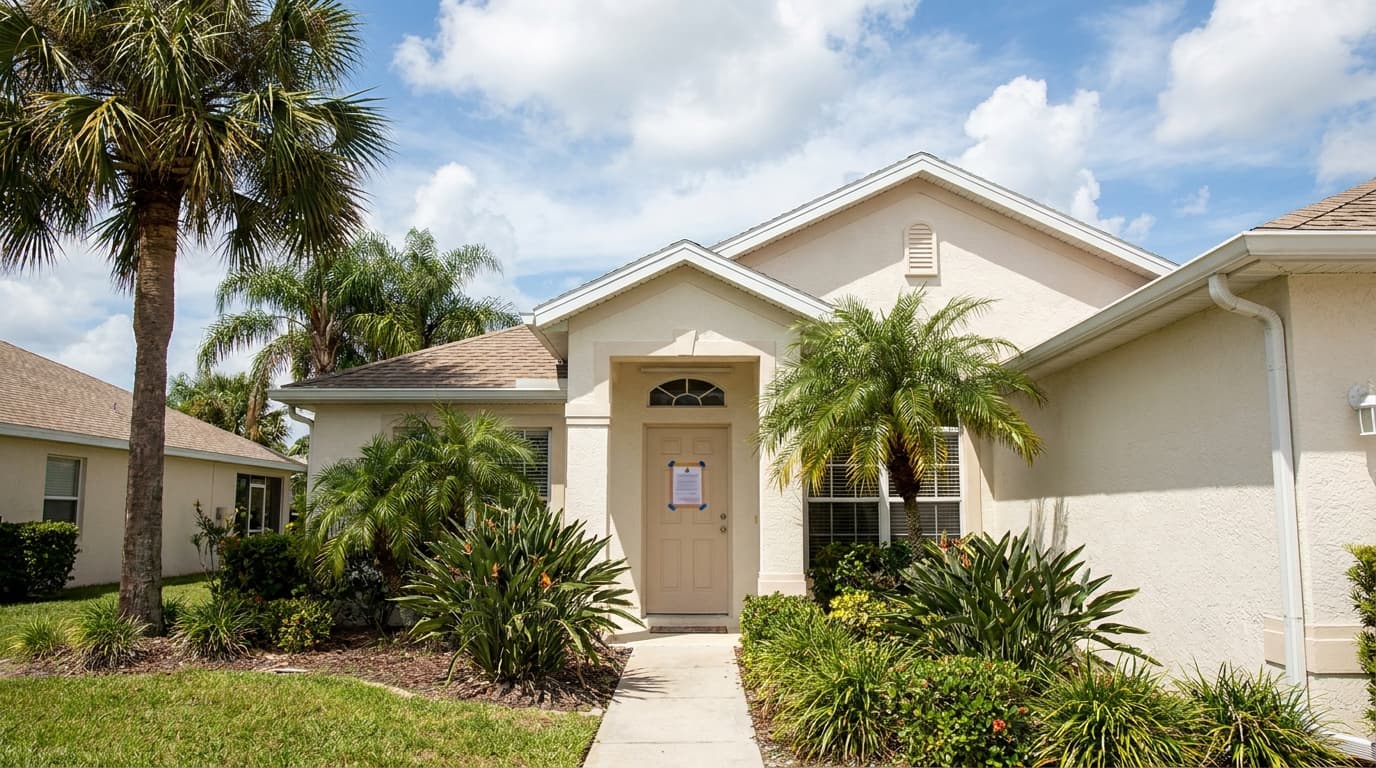

If you've received a code enforcement notice from St. Johns County regarding unpermitted work on your property, you're not alone—and you're probably stressed. Thousands of Florida homeowners face this situation every year, often without understanding what it means or how to fix it. The good news: unpermitted work violations are resolvable, and there's a clear path forward.
This guide walks you through exactly what to do, when to do it, and how to navigate St. Johns County's building department to get your property back in compliance. We'll cover everything from understanding the violation itself to working with contractors, pulling permits retroactively, and avoiding penalties.
Let's get started.
What Is an Unpermitted Work Violation?
An unpermitted work violation occurs when construction, renovation, or installation work is completed on your property without the proper building permit from St. Johns County. This includes electrical work, plumbing, HVAC installation, room additions, roof repairs, deck construction, pool installation, or even significant interior remodeling.
Florida Statute 553.80 (Florida's Building Code) requires that most construction work meet local and state standards and be inspected and approved by the building authority. St. Johns County enforces this requirement to ensure public safety, structural integrity, and property value protection.
Why Code Enforcement Notices Are Issued
Code enforcement officers in St. Johns County typically discover unpermitted work through:
Once a violation is identified, code enforcement sends a notice to the property owner. This notice includes:
Warning: Ignoring a code enforcement notice will not make it disappear. Fines accumulate, and the county can pursue liens against your property. The longer you wait, the more expensive and complicated the resolution becomes.
Understanding St. Johns County Building Requirements
St. Johns County follows the Florida Building Code (based on the International Building Code) and enforces it through its Building Department. The county's jurisdiction covers unincorporated St. Johns County; municipalities like St. Augustine, Ponte Vedra, and Jacksonville Beach have their own building departments.
Work That Requires Permits in St. Johns County
Most construction and renovation work requires a permit. Here's what typically needs one:
| Work Type | Permit Required? | Inspection Needed? |
|---|---|---|
| Electrical wiring, outlets, lighting | Yes | Yes (rough and final) |
| Plumbing (pipes, fixtures, drains) | Yes | Yes (rough and final) |
| HVAC installation or replacement | Yes | Yes (final only, usually) |
| Roof replacement (more than 25% of area) | Yes | Yes (final inspection) |
| Adding a room or deck | Yes | Yes (multiple inspections) |
| Pool installation | Yes | Yes (multiple inspections) |
| Structural repairs or modifications | Yes | Yes (rough and final) |
| Drywall, paint, or cosmetic work only | No | No |
| Replacing in-kind fixtures (same type/size) | Generally No | No |
| Window or door replacement (same opening) | Generally No | No |
Note: When in doubt, contact St. Johns County Building Department before starting work.
Watch Related Videos on YouTube
unpermitted work violation St. Johns County Florida how to fix guide
Step-by-Step: How to Resolve an Unpermitted Work Violation
Now let's walk through the actual process of resolving your violation. This is where action replaces panic.
Step 1: Read and Understand Your Code Enforcement Notice
Don't skip this. Your notice contains critical information:
Read it carefully. If something doesn't match what actually happened on your property, note it. You may have a legitimate defense.
Step 2: Contact St. Johns County Building Department
Don't wait. Call the St. Johns County Building Department immediately:
St. Johns County Building DepartmentWhen you call, have your address, the notice number, and photos of the work ready. Ask for:
Tip: Be honest and professional. Code enforcement officers work with hundreds of property owners. Straightforward cooperation speeds resolution and may result in more reasonable timelines.
Step 3: Document the Unpermitted Work
Before moving forward, thoroughly document what was done:
This documentation serves two purposes: it helps you communicate clearly with the building department, and it provides evidence of the work's scope and quality if disputes arise.
Step 4: Determine If Retroactive Permits Are Possible
This is the critical question: Can you get a permit after the fact?
In most cases, yes—if the work was done to code standards. Florida Statute 553.80 allows for retroactive permits when:
However, if the work is substandard, damaged, or done by unlicensed contractors, the building department may require:
This is where things can get expensive. An engineer's report might cost $500–$1,500. Remediation can be much more.
Critical Warning: Do not attempt to hide or cover up unpermitted work. Doing so can result in criminal charges, higher fines, and legal liability. Transparency is always the better path.
Step 5: Hire a Licensed Contractor or Engineer (If Needed)
Depending on the complexity of the work and the building department's findings, you may need:
Licensed Contractor – To assess the work, pull the permit, and coordinate inspections. Costs vary by trade but typically range from $500–$2,000 in consultation and coordination fees. Structural or Systems Engineer – If the building department questions whether the work meets code, you may need a professional engineer to certify it or recommend remediation. Cost: $500–$2,000+.When hiring:
Tools like HomeProBadge can help you find verified contractors in your area. The platform features identity-verified and background-checked professionals, searchable by county and trade, along with before/after portfolios and trust scoring—giving you confidence in who you hire.
Step 6: Pull the Retroactive Permit
Once you've determined that a retroactive permit is feasible, the process is:
- Original design plans or "as-built" plans (drawings of the work as it was actually completed)
- Contractor's license and proof of insurance
- Owner authorization
- Engineering reports (if required)
- Electrical work: $100–$300
- Plumbing: $100–$400
- HVAC: $100–$300
- Structural/additions: $200–$800+
- Inspections: Usually $75–$150 each
Step 7: Pass Inspections and Close Out the Permit
Once your retroactive permit is issued, the building department will schedule inspection(s). Here's what to expect:
Electrical Inspections – The inspector verifies that wiring, outlets, switches, and breakers meet code. Common issues: incorrect wire gauge, improper grounding, missing GFCI outlets, overcrowded panels. Plumbing Inspections – The inspector checks for proper slope, venting, materials, and connections. Common issues: incorrect pipe sizing, missing traps, improper venting. HVAC Inspections – The inspector verifies proper sizing, ductwork, and refrigerant lines. Common issues: undersized systems, poor duct sealing, missing insulation. Structural Inspections – For additions, roofs, and deck work, the inspector verifies proper framing, bracing, and materials. Common issues: inadequate support, incorrect lumber grades, improper fastening.If the inspector finds deficiencies, they'll issue a "notice of deficiency," which outlines what needs to be corrected. You have time to make corrections and request a re-inspection. Once everything passes, the permit is "closed out," and the violation is resolved.
Step 8: Respond to Code Enforcement and Close the Violation
Once your permit is closed out and inspections are passed, notify the code enforcement officer who issued the original notice. Provide:
The code enforcement officer will close the case. You should receive a letter confirming that the violation is resolved.
What If the Work Doesn't Meet Code?
If the building department determines that the unpermitted work does not meet current code standards, you'll need to remediate (fix or remove it):
Option 1: Bring It Into Compliance – The most common path. Your contractor will make necessary corrections, and you'll pass inspection. This costs money but keeps the improvement on your property. Option 2: Remove the Work – For work that can't be brought into compliance (e.g., structural additions that don't meet setback requirements), the building department may require removal. This is expensive and you lose the improvement, but it's sometimes the only option. Option 3: Variance or Exception – In rare cases, you can request a variance from the building code if strict compliance is impractical. This requires approval from St. Johns County and is not guaranteed. Expect costs of $1,000–$3,000+ for the variance process.Discuss these options with your contractor and code enforcement officer early.
Penalties and Fines: What You Might Owe
Unpermitted work violations in St. Johns County and Florida can result in:
Civil Penalties:The longer you wait to resolve the violation, the higher the accumulated fines become. Early action is always financially smart.
Common Mistakes to Avoid
Mistake 1: Ignoring the Notice
Ignoring a code enforcement notice doesn't make it disappear—it makes it worse. Fines accumulate, and eventually, the county can place a lien on your property or pursue more severe enforcement.
Mistake 2: Hiring an Unlicensed Contractor to "Fix" the Problem
You'll likely need a licensed contractor to pull the retroactive permit. Hiring another unlicensed contractor to remediate unpermitted work just compounds the problem.
Mistake 3: Attempting DIY Repairs Without Permits
If the building department says the work needs to be redone, don't try to DIY it further. Hire a licensed professional. The city is watching now, and additional unpermitted work will make things much worse.
Mistake 4: Not Getting Documentation from Your Original Contractor
If the original work was done by a contractor, try to get them to cooperate in documenting and remediating if needed. If they refuse or are unreachable, get written documentation that you attempted to contact them. This protects you and helps the building department understand the situation.
Mistake 5: Assuming the Work Meets Code
Just because unpermitted work "looks fine" doesn't mean it meets code. Let the inspectors verify. Many code violations aren't visible (e.g., improper wire gauge, missing structural bracing, incorrect ductwork sizing).
Timeline Expectations
Here's a realistic timeline for resolving a typical unpermitted work violation in St. Johns County:
| Phase | Duration |
|---|---|
| Receiving notice and understanding requirements | 1–2 weeks |
| Contacting building department and contractor | 1–2 weeks |
| Pulling retroactive permit (if no remediation needed) | 2–4 weeks |
| Scheduling and passing inspection(s) | 2–6 weeks |
| Closing permit and notifying code enforcement | 1 week |
| Code enforcement closes violation | 1–2 weeks |
| Total Average Duration | 8–17 weeks (2–4 months) |
If remediation is required, add 4–12 weeks depending on the scope of work.
Special Situations
Inherited Violations (You Didn't Do the Work)
If you purchased the property and discovered unpermitted work, you're still responsible for resolving it. However, code enforcement officers understand that you may not have been aware of the violation when you bought the home. Document when you discovered it and move quickly to remediate. You may have recourse against the previous owner through your purchase contract or legal action, but that's separate from your obligation to the county.
Violations by Renters
If you own a rental property and a tenant did unpermitted work without authorization, you're technically still responsible to the county. Document that the work was done without your knowledge or consent, address the violation promptly, and consider legal action against the tenant for damages.
Minor Cosmetic Work
If the violation is minor cosmetic work (e.g., added a non-permitted wall that isn't structural), you may be able to remediate it quickly by removing the work or obtaining a simple permit. Discuss with the building department.
Work Done Years Ago
Old violations sometimes surface during property transfers or insurance renewals. The statute of limitations for code violations is generally 5 years under Florida law, but the liability doesn't disappear—it just becomes harder to prove. Resolve it anyway to clear the title and ensure insurability.
Frequently Asked Questions
Q: Can I sell my house with an unresolved code violation?
A: Technically, yes—but you should disclose it to the buyer. Most buyers will require it to be resolved before closing, and lenders typically won't finance a property with open violations. It's better to resolve it first.
Q: What if I can't afford to fix or remediate the unpermitted work?
A: Contact the code enforcement officer and discuss your situation honestly. Some officers may negotiate extended timelines or phased remediation. You could also:
Ignoring the problem will only make it more expensive over time.
Q: Can I remove unpermitted work myself?
A: Only if it's truly non-structural (like a removable partition or cosmetic item). For anything involving building systems, structure, or permanent installations, hire a licensed contractor. The building department will need documentation that it was removed properly.
Q: What if the building department says the work can never be brought into compliance?
A: This is rare, but it happens with work that doesn't meet setback requirements, zoning rules, or structural standards. Your options are:
Q: Will resolving the violation affect my home value?
A: Resolving it protects your value. An unresolved violation will seriously harm your home's value, insurability, and saleability. A resolved violation shows the work is compliant and shouldn't negatively impact value.
Q: Can I go after the original contractor for unpermitted work?
A: Yes. You can pursue a civil lawsuit against the contractor for damages, breach of contract, or fraud. You may also file a complaint with the Florida Department of Business and Professional Regulation (DBPR). However, resolve the code violation first, then pursue contractor liability separately.
Q: How much will it cost to resolve an unpermitted work violation?
A: It varies widely:
Get estimates from licensed contractors early.
Q: Does resolving the violation require me to disclose it when selling later?
A: Once the violation is officially closed by code enforcement, you typically don't need to disclose it (though local real estate disclosure laws vary). Check with a real estate attorney. Disclosing it upfront is generally safer than risking buyer discovery later.
Q: Can code enforcement demolish my property?
A: Only in extreme cases where the structure is deemed a public safety hazard. This is very rare. Most violations resolve through permitting and inspection long before demolition is considered.
Get Help Resolving Your St. Johns County Violation
Unpermitted work violations are stressful, but they're resolvable with the right approach. The key is acting quickly, being honest with the building department, and working with licensed professionals.
If you need guidance tailored to your specific situation, HomeProBadge offers county-specific Permit Violation Action Plans that provide AI-generated, step-by-step guidance for St. Johns County homeowners. These plans include:
Visit HomeProBadge.com to generate your action plan. You can also use the platform's verified contractor directory to find licensed, background-checked professionals in St. Johns County who specialize in permit remediation and compliance work.
Remember: the fastest and least expensive resolution is the one you start today. Don't wait.