

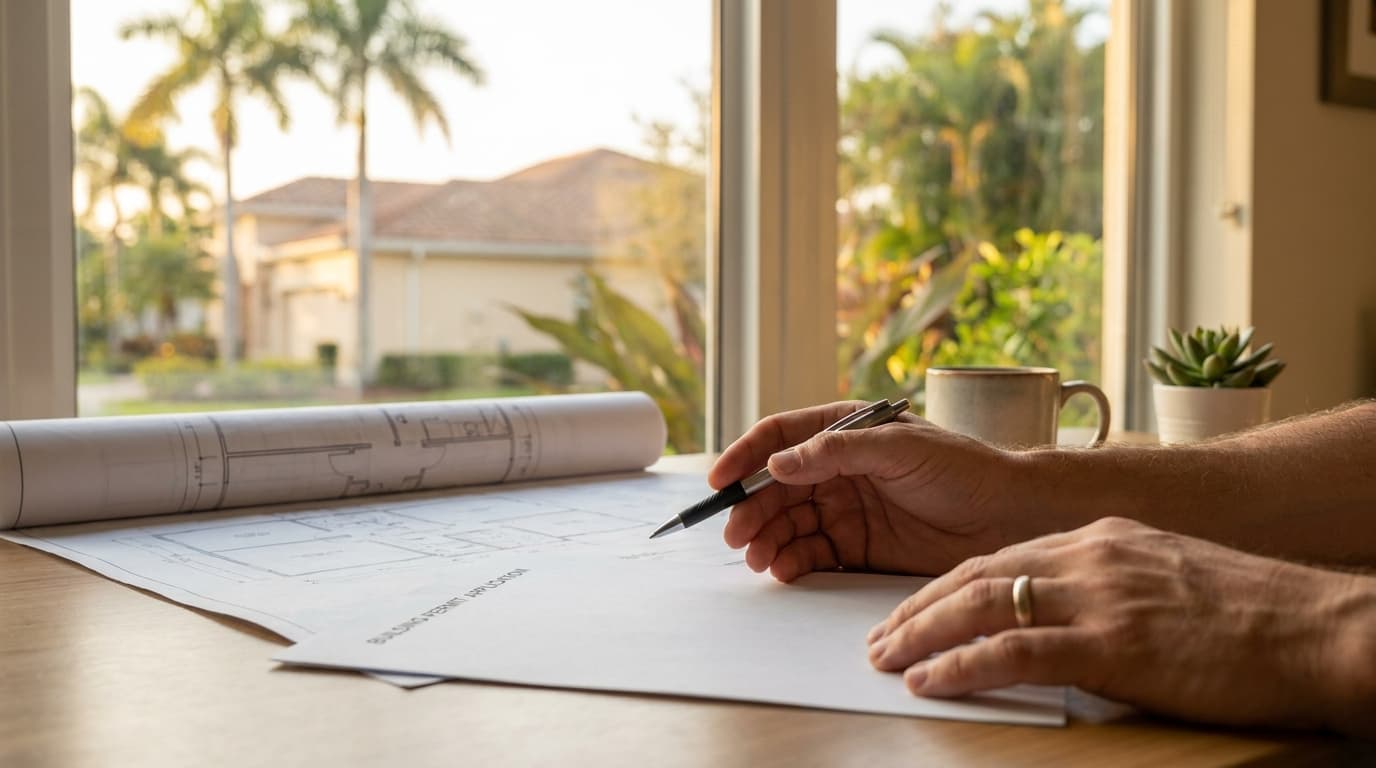

If you've received a code enforcement notice in Palm Beach County, or you're worried about unpermitted work on your property, you're not alone—and you're not in trouble yet. Thousands of Florida homeowners face permit violations every year, often without realizing the work they had done or allowed to happen wasn't properly permitted. The good news: permit violations are fixable, and understanding how Palm Beach County's building permit system works is your first step to resolution.
This guide walks you through everything a homeowner needs to know about Palm Beach County building permits—from what requires a permit to how to respond if you've received a notice of violation. We'll break down the process, explain your options, and show you exactly what comes next.
Quick Summary
Key Point: In Palm Beach County, most structural, electrical, plumbing, HVAC, and roofing work requires a permit. Unpermitted work can result in code enforcement notices, fines, and title issues when selling. The county's Building Division processes thousands of permits annually and has strong compliance enforcement.
What Are Building Permits and Why Does Palm Beach County Require Them?
A building permit is an official authorization from Palm Beach County that allows you to perform construction or renovation work on your property. It's not just red tape—it serves a real purpose.
Permits exist to:
Palm Beach County adopted the Florida Building Code, which is updated every three years. This code governs everything from foundation requirements to electrical spacing. When a contractor pulls a permit and the work is inspected, you get a guarantee that it was done to code.
Why This Matters: Unpermitted work can void homeowner insurance claims, complicate home sales, and create liability issues if something fails or injures someone.
Understanding the "why" behind permits helps explain why the county takes violations seriously—and why you should too.
Watch Related Videos on YouTube
Palm Beach County Florida building permits homeowner guide how to fix guide
Types of Work That Require Permits in Palm Beach County
Not every home improvement requires a permit. Small projects like painting, landscaping, or replacing a faucet typically don't. But anything structural, electrical, or involving significant systems does.
Work That Almost Always Requires a Permit
| Project Type | Why | Permit Required? |
|---|---|---|
| Room additions or expansions | Structural changes, electrical load | Yes |
| Roof replacement or repair (>25% of roof) | Structural integrity, wind resistance | Yes |
| Electrical wiring or outlet installation | Safety hazard if done incorrectly | Yes |
| Plumbing (new lines, fixtures, septic) | Health and safety codes | Yes |
| HVAC installation or replacement | Efficiency and safety standards | Yes |
| Pool, spa, or hot tub installation | Structural, electrical, safety codes | Yes |
| Deck or patio (permanent structure) | Structural and foundation codes | Yes |
| Fence (>6 feet or structural changes) | Setback and zoning rules | Yes |
| Generator installation | Electrical and placement codes | Yes |
| Window or door replacement (entire home) | Energy code compliance | Yes |
| Shed or detached structure (>200 sq ft) | Zoning and setback rules | Yes |
| Kitchen or bathroom remodel | Electrical, plumbing, structural changes | Yes |
| Garage conversion | Structural, electrical, egress | Yes |
| Wall removal or relocation | Structural integrity | Yes |
| Foundation work or underpinning | Structural safety | Yes |
Work That Typically Does NOT Require a Permit
How to Pull a Permit in Palm Beach County
Pulling a permit is straightforward once you know what you're doing.
Step 1: Gather Required Documents
Before you can submit, you'll need:
For simple projects, you may be able to submit simplified plans. For complex work (additions, major remodels), you'll need professionally prepared drawings.
Step 2: Submit Your Application
You have two options:
Online (ePASS system): Palm Beach County Building Division uses ePASS for online permit submission. You can:Step 3: Wait for Plan Review
Once submitted, the county's plan review team examines your application for:
Step 4: Receive Your Permit
Once approved, you'll receive:
Step 5: Schedule Inspections
Critical: Inspections are mandatory. Never skip them or proceed without a county inspector's approval.
Typical inspections include:
Contact the Building Division to schedule. Inspectors typically respond within 24–48 hours.
Understanding Palm Beach County Code Enforcement and Violations
If unpermitted work has been done on your property—whether you hired someone or inherited it from a previous owner—you may receive a Notice of Code Violation from Palm Beach County's Code Enforcement Division.
What Triggers a Code Enforcement Notice?
The county typically learns about unpermitted work through:
What Happens When You Receive a Notice
You'll receive a formal letter that specifies:
Important: Do not ignore this notice. Ignoring it makes penalties accumulate and complicates property sales.
Your Options When You Receive a Violation Notice
Option 1: File a Retroactive PermitIf the work was done properly (even though not permitted), you can file for a retroactive permit:
If the work was done improperly or you can't legalize it:
If you believe the violation is incorrect or have extenuating circumstances:
If you're confused about what to do, HomeProBadge offers county-specific Permit Violation Action Plans for Palm Beach County homeowners. These AI-generated, step-by-step plans tell you exactly:
This removes guesswork and gives you a clear roadmap.
Penalties and Consequences of Unpermitted Work
Understanding the stakes helps explain why the county is serious about permits.
Financial Penalties
A violation that sits unresolved for 60 days could cost $15,000+ in fines alone.
Property Transfer and Title Issues
Insurance and Liability
Property Value Impact
Florida Building Code Compliance and What It Means
When the county requires a permit, they're enforcing compliance with the Florida Building Code (FBC), which is adopted under Florida Statute 553. Understanding what this code covers helps explain why certain work is regulated.
Key Areas Covered by Florida Statute 553
| Code Area | What It Covers | Why It Matters |
|---|---|---|
| Structural | Foundation, framing, load capacity | Prevents collapses and safety hazards |
| Electrical | Wiring, circuit capacity, grounding | Prevents fires and electrocution |
| Plumbing | Water supply, drainage, fixtures | Prevents contamination and backups |
| Mechanical (HVAC) | Heating, cooling, ventilation | Ensures comfort and indoor air quality |
| Fire-Life Safety | Egress, sprinklers, fire-rated materials | Allows safe evacuation during emergency |
| Energy | Insulation, HVAC efficiency, windows | Reduces utility costs and environmental impact |
| Accessibility | ADA compliance for public areas | Ensures access for people with disabilities |
How Inspectors Verify Code Compliance
When an inspector arrives, they're checking:
If work doesn't pass, the inspector issues a "Notice of Non-Compliance," and the contractor must fix it before the next inspection.
Common Permit Violations and How to Fix Them
The most common unpermitted work the county encounters:
Unpermitted Roof Replacement
Why it happens: Homeowners think roof replacement is simple and skip the permit. The problem: Roofing codes specify material wind ratings, fastener spacing, and underlayment—all critical in Florida's hurricane zone. How to fix it: File a retroactive permit, provide the contractor's invoice and material data sheet. County may inspect the work (difficult if already completed). If accessible, inspection can be done. If not, affidavit from contractor may suffice.Electrical Work by Unlicensed Individuals
Why it happens: Homeowners DIY outlet installation or hire someone "off the books." The problem: Improper grounding, wrong wire gauge, and overloaded circuits cause fires. How to fix it: File retroactive permit + hire a licensed electrician to inspect and certify the work to code. County will reinspect.Unpermitted Room Additions or Enclosures
Why it happens: Converting a patio or garage seems straightforward; homeowners skip permitting. The problem: Structural calculations, egress windows, and electrical load changes require engineering. How to fix it: This is harder. You'll need:Unpermitted Plumbing Changes
Why it happens: Adding a bathroom or moving fixtures without permits. The problem: Improper venting and drainage cause backups, contamination, and health hazards. How to fix it: File retroactive permit, provide plumber's invoice, schedule rough-in and final inspections. If work is hidden behind walls, affidavit from licensed plumber may be accepted.Unpermitted Pool or Spa
Why it happens: Homeowners install pools thinking they don't need county approval. The problem: Pools require electrical GFCI protection, proper fencing, chemical handling, and setback compliance from property lines. How to fix it: File retroactive permit, provide pool contractor documentation, pass all required inspections (equipment, electrical, fencing). This is a high-priority violation because of safety concerns.Working with Contractors and Verifying They'll Pull Permits
A major reason permits are skipped: homeowners hire contractors who avoid permitting to save time and money.
Red Flags When Hiring
How to Verify a Contractor
- Visit MyFloridaLicense.com
- Search the contractor's name and license number
- Verify the license type matches the work (electrical, plumbing, general contractor, etc.)
- General liability insurance
- Workers' compensation insurance (if hiring employees)
- Verify policies are active and valid
- Call 3–5 recent clients
- Ask if permits were pulled and inspections passed
- Ask about quality and timeliness
- HomeProBadge lists verified, background-checked contractors by county and trade
- Contractors with HomeProBadge have been vetted and maintain a public review record
- You can search by Palm Beach County and trade (electrical, plumbing, roofing, etc.)
- Reviews and job portfolios show their work quality
- Contract should state: "Contractor will pull all required permits and pass all county inspections"
- Specify who pays permit fees
- Include timeline for inspections
How to Respond to a Code Enforcement Notice
If you've received a notice, here's exactly what to do:
Step 1: Don't Panic—You Have Time (Usually)
Most notices give you 30–60 days to cure the violation. This is enough time to figure out your options.
Step 2: Document Everything
Gather:
Step 3: Contact the Code Enforcement Officer
Call the officer listed on your notice. Ask:
Step 4: Decide Your Course of Action
If retroactive permitting is viable: Proceed with Option 1 (see earlier section). Gather documents and file. If removal is necessary: Hire a contractor, file a demolition permit, and document completion. If you need clarity: Use a Permit Violation Action Plan from HomeProBadge. These county-specific plans tell you exactly which option applies to your situation and what steps come next—no guesswork.Step 5: File Your Response
Submit your retroactive permit application or removal documentation before the deadline. Keep copies of everything.
Step 6: Schedule Required Inspections
Work with the county to get on the inspection schedule. Don't delay—inspections are how you officially close the violation.
Step 7: Close the Violation
Once all inspections pass (or removal is verified), the Code Enforcement Division will issue a letter confirming the violation is resolved. Keep this letter—you may need it for a future home sale.
Selling a Home with a Permit Violation
If you're selling and have an unresolved violation, here's what you'll face:
Title Company Discovery
During title search, the title company will flag any unresolved violations. Lenders require violations be resolved before closing.
Seller Disclosure Requirements
Florida law requires you to disclose known permit violations to buyers. Failing to disclose is fraud and can result in lawsuits post-closing.
Buyer Leverage
Buyers will:
Resolving Before Sale
If you're planning to sell, resolve violations first:
Resolving proactively:
Resources and Next Steps
Palm Beach County Building Division Contact Information
When to Call
Florida Statute 553 and Building Code Resources
If You Have Unpermitted Work and Need Clarity
Get a Permit Violation Action Plan at HomeProBadgeIf you've received a violation notice or discovered unpermitted work on your property, the uncertainty of what to do next is stressful. A Permit Violation Action Plan removes the guesswork.
HomeProBadge generates AI-powered, county-specific action plans that tell you:
Finding a Verified Contractor
If you need to hire someone to file a retroactive permit, complete an inspection, or remove unpermitted work, use HomeProBadge's verified contractor directory.
You can search by:
This eliminates the risk of hiring someone unlicensed or unreliable.
Final Thoughts
Navigating permit violations and building code requirements feels overwhelming at first, but it's a solvable problem. Thousands of Florida homeowners resolve violations every year and go on to sell their homes successfully.
The key is understanding what you're dealing with, responding quickly, and taking the right steps in order. Whether you're filing a retroactive permit, getting a violation cleared before a sale, or ensuring future work is properly permitted, the process is straightforward once you know the rules.
Don't let unpermitted work or a violation notice linger. The sooner you act, the sooner you close the issue and move forward with clarity and peace of mind.