

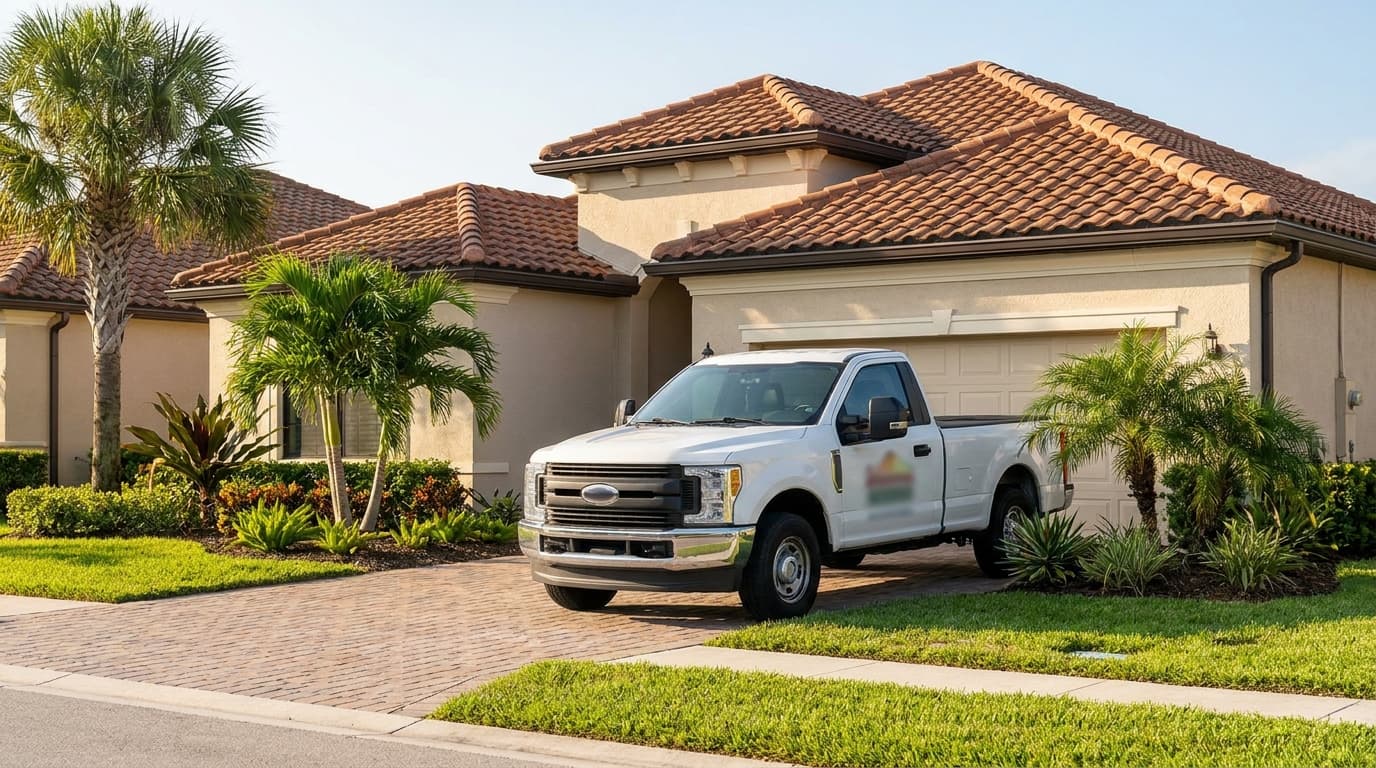

You finish a job on Friday. The work is clean. The customer is relieved. You explain what you fixed, what to watch next, and you leave the space better than you found it. Before you pull away, they say, “I'm giving your number to my sister.”
Next week, the phone rings. The new caller already trusts you more than the last one did. They didn't click an ad. They didn't compare ten bids. Someone they know told them you're the one to call.
That's word of mouth marketing in home services. Not a slogan. Not luck. A real job created by a real experience.
Most pros already have some of this working. The problem is that it stays accidental. Good work happens, referrals happen sometimes, and nobody builds the system around it. That leaves money on the table. The better approach is simple. Do work worth talking about, package proof people can share, and make the referral path obvious.
The Most Powerful Marketing You Already Own
A lot of owners think of word of mouth marketing as something soft. They put it in the bucket with “brand awareness” and “community buzz.” That's a mistake. In home services, word of mouth is often the shortest path between one finished job and the next booked one.
A referral starts long before anyone shares your phone number. It starts when your tech shows up on time. When the estimate matches the reality. When the customer understands the repair. When the invoice doesn't feel like a surprise. People recommend businesses that make them feel safe and competent for choosing them.
That's why the little details matter so much. Clean uniforms. Clear texts before arrival. Photos of the finished work. A short explanation the homeowner can repeat to a neighbor. Those details give customers language. If they can describe what was good about hiring you, they can refer you.
Practical rule: If a customer can't easily explain why you were worth recommending, referrals slow down even when the work itself was solid.
The strongest referrals usually sound ordinary. “They showed up.” “They fixed it without drama.” “They explained everything.” “They cleaned up.” None of that sounds flashy, but it closes jobs because it answers the fears buyers already have.
Here's what experienced operators know. Customers don't refer abstract quality. They refer specific experiences.
When you build around those moments, word of mouth marketing stops being random. It becomes part of how your business produces demand.
Why Word of Mouth Is Different for Home Services
Word of mouth marketing is a simple concept. A customer talks about your business, someone else trusts that recommendation, and that trust affects whether they call you. That happens in person, in text threads, in neighborhood groups, and in online reviews.For home service businesses, the decisions carry more weight than they do for most other local businesses. A homeowner isn't just picking a place to eat. They're choosing who gets access to their house, their family routine, and often an urgent problem they don't fully understand.

A referral in home services carries risk
Trust matters in every category, but it matters more when the buyer feels exposed. That's why the trust gap is so important here. In Nielsen's global Trust in Advertising study, 88% of consumers said they trust recommendations from people they know above all other marketing messages. For a contractor, cleaner, pool tech, or nanny, that isn't a nice bonus. It's the operating environment.
A homeowner calling a roofer after a storm is trying to reduce uncertainty. A family hiring a cleaner or babysitter is doing the same thing in a different form. They want proof that you're legitimate, reliable, and known by real people.
That changes how word of mouth marketing works for you.
| Situation | What the homeowner is thinking | What a referral does |
|---|---|---|
| Urgent repair | “I need someone I can trust fast.” | Shortens decision time |
| Planned project | “I don't want to choose wrong.” | Reduces perceived risk |
| Recurring service | “I want someone dependable.” | Builds confidence in long-term fit |
What homeowners actually want to reduce
Most service buyers aren't trying to find a clever brand. They're trying to avoid regret. They don't want the no-show, the surprise charge, the sloppy cleanup, or the person who disappears when something goes wrong.
That's why generic marketing advice often misses the mark for trades. You don't need louder promotion first. You need stronger trust signals attached to real work.
In home services, a referral doesn't just create awareness. It transfers confidence.
The local angle matters too. Referrals are strongest when they travel through neighborhoods, schools, church groups, HOA chats, realtor networks, and family circles. The buyer doesn't just hear “they do good work.” They hear “they did good work for someone like me, nearby.”
That's a different dynamic from broad consumer marketing. It's tighter, more personal, and much more dependent on reputation you can prove.
The Three Engines of Your Referral System
Referrals don't come from one tactic. They come from a system with moving parts. When I audit home service businesses, I usually find one of three conditions. They do strong work but never show it. They show work but don't ask for anything. Or they ask for referrals before they've built enough trust to deserve them.
The better model is to treat word of mouth marketing like a three-engine system.

Engine one builds the story
The first engine is exceptional service. Not perfection. Consistency.
Customers talk when the full experience is smooth enough to retell. That includes the office, the field tech, the estimate, the follow-up, and the billing. If one part breaks trust, the whole referral weakens.
Many companies sabotage themselves. They think referrals come from workmanship alone. Workmanship matters, but homeowners usually remember the entire sequence.
A lot of “marketing problems” are really operations problems showing up in lead flow.
A strong service experience also creates the raw material for advocacy. If you want more than polite compliments, study the moments that get repeated back to you. Those are your talk triggers. For a deeper look at that shift from customer satisfaction to advocacy, this piece on turning insights into loyal advocates is worth your time.
Engine two makes the story visible
Good experiences fade away if nobody can verify them. That's where amplified proof comes in. A referral often starts offline and gets validated online. The customer hears your name from a neighbor, then searches you.
If that search leads to thin proof, old photos, weak reviews, or a dead-looking profile, you've just weakened your own referral. If it leads to documented jobs, recent reviews, and a clean professional presence, the referral gets stronger.
This is also why businesses that rely on real estate relationships often outperform casual referral networks. They package trust better. If you work with agents, property managers, or related local partners, realtor referral networks can create a more structured flow than waiting on random customer mentions.
Later in the buying cycle, this visibility compounds. McKinsey found that in the mobile-phone market, the pass-on rate of key positive and negative messages could raise a company's market share by as much as 10% or reduce it by 20% over two years, holding other factors constant, in its analysis of how to measure word of mouth marketing. Different market, same lesson. Word of mouth changes outcomes when businesses manage it deliberately.
To see the framework visually, this breakdown is useful:
Engine three creates repeatable momentum
The third engine is proactive programs. This is the part most owners avoid because they don't want to sound pushy. Fair. But there's a difference between being awkward and being organized.
A proactive referral system includes timing, scripts, reminders, and easy next steps. It gives happy customers a low-friction way to leave a review, share your info, or introduce you to someone else.
What works:
What doesn't:
Turn Great Work into Shareable Proof
A referral used to end with a phone number on a scrap of paper. Now it usually starts there and then moves into a search. The homeowner hears your name, checks your site, scans your reviews, looks at your photos, and decides whether the recommendation holds up.
That means your proof has to travel.
A spoken referral usually becomes a search
When a customer says, “Use my plumber,” the next person wants confirmation. They want to see real jobs, real faces, real details, and signs that your business is current. If all they find is a neglected Facebook page and a stock-photo website, the referral loses force.
Shareable proof solves that. It turns your finished work into assets other people can pass along without explaining everything themselves.
The most useful proof is concrete:
One practical option is a verified job profile system such as HomeProBadge video testimonials, which lets contractors collect consent-based customer videos tied to real projects. Used correctly, that turns offline praise into something another homeowner can see and trust.
A customer recommendation gets you in the door. Proof of work keeps the door open.
What shareable proof looks like in the field
The easiest way to think about this is to treat every completed job like a mini case file. You don't need a polished production team. You need a repeatable capture process.
A simple field workflow looks like this:
Modern tools help; AI-generated before-and-after reports can turn a pile of phone photos into a coherent story fast. That matters because most crews won't consistently create content if the process feels like extra admin work.
If you want ideas for making customer-created proof more usable across channels, you can explore ShortsNinja's content strategies. The big takeaway for home services is simple. Don't ask customers to create marketing. Capture the evidence of the work and package it so they can share it easily.
Here's the standard I use when reviewing a contractor's proof stack:
| Asset | Good | Weak |
|---|---|---|
| Photos | Clear, job-specific, before and after | Random gallery with no context |
| Reviews | Specific and tied to work performed | Generic praise with no details |
| Testimonials | Short, natural, and credible | Overproduced or scripted |
| Profile | Updated and easy to share | Incomplete or hard to verify |
You don't need more content for the sake of content. You need better evidence. That's what makes word of mouth marketing scalable instead of informal.
How to Measure Your Word of Mouth ROI
A lot of owners treat referrals like weather. They know it happens, but they don't think they can track it. You can. Not perfectly, but well enough to make decisions.
The first job is simple. Stop letting referral leads come in untagged.

Start with simple source tracking
Every intake form, estimate request, and call workflow should include some version of “How did you hear about us?” Don't bury it. Train your office to ask it the same way every time and record the answer cleanly.
Use categories that reflect reality:
That last one matters because many referrals are mixed-source. Someone hears about you from a friend, then validates you online. Track both when possible. You're not trying to create perfect attribution. You're trying to stop losing obvious signals.
Use links because referrals travel privately
A lot of word of mouth marketing happens in text messages, DMs, email chains, and neighborhood chats. That's why attribution gets messy. Invesp notes that because WOM often moves through “dark social” channels, UTM-tagged links and trackable URLs are essential for measuring referral traffic, conversion rates, and ROI.
In practice, that means giving people links that help you identify what got shared.
If you want a good outside reference for building a measurement mindset, especially around assisted conversions and channel value, these practical influencer marketing KPIs are useful because the attribution problems are similar.
For teams that want a tighter feedback loop on reputation and performance, a tool like the review benchmarker can help compare review patterns over time. That kind of benchmark is useful when you're trying to see whether stronger proof and follow-up are improving lead quality.
Track the lead source, track whether it booked, and compare it against your paid leads. That's enough to make smarter budget decisions.
Common Pitfalls That Kill Referrals
Some companies ask for referrals constantly and still don't get many. Usually the problem isn't the ask. It's everything around it.

Good work alone doesn't save a bad process
I've seen businesses do strong technical work and still underperform in referrals because the customer journey feels rough. One crew is excellent. Another is sloppy. The office never follows up. The review request comes two weeks late. The website looks abandoned. Customers may still be satisfied, but they don't feel confident enough to put their name behind the recommendation.
That's the first pitfall. Inconsistency.
The second is asking without giving customers anything to share. If your referral strategy depends on them remembering your phone number or spelling your company name correctly, you're creating friction for no reason.
Common referral killers include:
A referral is fragile. If the referred lead calls and gets voicemail for two days, you didn't just lose one opportunity. You also weaken the person who recommended you.
Bad incentives can cheapen trust
A lot of generic marketing advice says to offer cash and call it a day. That can backfire in trust-sensitive categories.
The American Marketing Association highlights that different word-of-mouth tools create different effects, and the broader lesson is important here. The wrong financial incentives can sometimes harm word-of-mouth marketing by reducing its perceived authenticity. In home repair and similar services, a recommendation often works because it feels honest, not because it feels compensated.
That doesn't mean every incentive is bad. It means you need judgment.
| Approach | Likely effect |
|---|---|
| Simple thank-you and appreciation | Preserves authenticity |
| Useful customer perk tied to service relationship | Can work if it feels natural |
| Aggressive cash bonus framing | Can make the referral feel bought |
| Scripted or pushy referral asks | Lowers trust fast |
A practical rule is to protect the sincerity of the recommendation first. If the customer would hesitate to mention the reward when talking to a neighbor, the incentive is probably too blunt.
Your Step-by-Step Word of Mouth Implementation Plan
Most referral systems improve when the owner stops treating them like an abstract marketing goal and starts treating them like a field process.
What to do this week
What to keep doing on every job
This is the part many companies skip. They want referrals, but they don't build the operating habits that produce them. Word of mouth marketing works best when service, proof, and follow-up all support each other.
If you want a practical way to turn completed jobs into verifiable trust assets, HomeProBadge gives home service pros a public profile, verified credentials, project-linked reviews, and proof-of-work tools that customers can share. That helps move referrals from casual praise to something visible, searchable, and easier to track.