

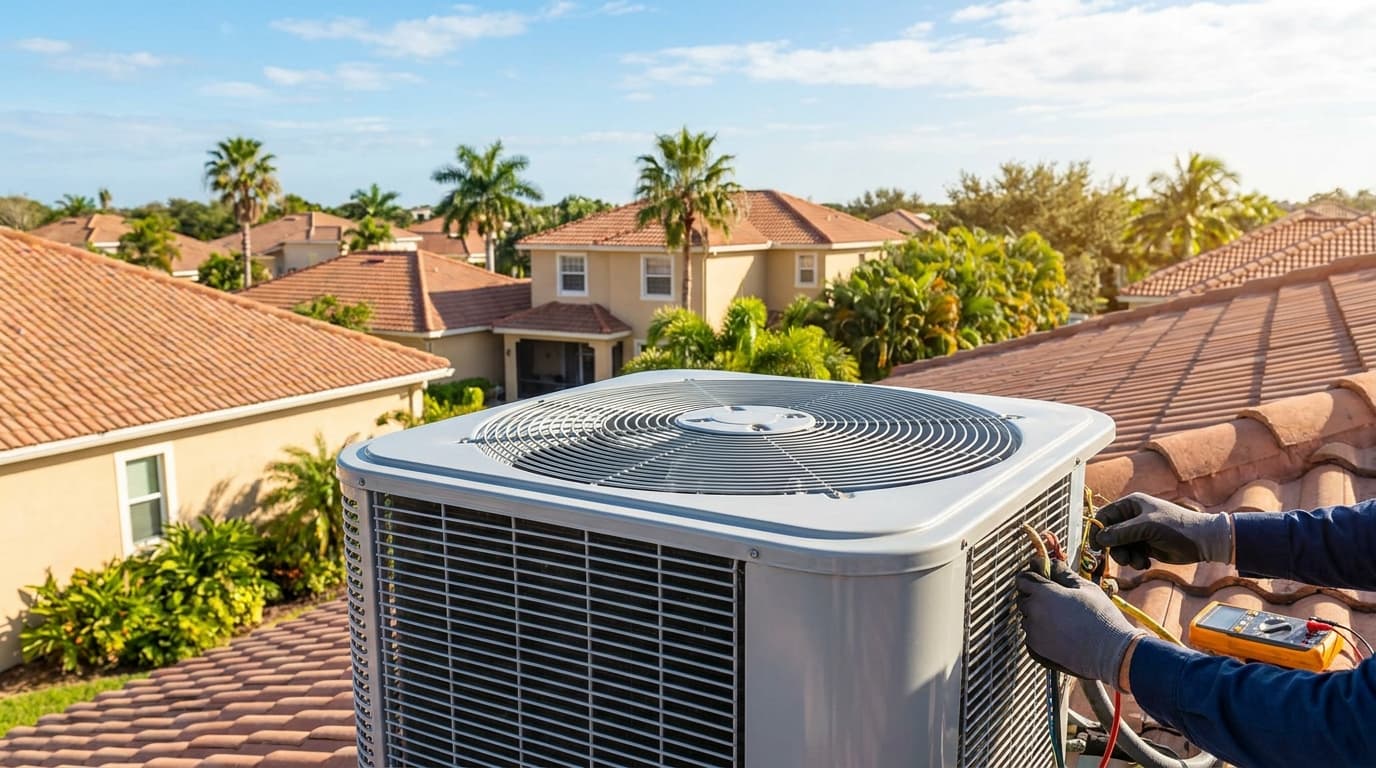

The power comes back on, the lights work, and the house starts heating up. You lower the thermostat, wait for the usual hum from the outdoor unit, and nothing happens. Or the fan runs, but the air never gets cold. That's one of the most common post-outage calls in HVAC, and the good news is that the first move usually isn't replacing major equipment.
Most systems need a calm, methodical restart after a power interruption. The bigger mistake is rushing it. Homeowners often flip the breaker a few times, keep changing thermostat settings, or try to force the system back on while power is still flickering. That can turn a temporary lockout into a service call.
Initial Safety Checks Before You Reset
Start with the easy stuff. When an AC isn't working after a power outage, the first-pass checks are usually the safest and the most productive because they rule out simple control and power issues before you touch anything else.
A lot of homeowners assume the outdoor unit failed. Sometimes the problem is much smaller. A thermostat may have lost its schedule, a breaker may be sitting in a tripped position that doesn't look fully off, or the outdoor disconnect may have been shut off during other work.
Check the thermostat first
Make sure the thermostat is set to COOL and the target temperature is set below the current room temperature. If it has a blank screen, weak display, or odd settings after the outage, that points to a control issue rather than an outdoor unit issue.
If the thermostat uses batteries, check them. If it's a smart thermostat, give it a minute to reconnect and settle before assuming the AC itself is dead.
Practical rule: If the thermostat isn't clearly calling for cooling, don't move on to breaker resets yet.
Inspect the breaker panel carefully
Go to the electrical panel and look for the breaker tied to the AC condenser or air handler. A breaker can trip hard, but it can also sit in a middle or half-tripped position after an outage or surge. That's easy to miss if you just glance at it.

Don't open the panel beyond the normal homeowner access area. You're only looking at the breaker handles. If you smell burning, hear crackling, or see heat damage, stop there and call for service.
Find the outdoor disconnect
Near the outdoor condenser, there's usually a disconnect box mounted on the wall. This is a local shutoff for service work. Confirm it's in the normal operating position and hasn't been left off.
Use only a visual check unless you already know exactly how your disconnect works. No tools. No removing covers. No reaching into electrical components.
For the bigger household side of outage prep, this practical guide for homeowners facing power outages is useful because it helps you think beyond the AC and handle the whole home safely during restoration.
How to Properly Reset Your AC After an Outage
If the thermostat looks right, the disconnect appears normal, and the breaker area doesn't show obvious trouble, then do a full reset. This is the step that fixes a lot of “AC not working after power outage” problems, but only if you do it in the right order and don't rush it.
A widely recommended sequence is to turn the thermostat off, reset the AC circuit breaker, wait at least 30 minutes, then restart the system and wait about 10 minutes to see whether cooling returns normally, because many systems have built-in safety lockouts or surge protection that block an immediate restart after a power interruption according to Angi's outage troubleshooting guidance.
Here's the basic flow at a glance.

The reset sequence that works
The reason for the wait is simple. Modern AC equipment often protects itself after a power interruption. If the compressor tries to restart too quickly, the controls may hold it off. That delay helps avoid stress on the system.
Don't keep flipping the breaker because the unit didn't start right away. That usually makes troubleshooting harder, not easier.
This walkthrough is also helpful if you want to watch the process before trying it yourself:
What not to do during the reset
A lot of bad outcomes start with impatience. Avoid these:
If the unit starts and cool air returns, you're probably past the outage lockout. If it still won't run, or it runs without cooling, the next step is symptom-based troubleshooting.
Troubleshooting Common AC Failure Points
If a proper reset didn't solve it, pay attention to what the system is doing. The sound, timing, and behavior usually tell you more than the thermostat screen does.
This isn't the stage for guessing. It's the stage for narrowing the problem safely so you know whether you're dealing with a simple power issue, a failed electrical component, or a problem that needs a technician.
What the symptoms usually point to
Some failures show up right away after an outage. Others show up as “it turns on, but it's acting strange.” Use the pattern below to decide your next move.
| Symptom | Possible Cause | Next Step |
|---|---|---|
| Indoor blower runs but outdoor unit stays silent | Breaker issue, disconnect issue, control problem | Recheck accessible power points once, then stop if they appear normal |
| Outdoor unit hums but won't fully start | Capacitor or compressor-related problem | Turn the system off and call a professional |
| Repeated clicking at the outdoor unit | Contactor or control issue | Don't keep forcing starts |
| System starts but air isn't cold | Electrical issue, refrigerant issue, or outdoor section not fully operating | Replace filter if it's badly clogged, then schedule service if cooling doesn't return |
| Breaker trips again after reset | Short, locked component, or electrical fault | Stop resetting and call for service |
| Burning smell or visible damage | Electrical damage | Shut it down and don't touch it again |
Sounds that matter
A steady hum from the outdoor unit without a clean startup often points toward a hard-start problem or a failed capacitor. Homeowners sometimes want to “help it along,” but that's where DIY needs to stop. Capacitors and compressor circuits are not casual homeowner repairs.
A rapid clicking sound usually means a control component is trying to engage and failing. That can happen after an outage if a contactor or board took a hit. Again, that's diagnosis territory, not trial-and-error territory.
If a breaker trips a second time after one careful reset, treat that as a warning, not a challenge.
A few checks that are still reasonable
There are still a couple of safe checks you can make without opening equipment:
If you need help finding a qualified company, this HVAC contractor directory is a practical place to start because it narrows the search to actual service providers instead of random listings.
Proactive Steps to Protect Your AC from Power Surges
The best way to handle an AC that quits after an outage is to keep the outage from hurting it in the first place. That means changing what you do while the power is unstable, not only after it has fully returned.
Many homeowners treat power restoration like an on-off event. In real neighborhoods, it often comes back rough. Lights flicker. Voltage dips. Then everything tries to start at once. That's a hard environment for compressors and electronics.
Guidance on post-outage AC issues also warns that flickering or rapidly restored power is its own risk window because repeated voltage fluctuations can stress the compressor and other electronics, and one HVAC explainer specifically advises turning the thermostat off during unstable power and waiting before restarting according to Supreme Heating, Plumbing, Air Conditioning & Electric.
What to do while power is bouncing back
If the power is still flickering, set the thermostat to OFF and leave it there. Don't ask the system to start in the middle of unstable restoration.
That one habit prevents a lot of unnecessary wear. The AC doesn't need to be first in line the second the grid starts acting alive again. It needs stable power more than it needs urgency.
Protection that makes sense long term
For homeowners in storm-prone areas or places with frequent utility issues, surge protection is worth discussing with an electrician. A whole-home device or dedicated HVAC surge protector won't solve every electrical problem, but it's one of the few proactive upgrades that directly addresses outage-related damage risk.
If you want a plain-English explanation of the hardware side, this guide on guarding against damaging power surges gives a good overview of how whole-home protection fits into the system.
And if you decide to add protection, use a licensed pro. This electrician directory is a practical starting point for that kind of work.
Waiting for stable power isn't wasted time. It's one of the simplest ways to avoid turning a grid problem into an AC repair.
Knowing When to Call a Verified HVAC Professional
Some post-outage problems are routine. Others cross the line into safety and equipment risk fast. When that happens, the smart move is to stop testing and get a qualified technician involved.
A lot of homeowners call too late because the system is still “kind of” running. If it's making abnormal noise, tripping power, or moving air without proper cooling, that still counts as a fault.
Stop and call if you notice any of these signs
For urgent situations when the house is getting dangerously hot, it can help to review what AC emergency help typically looks like so you know what to expect from a rapid service call.
Why verified credentials matter
Once you're past basic troubleshooting, the next problem is trust. You're letting someone diagnose high-voltage equipment tied to one of the most expensive systems in the house. License status, insurance, and real business identity matter.
If you're checking a company before booking, this article on how contractor license verification works is useful because it helps you separate a real, accountable business from a vague online listing.

What to tell the technician
You'll get better help if you can describe the sequence clearly:
That short summary saves time and helps the technician zero in on the likely failure point before they even remove a panel.
Frequently Asked Questions About ACs and Power Outages
Why do I need to wait before turning the AC back on
Because the reset isn't just about the breaker. A technically sound restart sequence is to set the thermostat to OFF, fully reset the AC breaker, wait about 30 minutes for internal control circuitry or safety lockouts to clear, then return the thermostat to COOL, and a breaker can sit in a halfway-tripped state after a surge or outage, which is why a full reset matters according to Gunny's Air Conditioning & Plumbing.
Can a power outage permanently damage an AC
Yes, it can, especially if the outage involved surging or unstable restoration. The damage may affect controls, capacitors, contactors, or in worse cases the compressor. Sometimes the system just needs a proper reset. Sometimes the outage was the event that exposed a weak part.
Why is my AC running but not cooling
That usually means at least part of the system is operating, but the cooling process isn't completing correctly. The indoor blower may be moving air while the outdoor section isn't doing its job, or the system may have another fault that needs testing. If the reset didn't fix it, that's usually professional diagnosis territory.
Should I keep trying the breaker if it doesn't work the first time
No. One careful reset is reasonable. After that, repeated breaker cycling usually adds risk and confusion. If the breaker trips again or the equipment behaves abnormally, leave it off and schedule service.
If you need a trustworthy next step, HomeProBadge helps homeowners find verified home service pros and gives contractors a clear way to show real credentials, proof of work, and accountability before anyone books a job.