

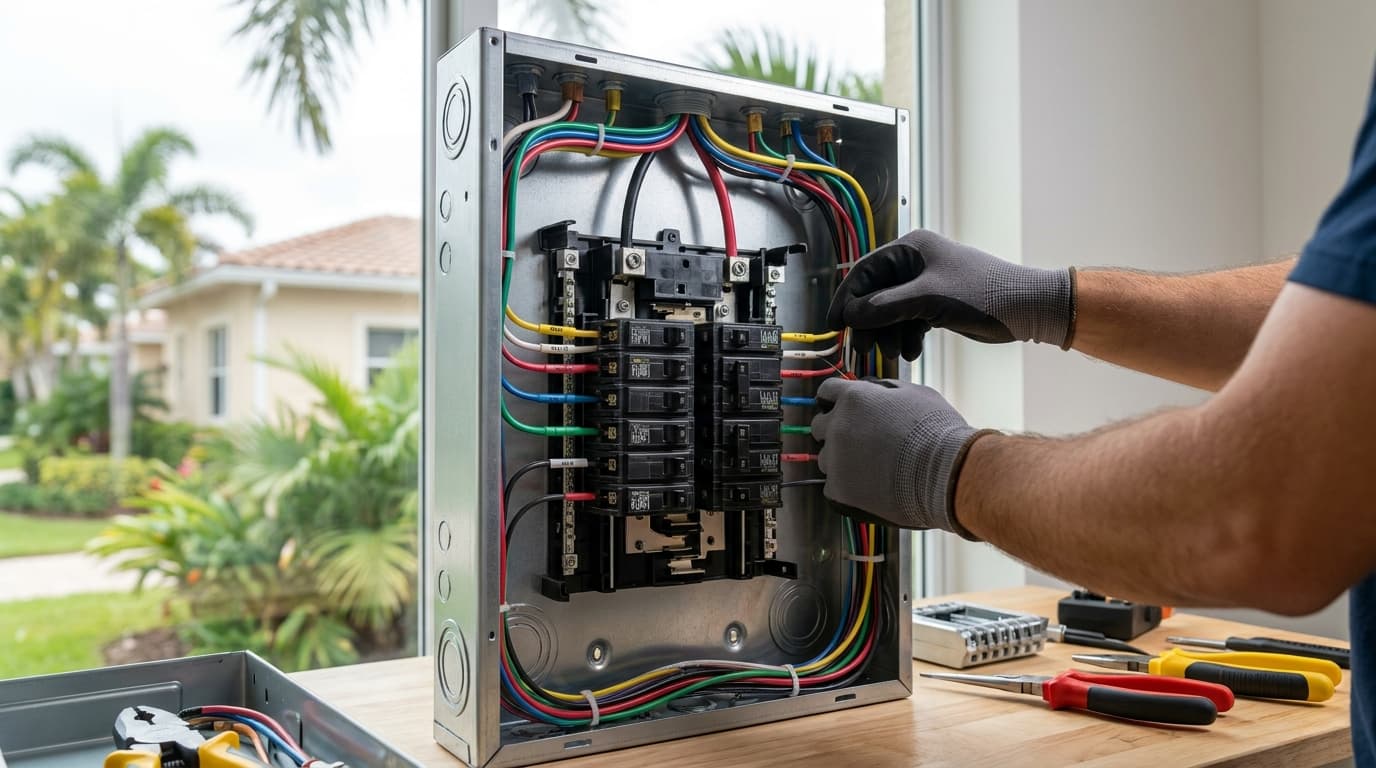

The electrical permit compliance market in Escambia County, Florida is booming. Homeowners are increasingly caught with unpermitted work—improper rewiring, panel upgrades, sub-panel installations, and code violations that threaten their property values and insurance coverage. Many don't know where to start. Electrical contractors who can position themselves as permit compliance specialists are tapping into a lucrative, recession-resistant niche where customers actively seek out qualified professionals.
This isn't about just doing electrical work. It's about solving a specific, high-anxiety problem for homeowners who are desperate for a credible, knowledgeable partner. In Escambia County—where the building department processes hundreds of violation cases annually—contractors who understand the permitting landscape, code requirements, and remediation processes are winning consistent work and commanding premium rates.
If you're an electrical contractor in Escambia County looking to specialize in permit compliance jobs, this guide walks you through the exact steps to build your reputation, prove your expertise, and capture this growing market segment.
Step 1: Master Escambia County's Electrical Code Requirements and Building Regulations
Before you can win permit compliance jobs, you need to become a genuine expert in what Escambia County's building department actually requires.
Understand Florida Statute 553 and the Energy Code
Florida's building code is governed by Florida Statute 553, which mandates the adoption of the Florida Building Code (FBC)—essentially the International Building Code (IBC) adapted for Florida conditions. Electrical work in Escambia County falls under FBC Chapter 27: Electrical.
Key compliance areas that trigger violations and create jobs for contractors:
Critical Warning: Do not assume you know what Escambia County requires. Building departments interpret code with local amendments. Contact the Escambia County Building Department directly at (850) 595-7600 or visit their website to request the most current electrical inspection checklist and any local amendments. One misunderstood requirement can delay a job by 30 days and destroy customer trust.
Get Familiar with the Escambia County Building Department's Process
Call or visit the Escambia County Building Department (Santa Rosa County handles permits for unincorporated Escambia areas, while Pensacola and other municipalities have their own departments). Request:
Electrical inspectors in Escambia are generally professional and willing to discuss code interpretations over the phone. Building these relationships early creates advantages when you submit plans or need clarification on a tricky compliance issue.
Step 2: Develop a Permit Compliance Specialization and Messaging Framework
Specialization is the fastest path to premium pricing and consistent work. Generic "electrical contractor" messaging doesn't cut it anymore.
Define Your Niche Within Permit Compliance
You don't need to handle all permit violations. Choose one or two focus areas where you'll build deep expertise:
| Compliance Specialty | Job Profile | Typical Price Range | Why It Matters |
|---|---|---|---|
| Service Panel Upgrades | 100-amp to 150/200-amp upgrade, full remediation | $1,500–$3,500 | High-value, repeatable, code-driven urgency |
| Sub-Panel Installations | Unpermitted detached garage/shop sub-panel remediation | $2,000–$5,000 | Common violation, high safety risk, justifies premium |
| GFCI/AFCI Compliance | Retrofit entire home or specific circuits with code-required protection | $1,200–$2,500 | Fast turnaround, can be bundled with other work |
| Whole-House Rewiring (Partial) | Updating sections of outdated knob-and-tube or unsafe wiring | $3,000–$8,000+ | Major scope, high safety concern, insurance-mandated |
| Grounding System Remediation | Upgrading grounding electrode, bonding, and main service ground | $800–$2,000 | Often overlooked, frequently cited violation |
Pick two of these to start. You'll become the contractor homeowners and referral sources think of when they need that specific work done.
Craft Your Permit Compliance Positioning Statement
Write a clear, benefit-focused statement that will appear on your website, Google Business Profile, and proposals. Example:
"We specialize in resolving electrical code violations and unpermitted work in Escambia County. We handle the entire process—from initial violation assessment to building department sign-off—so you can get your home compliant without the confusion or delays."
This says:
Watch Related Videos on YouTube
electrical permit compliance jobs Escambia County how to fix guide
Step 3: Build Trust Through Verified Credentials and Transparent Documentation
In the permit compliance niche, trust is everything. Homeowners are usually stressed, sometimes embarrassed about the unpermitted work, and worried about costs or their home's insurability. Contractors who can credibly demonstrate expertise and transparency win these jobs consistently.
Get Your HomeProBadge Verified Contractor Profile
One of the fastest ways to build trust in Escambia County is to get verified on HomeProBadge, a trust platform specifically designed for home service professionals. Your profile includes:
Create your free profile at homeprobadge.com/florida/escambia-county. Upload 3–5 of your best permit compliance projects with clear before/after photos, a brief description of the violation, and the remediation process. This portfolio becomes your competitive advantage.
Obtain and Display Your Florida Electrical License
If you're not already licensed, obtain your Florida Electrical Contractor License through the Florida Department of Business and Professional Regulation (DBPR). There are three levels:
For permit compliance specialization, Licensed Electrical Contractor is ideal. Display your license number prominently on your website, business cards, and proposals.
Document Your Code Knowledge
Create a simple one-page handout or PDF titled "Escambia County Electrical Code Compliance Checklist" that lists the most common violations you see and remediate:
This document signals expertise to homeowners and becomes a lead magnet on your website. Customers appreciate contractors who demystify code.
Pro Tip: When you meet with a prospective permit compliance client, bring printed copies of the relevant sections of the Escambia County Building Department's electrical inspection checklist. Walk through it item-by-item with the homeowner. This simple act—showing them the official code language and explaining how you'll address each item—builds immediate credibility.
Step 4: Create a Permit Compliance Sales and Proposal Process
Permit compliance jobs require a slightly different sales process than routine electrical work. Homeowners need reassurance about the scope, cost, and timeline.
Develop a Standardized Inspection and Quote Process
Step 1: Initial Consultation (30–45 minutes, free or $50)Create a Permit Compliance Job Proposal Template
Your proposal should address homeowner anxieties. Use this structure:
1. Violation SummaryMake your proposal a trust-building document. Use clear language, avoid jargon, and explain every line item.
Build Strategic Referral Partnerships
Permit compliance jobs often come from referral sources who interact with homeowners before the electrical contractor. Build relationships with:
Reach out to these referral sources with a simple message: "I specialize in electrical code violations in Escambia County. If you ever have clients who need help, I'd be happy to provide a quick assessment and referral." Include your phone number and a link to your HomeProBadge profile.
Step 5: Market Your Permit Compliance Expertise in Escambia County
Optimize Your Website and Google Business Profile
Create a dedicated page on your website titled "Electrical Code Violations in Escambia County" or "Permit Compliance Specialist." This page should:
On your Google Business Profile, include:
Create Educational Content Around Escambia County Violations
Start a simple blog or publish articles on LinkedIn that educate homeowners about common violations. Example titles:
Each article should be 1,200–1,500 words, explain a specific violation type, include code references, show examples, and end with a CTA to schedule a consultation.
This content does two things:
Leverage Local Networking
Join or attend:
Step 6: Systematize Your Permit Compliance Operations
Once you start winning these jobs, you need systems to execute them reliably and profitably.
Create a Project Management System
Use a tool like Monday.com, HubSpot, or even a detailed Excel spreadsheet to track:
This system helps you:
Build a Compliance Job Checklist
Create a detailed checklist for every permit compliance project. Example:
Pre-WorkThis checklist ensures nothing falls through the cracks and that every job moves toward closure reliably.
Step 7: Build Your Portfolio and Track Social Proof
Permit compliance work is inherently demonstrable. Use it to build social proof.
Document Every Project
For each permit compliance job, collect:
Publish Your Portfolio on HomeProBadge
HomeProBadge allows you to create a visual portfolio of your work with trust scoring. Upload your permit compliance projects with photos and details. This portfolio becomes a powerful credibility tool when prospects visit your profile.
Generate Case Studies
For your top 2–3 permit compliance projects, write a detailed case study (400–600 words):
Publish case studies on your website. They're incredibly persuasive for prospects in the same situation.
Step 8: Stay Current on Code Changes and Build Credibility as an Expert
Electrical code updates periodically. Staying current ensures you remain credible and compliant.
Monitor Florida Building Code Updates
The Florida Building Code is typically updated every 3 years. Subscribe to:
Continue Your Education
Take annual continuing education (CE) courses. This keeps you sharp and provides talking points in your marketing. Courses relevant to permit compliance include:
Speak at Local Events
Offer to give a 20–30 minute presentation at:
Public speaking establishes you as an authority and generates referrals.
Common Warnings and Pitfalls
Do Not Guess on Code Requirements: If you're unsure about what Escambia County requires, contact the building department or the municipal inspector directly. Guessing can result in rejected work, failed inspections, and damaged reputation. The building department email and phone are your friends—use them liberally.
Do Not Underestimate the Scope: Permit compliance jobs often surface additional issues. A customer calls about a sub-panel violation; during your inspection, you discover the main grounding electrode is compromised. Build contingency into your estimates and communicate clearly when you uncover new issues. Homeowners appreciate transparency; they hate surprise bills.
Do Not Neglect the Customer Communication: The homeowner is typically stressed about the violation and worried about cost and timeline. Over-communicate. Send a text or email after the inspection confirming what you found and next steps. Call to confirm the work date. Take photos during the work and send them to the customer. This ongoing communication builds trust and often leads to referrals and positive reviews.
Key Takeaways for Building Your Permit Compliance Practice
FAQ: Electrical Permit Compliance Jobs in Escambia County
Q: Do I need a special license to handle permit compliance work?
A: No special license is required beyond your standard Florida Electrical Contractor License or Electrician License. However, having a Contractor License (rather than just a Journeyman license) gives you the authority to bid projects, pull permits, and manage larger scopes. If you're already licensed as an electrician, a Contractor License is a natural next step for growing your permit compliance business.Q: How much should I charge for a permit compliance inspection?
A: A typical initial inspection (30–45 minutes, including photos and notes) is billed at $50–$150, depending on your market rate and experience level. Many contractors offer this for free as a lead-generation tool, especially if the customer is likely to hire them for the remediation. The real money is in the compliance work itself, which ranges from $800–$8,000+ depending on the violation type and scope.Q: Can I pull permits on behalf of homeowners, or do they have to pull permits themselves?
A: As a Licensed Electrical Contractor, you can pull permits on the homeowner's behalf. Most contractors do this as part of the service—it's one less thing for the homeowner to worry about. You typically add the permit fee (around $100–$300 in Escambia County for electrical permits) to the project invoice. Always clarify this in your proposal so there are no surprises.Q: How long does it typically take to resolve a permit violation in Escambia County?
A: From initial inspection to final sign-off, a typical permit compliance project takes 30–90 days, depending on the complexity and building department schedule. Simple violations (e.g., GFCI retrofit on a few circuits) might take 2–3 weeks. Complex issues (e.g., full service panel upgrade requiring extensive planning) can take 3+ months. Always communicate realistic timelines to the customer upfront.Q: What's the most common electrical violation you see in Escambia County homes?
A: Based on contractor feedback and building department trends, the most common violations are:These four violation types are your bread and butter. Master them, and you'll have a consistent pipeline of work.
Q: How do I handle a situation where the homeowner wants to do the work themselves instead of hire me?
A: Some homeowners are tempted to DIY after hearing the cost. Your response should be educational and non-pushy:"I understand—this is a significant investment. Here's what I'd encourage you to consider: A building inspector will review your work, and if it doesn't meet code, you'll have to redo it. Plus, you're liable if something goes wrong. My price includes my license, insurance, and guarantee that the work will pass inspection the first time. Most of my customers find that peace of mind is worth the cost."
Often, homeowners realize that the hassle and risk of DIY isn't worth saving a few hundred dollars. But some will choose to DIY anyway—that's okay. You've positioned yourself as the professional alternative, and they may circle back if they run into problems.
Q: Should I specialize in permit compliance exclusively, or keep it as part of my broader electrical business?
A: Start with specialization, then expand. Build your reputation as a permit compliance expert first (6–12 months). Once you've established yourself and have a steady referral pipeline, you can take on general electrical work. Specialization makes marketing easier and commands premium pricing. Once you're established and busy, you have more flexibility to diversify.Q: How do I build relationships with the building department inspectors?
A: Be professional, prepared, and respectful of their time. When you schedule inspections:These relationships pay dividends. Inspectors respect contractors who know code and do things right the first time. That respect often translates to smoother inspections and faster sign-offs.
Q: What should I include in my HomeProBadge contractor profile to attract permit compliance customers?
A: Your HomeProBadge profile should include:Your profile is often the first thing a prospective customer sees. Make it authoritative and customer-focused.
Q: How do I stay competitive if other contractors in my area also specialize in compliance work?
A: Compete on expertise and customer experience, not price. If two contractors are bidding on a job:Contractor B wins most of the time. Customers understand that expertise and reliability are worth a premium. Position yourself as the best, not the cheapest.
Ready to Start Building Your Permit Compliance Business?
Permit compliance is a specialized, high-value niche for electrical contractors in Escambia County. Homeowners with violations are actively looking for qualified professionals who understand the code and can guide them through remediation. Your opportunity is to position yourself as that expert.
Start by creating your free HomeProBadge verified contractor profile at https://www.homeprobadge.com/florida/escambia-county. Upload your best permit compliance projects, get verified, and start building trust with local homeowners searching for contractors they can rely on.
From there, implement the steps in this guide: master local code, specialize in 1–2 compliance areas, create educational content, build referral partnerships, and systematize your operations. In 6–12 months, you'll have a recognizable reputation in Escambia County as a permit compliance specialist—and a steady pipeline of profitable work.
Your expertise solves a real, urgent problem for homeowners. That's a powerful competitive advantage. Now go execute.