

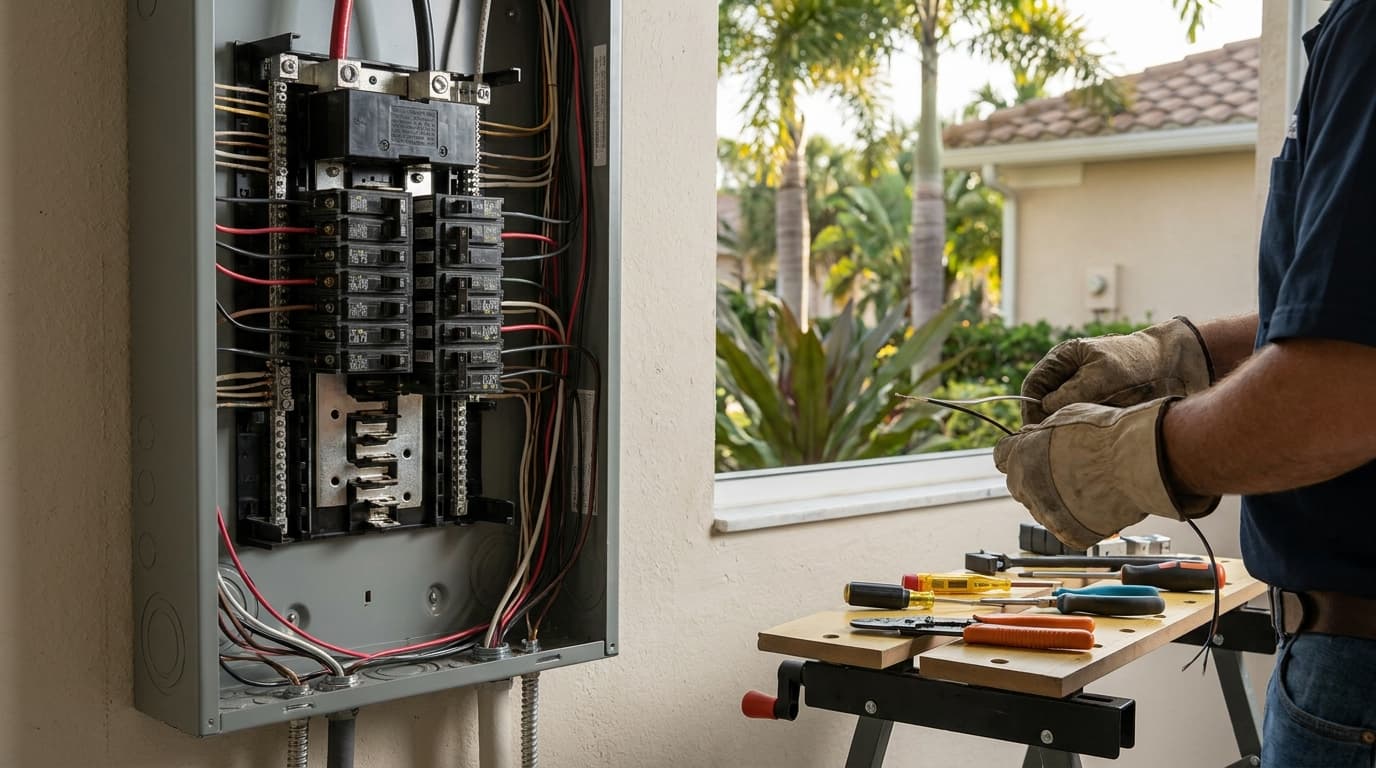

Permit violations are a $2+ billion problem across Florida's residential market—and Hillsborough County is ground zero for this opportunity.
Whether a homeowner added a garage without permits, installed a pool electrical system incorrectly, or hired an unlicensed electrician, the county's permitting system eventually catches up. When it does, they need a licensed electrical contractor who understands both the violation and the path to correction.
Right now, most electrical contractors in Hillsborough County are reactive: they wait for calls. But the contractors who are winning are proactive—they're positioning themselves as the go-to specialists for permit compliance jobs, the high-margin work that keeps homeowners coming back once they've hit a regulatory wall.
This guide shows you how to systematically win more permit compliance electrical work in Hillsborough County. You'll learn where violations come from, how to identify prospects, how to price compliance work, and how to build the credibility signals that turn homeowners into referral engines.
The Permit Compliance Opportunity in Hillsborough County
Hillsborough County—home to Tampa, Valrico, Plant City, and over 1.4 million residents—processes thousands of electrical permits annually. But for every permitted job, there are multiples of unpermitted or incorrectly permitted installations that eventually trigger code violations.
Why? A combination of factors:
Homeowner cost avoidance. Skipping permits saves money upfront (often 10-20% of project cost). Homeowners reason they'll "cross that bridge later." Contractor turnover and poor documentation. Even well-intentioned contractors leave jobs incomplete or with inadequate inspections. Records get lost, final inspections aren't scheduled. Property transfers and mortgage refinancing. Lenders and title companies now routinely flag unpermitted work during transactions. A homeowner selling or refinancing suddenly needs violations corrected—fast. Insurance claims. Damage from electrical fires, water intrusion, or equipment failure often triggers insurer investigations that uncover permit violations. County enforcement initiatives. Hillsborough County's permitting department (under Florida Statute 553, the Florida Building Code Adoption Act) conducts periodic compliance sweeps and sends violation notices. This creates a predictable influx of homeowners in crisis mode.The key insight: These aren't price-shopping customers. They're desperate to solve a regulatory problem. They'll pay for a licensed contractor who can navigate the fix correctly.
Where Permit Violations Come From (And Where to Find Them)
Understanding the sources of violations helps you identify prospects before they get a county notice.
Common Electrical Violations in Hillsborough County
Unpermitted additions and renovations. New circuits, subpanels, or equipment installed without permits are the #1 source. Kitchen renovations, bathroom upgrades, ADU (accessory dwelling unit) wiring. Pool and spa electrical systems. Improper bonding, missing GFCI protection, undersized circuits, or incorrect grounding. These are highly regulated under Florida Statute 553.902 and trigger frequent violations during property transfers. Exterior and landscape lighting. Buried cables without proper conduit, unrated fixtures, or inadequate grounding in wet areas. Service upgrades done partially or incorrectly. Homeowners or handymen who upgrade from 100A to 150A service without proper disconnects, bonding, or main breaker coordination. Detached structures (guest houses, workshops, sheds). Separate circuits, subpanels, or lighting installed without inspection. Complex bonding and grounding requirements often missed. EV charging station installations. Growing category. Homeowners install Tesla chargers or Level 2 chargers without proper permit, dedicated circuits, or load calculation. Backup generator systems. Improper transfer switch installation, fuel line placement, or load-shedding logic creates code violations and safety hazards.How to Identify Prospects
1. County Violation Notices (Public Records)Hillsborough County's permitting office publishes violation notices. You can:
These are warm leads. Homeowners have received official notice and are legally obligated to remedy the violation.
2. Property Transfer Records and Mortgage RefinancesTitle companies and lenders now require electrical inspections before closing. You can:
Insurance companies investigate electrical fires, water damage, and equipment failures. If unpermitted work is found, they often require correction before settling.
Homeowners in Tampa, Valrico, and Plant City post on Nextdoor, Facebook groups, and Reddit asking about permit violations. Monitor local groups and respond with education (not hard sales). "Hey, I'm a licensed electrician in Hillsborough County. I work on these issues. Happy to give you a free assessment."
5. Direct Outreach to Older PropertiesProperties built before 1990, especially in unincorporated Hillsborough County, often have legacy unpermitted work. Cross-reference county assessor records with permit records to identify likely prospects.
Watch Related Videos on YouTube
electrical permit compliance jobs Hillsborough County how to fix guide
Step-by-Step: How to Win Permit Compliance Jobs
Step 1: Audit Your Credentials and Certifications
Before you market yourself, ensure you're fully qualified and compliant.
Florida licensing: Confirm your electrical contractor license is active with the Florida Department of Business and Professional Regulation (DBPR). Violations work requires a Florida-licensed electrician or contractor—no exceptions. Continuing education: Florida Statute 553.505 requires electricians to complete 18 hours of continuing education every three years, with at least 6 hours in electrical code. Take a Hillsborough County–specific code course if available. Know the current Florida Building Code version your county enforces (currently the 2020 Florida Building Code, based on the 2020 IBC). Background and bonding: A clean background and solid bonding position are essential. Homeowners choosing a contractor for compliance work are risk-averse; they need proof you won't introduce more problems. Get HomeProBadge verified. This is critical for permit compliance work. A HomeProBadge identity-verified and background-checked badge ($9.95/year, renewed annually) signals to homeowners that you've passed verification checks. When a homeowner is already stressed about a violation, they'll trust an electrician with a verified badge. Plus, your profile is listed in the HomeProBadge verified contractor directory, searchable by county and trade—so homeowners hunting for an electrical compliance specialist in Hillsborough County find you.Step 2: Specialize Your Marketing and Service Offering
Instead of being a general electrician, become "the permit compliance electrician in Hillsborough County."
Define your niche. Examples:Pick one or two niches initially. Specialization builds authority.
Update your website and Google My Business.- What violations are (with local examples).
- The risks of ignoring them (insurance denial, sale/refinance delays, fines, safety hazards).
- Your process (inspection → remediation plan → permits → inspection → closure).
- Timeline and cost estimates for common violations.
Homeowners are searching for "electrical permit violation Hillsborough County" or "how to fix unpermitted electrical work." Rank for these with blog posts, YouTube videos, or PDF guides.
Example topics:
Step 3: Develop a Compliance Assessment Process
When a homeowner calls about a violation, your response sets the tone. A systematic, transparent assessment process builds trust and closes deals.
Free initial assessment (30-45 minutes on-site or virtual).- Unpermitted circuits, subpanels, or service upgrades.
- Code violations (improper grounding, bonding, GFCI, conduit, wire sizing, or breaker ratings).
- Safety hazards (loose connections, amateur workmanship, fire risks).
- Missing disconnects or shutoffs.
- Documentation gaps (no inspection tags, no final sign-off).
- Some violations require simple fixes (add a missing GFCI outlet, bond a subpanel, relocate a cable).
- Others require full permit applications, inspections, and rewiring.
- A few might require licensed engineer involvement or architect consultation.
- Itemize the work required.
- Note permit applications you'll handle.
- Estimate timeline (e.g., "Permit approval typically 2-3 weeks; work + inspection 2-3 days").
- Clarify county inspection requirements and your role.
Step 4: Master the Hillsborough County Permitting Process
Your competitive advantage is knowing Hillsborough County's rules better than competitors.
Key contacts and resources:| Agency/Resource | Contact | Relevance |
|---|---|---|
| Hillsborough County Building & Development Services | 813-272-6990 or bdsmain@hillsboroughcounty.org | Permits, inspections, violation inquiries |
| City of Tampa Permitting (if within city limits) | 813-274-8681 | Jurisdiction-specific codes and timelines |
| Florida Building Code Adoption Act | Florida Statute 553 | Statewide baseline; Hillsborough adopts with amendments |
| Hillsborough County Code | Chapter 8 (Building & Development) | Local amendments to FL Building Code |
| DBPR Licensing | www.myfloridalicense.com | Verify your license; understand contractor requirements |
- Service panel capacity and load calculations.
- Wire gauges, breaker ratings, and circuit details.
- Bonding and grounding diagrams.
- Existing inspection tags or permits (if available).
Warning: Missing or incorrect documentation delays permits by 4-6 weeks. Invest in templates and checklists now. Small errors cost big time later.
Step 5: Develop Tiered Pricing for Compliance Work
Permit compliance jobs have variable scopes and margins. Price strategically.
Service tier framework:| Scope | Typical Work | Pricing Model | Example |
|---|---|---|---|
| Minor Fix | Add GFCI, bond existing subpanel, relocate cable, add disconnect | Hourly + permit fees | $500–$1,500 |
| Moderate Remediation | New circuit, upgrade breaker/wire, fix grounding, partial rewiring | Hourly + permit fees + materials | $1,500–$5,000 |
| Major Overhaul | Service upgrade, full panel replacement, extensive rewiring, new subpanel | Fixed bid (hourly estimate + 15-20% contingency) | $5,000–$15,000+ |
Tip: Offer a free compliance assessment; charge for the remediation plan and estimates. This builds pipeline while demonstrating expertise.
Step 6: Build Credibility Signals and Social Proof
When homeowners are stressed about violations, they buy trust—not price.
Document your work professionally.Example: "Unpermitted Subpanel in Valrico—Closed in 3 Weeks"
Step 7: Build a Referral Network
Once you've done 5-10 compliance jobs, your network will generate leads passively.
Key referral relationships: Real estate agents and brokers: Title inspections frequently uncover unpermitted electrical work. Agents need a go-to contractor who's reliable and fast. Offer to give agents a 5-minute "permit compliance checklist" to discuss with sellers. When a client needs electrical corrections, the agent refers to you. Mortgage lenders and loan officers: Lenders flag unpermitted work before approval. Loan officers need contractors who can remediate quickly. Be the contractor they trust. Ask for a referral relationship. Insurance agents and adjusters: Claim investigations trigger compliance requirements. Build a referral relationship with 3-5 local agents. Attend their quarterly meetings. Offer a discount for mutual referrals. Inspectors and engineers: Home inspectors, structural engineers, and pool contractors often find electrical violations. Refer them business; they'll refer you back. County staff (informally): Building inspectors and permit technicians know contractors. Be professional, responsive, and code-compliant. Word travels fast. Homeowner referrals: Happy compliance customers are evangelists. Offer a $200 referral bonus for every referred client who books a job. Track referral sources in your CRM.Step 8: Systems and Scaling
As you land more jobs, systematize to maintain quality and speed.
CRM and project management:Use a tool like HubSpot, Jobber, or ServiceTitan to:
Create templates for:
Templates save hours per job and reduce errors.
Hire and train.As demand grows, hire a second licensed electrician or apprentice. Document your compliance process so new team members can replicate it. Train them on Hillsborough County procedures and code requirements.
Measure and optimize.Track KPIs:
Double down on high-ROI lead sources. Improve weak conversion rates with better sales or service process.
Key Warnings and Common Mistakes
Warning #1: Don't operate outside your license. Permit compliance work must be performed by a licensed Florida electrical contractor or engineer. Fines ($500–$5,000+) and legal liability are severe. Verify every contractor's license on DBPR's website.
Warning #2: Know Hillsborough's specific amendments to the Florida Building Code. The 2020 Florida Building Code (State baseline) is adopted with local amendments in Hillsborough County Code Chapter 8. Violations occur when contractors apply statewide code without local amendments. Review the county amendments before submitting permit applications.
Warning #3: Pool and spa electrical is heavily regulated and high-risk. Florida Statute 553.902 and National Electrical Code (NEC) Article 680 impose strict bonding, grounding, and GFCI requirements. A single mistake triggers violations and liability. If pool electrical isn't your expertise, partner with or refer to a specialist.
FAQ
Q: Can I bill for a compliance assessment even if the homeowner doesn't hire me?
A: Depends on your positioning. If you market "free assessments," honor it. But you can offer:
Q: How long does a typical permit closure take in Hillsborough County?
A: 4–8 weeks for straightforward violations (missing GFCI, subpanel bonding). Complex violations (service upgrades, new subpanels, extensive rewiring) can take 8–16 weeks. Plan and set expectations accordingly.
Q: What if the homeowner wants to "fix it themselves" to save money?
A: Educate them on the risks:
Offer your compliance service as risk mitigation. Most homeowners choose professional remediation once they understand the stakes.
Q: Should I offer financing or payment plans?
A: Yes. Compliance work is often unexpected and emergency-driven. Partner with a contractor financing platform (e.g., Affirm, LendingClub for contractors) so homeowners can spread payments over 6–12 months. Offering financing increases close rates by 20–30%.
Q: How do I compete against larger contractors or franchises?
A: Specialization and responsiveness. Large contractors handle everything poorly. You focus on compliance, respond to calls in 24 hours, and follow up religiously. Also, be local—be the contractor homeowners find first in Hillsborough County searches. Maintain a strong Google presence, HomeProBadge profile, and referral network.
Q: Is compliance work recurring, or one-off?
A: Mostly one-off. But satisfied compliance customers often call you back for other electrical work (new circuits, upgrades, repairs). Build a customer relationship and stay top-of-mind. Offer annual electrical safety inspections as upsell.
Q: What if a violation involves a previous contractor's poor work?
A: Document everything. Take photos, note what failed code inspection, and provide a written explanation to the homeowner. Protect yourself: ensure all your work is permitted and inspected. If the homeowner asks you to cover previous contractor's mistakes, charge separately for that remediation.
The Competitive Edge: Why Now Is the Time
Permit compliance isn't sexy, but it's lucrative. Margins are 30–50% higher than standard installations. Customers are motivated and less price-sensitive. Demand is growing as county enforcement tightens and property transactions increase.
Most electrical contractors ignore this niche. Those who specialize will win.
Start with one strategy: either target county violation notices, or build a referral network with real estate agents. Do one or two compliance jobs flawlessly. Document your work. Get HomeProBadge verified. Tell everyone you meet that you specialize in permit compliance.
Within 6 months, compliance work will be 20–30% of your revenue. Within a year, you'll have a waiting list.
Next Steps: Build Your Compliance Practice Today
Ready to dominate permit compliance work in Hillsborough County? Start here:
Permit compliance jobs are sitting in Hillsborough County right now—waiting for a contractor who knows the code and can close the deal. Be that contractor. Start today.
Questions or ready to get started? Create your free verified contractor profile on HomeProBadge (https://www.homeprobadge.com/florida/hillsborough-county) and start winning more compliance jobs.