



A standard septic inspection for a real estate transaction typically costs $400 to $650, while routine maintenance checks run closer to $100 to $250. More involved evaluations can reach $1,300, depending on the property, access, pumping requirements, and diagnostic work involved.
That price gap surprises homeowners because “septic inspection” describes two very different services. A maintenance check may involve a visual review and a basic assessment of system condition. A transaction inspection must often produce enough evidence for a buyer, lender, seller, and local authority to accept the system, which means more labor, documentation, and testing.
The right budget depends on the purpose of the inspection, not just the presence of a septic tank. If you're maintaining a home, budget for the lower tier. If you're buying or selling, assume the inspection will cost more and confirm exactly what's included before scheduling it.
The Real Cost of a Septic Inspection
The most useful answer to “how much is a septic inspection” is a range tied to scope. Routine visual checks commonly fall between $100 and $250, while detailed pre-sale inspections commonly range from $300 to $650. Camera or scoping work can add approximately $125 to $500, because the inspector needs additional equipment, access, and time to evaluate buried piping and tank interiors, as documented by The Septic Guide's inspection cost breakdown.
That means your neighbor may have paid close to the maintenance price while your real estate inspection quote lands near the upper end. Neither quote is automatically unreasonable. They may cover entirely different work.
Maintenance checks versus transaction inspections
A routine check is usually designed to answer a practical homeowner question: does the system appear to be operating normally, and are there warning signs that require attention? The inspector may review the tank area, look for odors or surfacing wastewater, and assess visible components.
A transaction inspection has a higher burden. The buyer needs information about the tank, baffles, distribution components, drain field, and any visible evidence of failure. The inspector may need to uncover lids, coordinate pumping, document findings, and prepare a report that can withstand scrutiny during a property sale.
Practical rule: Ask for a written scope before you compare prices. A low quote is only a bargain if it covers the work your lender, buyer, seller, or local authority requires.
The national cost guides collected by Angi's septic inspection cost guide place the broader market around an average of $500 to $550, with common pricing from $200 to $900. More detailed Title 5-style or pre-sale evaluations for larger or complex properties can reach $1,300, while some routine maintenance checks begin near $100 to $150.
The practical conclusion is clear. Don't ask only, “What's your inspection fee?” Ask whether the fee includes tank access, pumping, cameras, drain-field evaluation, written documentation, and any required transaction forms. Those details determine whether you're buying a meaningful evaluation or just a quick glance at the yard.
National Averages and Local Price Swings
National averages provide a useful starting point, but they aren't a quote for your property. Major cost guides cluster standard transaction work in the mid-hundreds, while independent quote data can land far lower when it includes simpler inspections and lower-cost markets.
One quote-based analysis reviewed 312 licensed-inspector estimates and found an average of about $184. The same analysis showed routine inspections around $200 to $250 and pre-sale inspections around $400 to $700, as reported in HomeAdvisor's septic inspection cost analysis. That difference doesn't prove one source is wrong. It shows how strongly geography, inspection depth, tank access, pumping, and transaction requirements influence the bill.
Septic Inspection Pricing Tiers
| Inspection Type | Average Cost Range | Primary Use Case |
|---|---|---|
| Routine visual or maintenance check | $100 to $250 | Ongoing homeowner maintenance |
| Standard transaction inspection | $400 to $600 | Home purchase or sale |
| Comprehensive pre-sale inspection | $300 to $650 | Buyer, seller, or lender due diligence |
| Camera or scoping add-on | $125 to $500 | Pipe and tank diagnostics |
| Complex property or detailed Title 5-style evaluation | Up to $1,300 | Larger properties or demanding compliance reviews |
These tiers reflect the historical effect of Massachusetts' Title 5 framework, which helped standardize septic evaluations during real estate transactions. Cost guides commonly associate that framework with a standard inspection tier around $400 to $600, because a transfer inspection requires more documentation and a broader review than ordinary upkeep. HomeAdvisor's Title 5 inspection guide provides that regulatory and pricing context.
Local rules can change the required paperwork, inspection method, and timing. Before you accept a quote, check whether your county treats septic work as a permitted plumbing or wastewater activity. This guide to plumbing permit requirements can help you identify the questions to ask your inspector and local authority.
Why quotes vary so sharply
A quote from a licensed inspector in a low-cost market may cover a straightforward inspection with easy tank access. A quote in a more expensive area may include excavation, pumping coordination, photographs, detailed reporting, or a form required by the municipality or lender.
The purpose of the inspection matters just as much. A homeowner checking system condition has more flexibility to choose a limited review. A buyer under contract has less room to improvise, especially if the inspection contingency or lender requirements specify particular tests.
Use the national figures as a screening tool. If a transaction quote is far above the usual range, ask for an itemized explanation. If it's far below the range, ask what the inspector excludes. The cheapest invoice can become the most expensive option when it fails to identify a problem or doesn't satisfy the transaction requirements.
What Inspectors Actually Check During the Visit
A proper septic inspection is physical work, not a five-minute walk around the lawn. The inspector needs to trace how wastewater moves from the house to the tank and then through the drain field. The more complete the evaluation, the more likely the inspector will need access to buried components, tank interiors, and distribution areas.
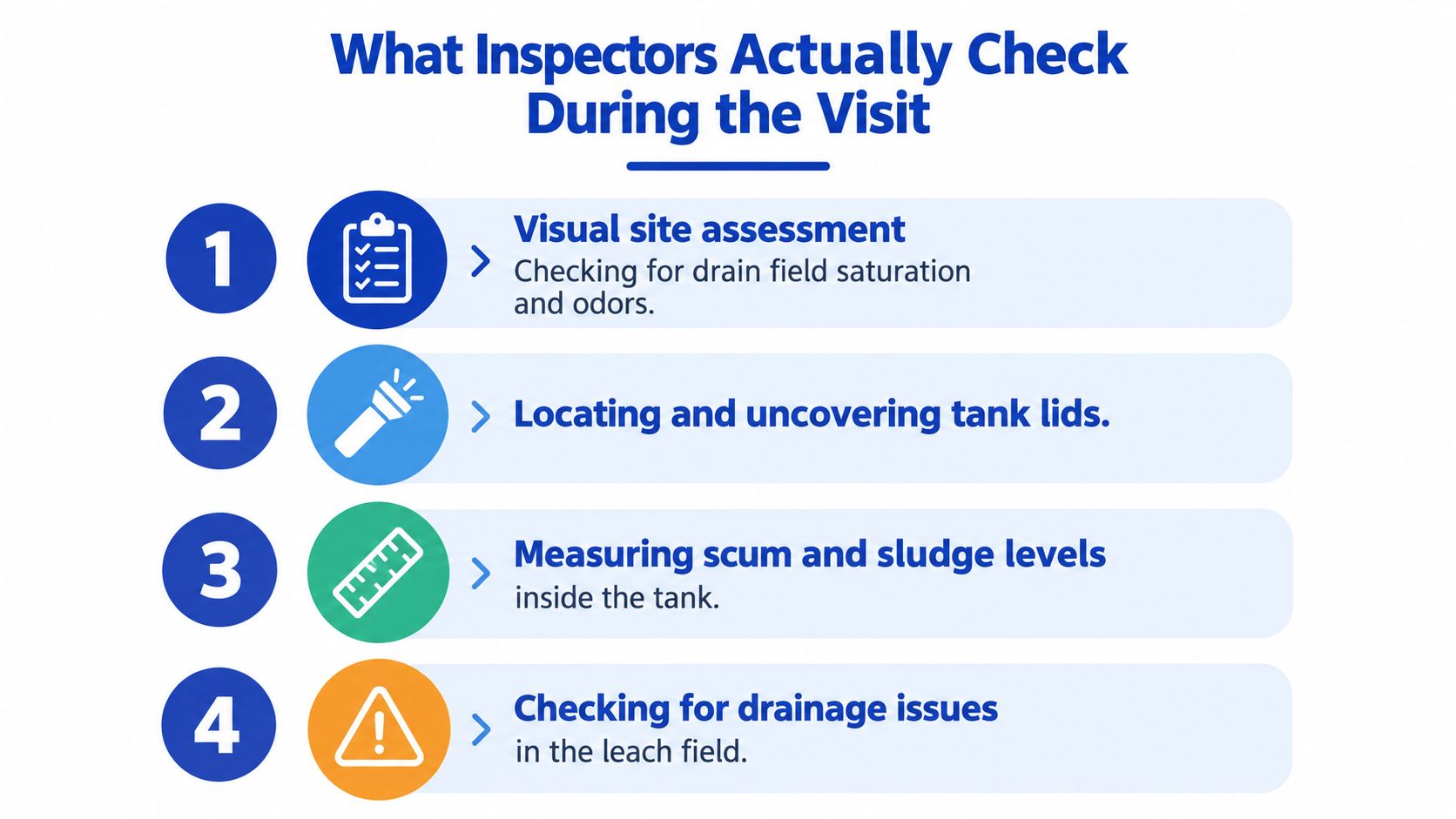
The inspection process
First, the inspector assesses the site. They look for wet or unusually green sections of the drain field, standing water, odors, sewage surfacing, erosion, and other signs that the system isn't dispersing wastewater correctly. They also review visible risers, cleanouts, pumps, alarms, and electrical components where applicable. Next, they locate and access the tank. Tank lids may sit below soil, turf, paving, or landscaping. Uncovering them takes labor, and the difficulty of that access is one reason two properties with similar systems can receive different quotes. Inside the tank, the inspector examines the baffles and liquid levels. Baffles help control the flow of wastewater and keep solids from moving toward the drain field. The inspector may assess sludge and scum levels, look for structural concerns, and determine whether pumping is necessary for a useful evaluation. Finally, the inspector evaluates the distribution and drain-field areas. They look for signs of hydraulic overload, poor drainage, surfacing effluent, and uneven distribution. A visual inspection can't guarantee that a system will never fail, but it can identify visible conditions that deserve immediate attention.A hydraulic load test is more demanding than a visual walkthrough. It evaluates how the system responds when water enters it, which can help expose drainage or distribution problems that aren't obvious during a dry visit. Whether that test is required depends on local rules, the inspector's scope, and the transaction requirements.
A professional report should tell you what the inspector examined, what wasn't accessible, and which findings need follow-up. “Inspected” doesn't mean every buried component was fully exposed.
Don't confuse septic inspection work with sewer-line repair. If the problem appears to involve a shared or lateral sewer line rather than the tank or drain field, a separate plumbing specialist may be appropriate. These tips for fixing sewer lines offer useful context for separating line-repair questions from septic-system questions.
Factors That Drive the Price Up or Down
The physical property usually explains more of the quote than the inspector's label for the service. A tank with exposed risers and a clear access path takes less time to evaluate than one buried beneath mature landscaping, concrete, or compacted soil.
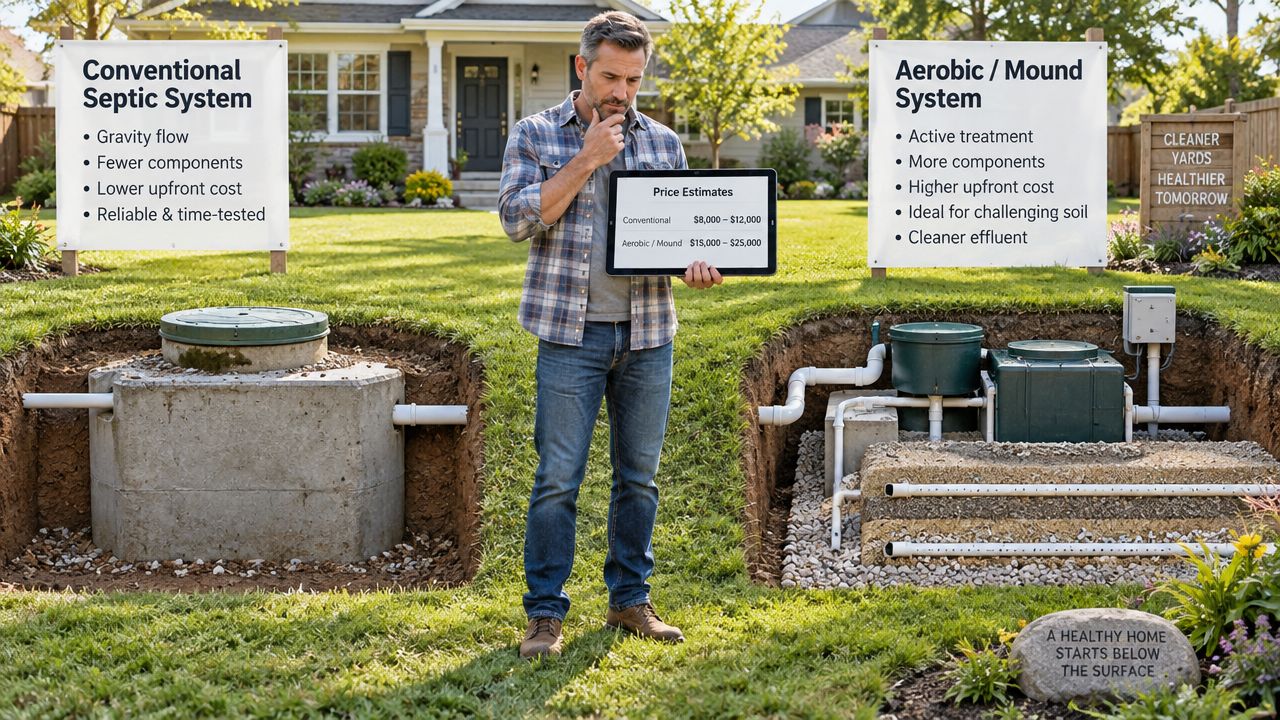
Property conditions that affect labor
Tank access is the first variable to investigate. Ask whether the quote assumes exposed lids or includes locating and uncovering them. If the inspector has to dig through soil or remove obstacles, the visit becomes slower and more labor-intensive. System design also matters. A conventional gravity system may require a different review than an aerobic treatment system, mound system, pump system, or other engineered arrangement. Specialized components create more inspection points and may require an inspector with the right experience. Property size changes the scope. A larger home or property may have a larger tank, multiple tanks, separate distribution areas, or a more complicated drain field. The inspector may need to trace more components and document more conditions. Camera diagnostics add equipment and time. Scoping buried pipes can reveal blockages, breaks, root intrusion, or improper connections that a surface review can't confirm. The camera itself isn't the only cost. The inspector also needs access points, recording capability, interpretation, and a clear report.Use your property to predict the quote
Walk the property before requesting estimates. Look for visible risers, cleanouts, inspection ports, pump alarms, saturated ground, strong odors, and areas where vehicles or heavy equipment have crossed the drain field. Take photographs and send them to prospective inspectors.
Don't cover the tank access with new soil or landscaping before a transaction inspection. Keep pets away from work areas, leave gates open, and provide any septic permits, pumping records, site plans, or prior reports you have. Better preparation may not remove every surcharge, but it can prevent avoidable delays and return visits.
A detailed quote should separate base inspection labor from optional diagnostics. Ask these questions directly:
The price is justified when the scope matches the property's complexity. It isn't justified when a contractor charges for advanced diagnostics but performs only a superficial visual check.
Additional Fees and Hidden Costs to Expect
The base inspection fee rarely tells the whole story. Pumping, dye testing, soil evaluation, repairs, permit work, and return visits can change the final invoice, especially when a buyer needs a quick answer before closing.
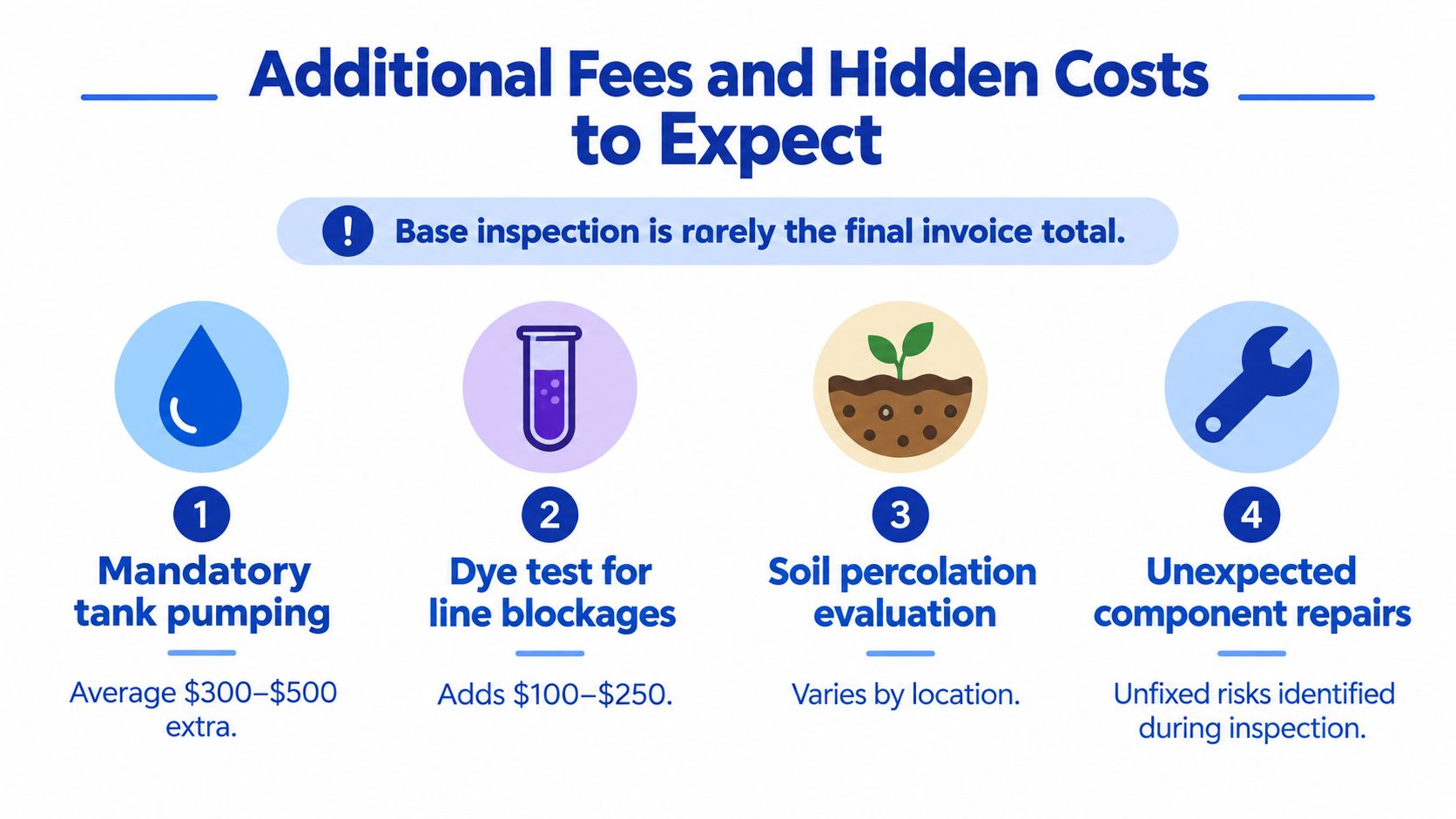
Read the estimate line by line
Tank pumping may be required. Some inspectors need the tank pumped to see structural details, inspect baffles, or satisfy a local transaction standard. Others can perform a limited evaluation without pumping. Don't approve it automatically. Ask whether pumping is required by the authority, the lender, the inspector's method, or only recommended. Dye testing can answer a narrow question. A dye test may help trace flow or investigate suspected connections and blockages. It isn't a substitute for a full inspection, and it may be unnecessary when the concern is routine maintenance. Soil or percolation work is a separate evaluation. A soil assessment may be appropriate when the drain field's capacity, expansion options, or replacement feasibility must be considered. It shouldn't appear as an unexplained line item on a basic inspection quote. Repairs are not inspection costs. The inspector may identify damaged lids, failing baffles, broken pumps, or drainage problems. Get a separate repair estimate, and be cautious if the same company pressures you to approve expensive corrective work immediately.Invoice check: Every extra charge should answer three questions. Who requires it, what problem does it solve, and will the written report identify the result?
A real estate transaction creates time pressure, which makes surprise fees especially frustrating. Put the inspection deadline, required report format, pumping expectations, and responsibility for additional work into writing before the visit.
If local permits or municipal records are involved, review the likely administrative charges before work begins. This overview of plumbing permit costs can help you distinguish inspection labor from permit-related expenses.
For a visual explanation of common add-ons and inspection concerns, use the following resource:
The best protection is an itemized estimate with a not-to-exceed amount for optional work. If the inspector discovers an issue that requires more time, you should know before the invoice grows.
How to Find and Vet a Qualified Inspector
Price should be your third screening criterion, not your first. Start with the inspector's license or certification requirements in your jurisdiction, experience with your system type, and ability to produce a report accepted by the buyer, lender, or local authority.
A practical vetting process
Ask for the inspector's business name, license details, insurance confirmation, and sample report. A credible professional should explain what the report covers, what remains inaccessible, and which conditions trigger a recommendation for pumping, camera work, or further evaluation.
Call the local wastewater or environmental health office when the rules aren't clear. Confirm whether the inspector must hold a specific license, whether the transaction requires a particular form, and whether permits or prior records are available for the property.
Check references that resemble your situation. A contractor who mostly handles routine maintenance may not be the right choice for a complicated purchase involving an aerobic system, buried tanks, a pump chamber, or a lender deadline.
Ask for proof, not promises. A polished website doesn't prove that an inspector is licensed, insured, experienced, or qualified to satisfy a transaction requirement.
A verification platform can make the documentation easier to review. HomeProBadge allows homeowners to search for service professionals with identity, background, licensing, and insurance information, along with verified project records where available.
You should also keep the inspection separate from unrelated plumbing work. For example, a company discussing water heater replacement San Antonio may offer useful plumbing expertise, but that doesn't automatically establish septic inspection qualifications in your county.
Use this local contractor search guide to build a shortlist, then verify each candidate against your local requirements. Get at least two written quotes when timing allows, but compare scope rather than headline price.
A strong inspector will tell you when they can't answer a question without another specialist. That honesty is valuable. The wrong inspector gives you false confidence, then leaves the buyer, seller, or new homeowner to discover the missing information later.
Money-Saving Tips and Maintenance Strategies
The cheapest septic inspection is the one you don't have to rush through during a home sale. Proactive maintenance gives you time to identify access problems, repair minor defects, preserve records, and address drainage concerns before a lender or buyer is waiting for an answer.
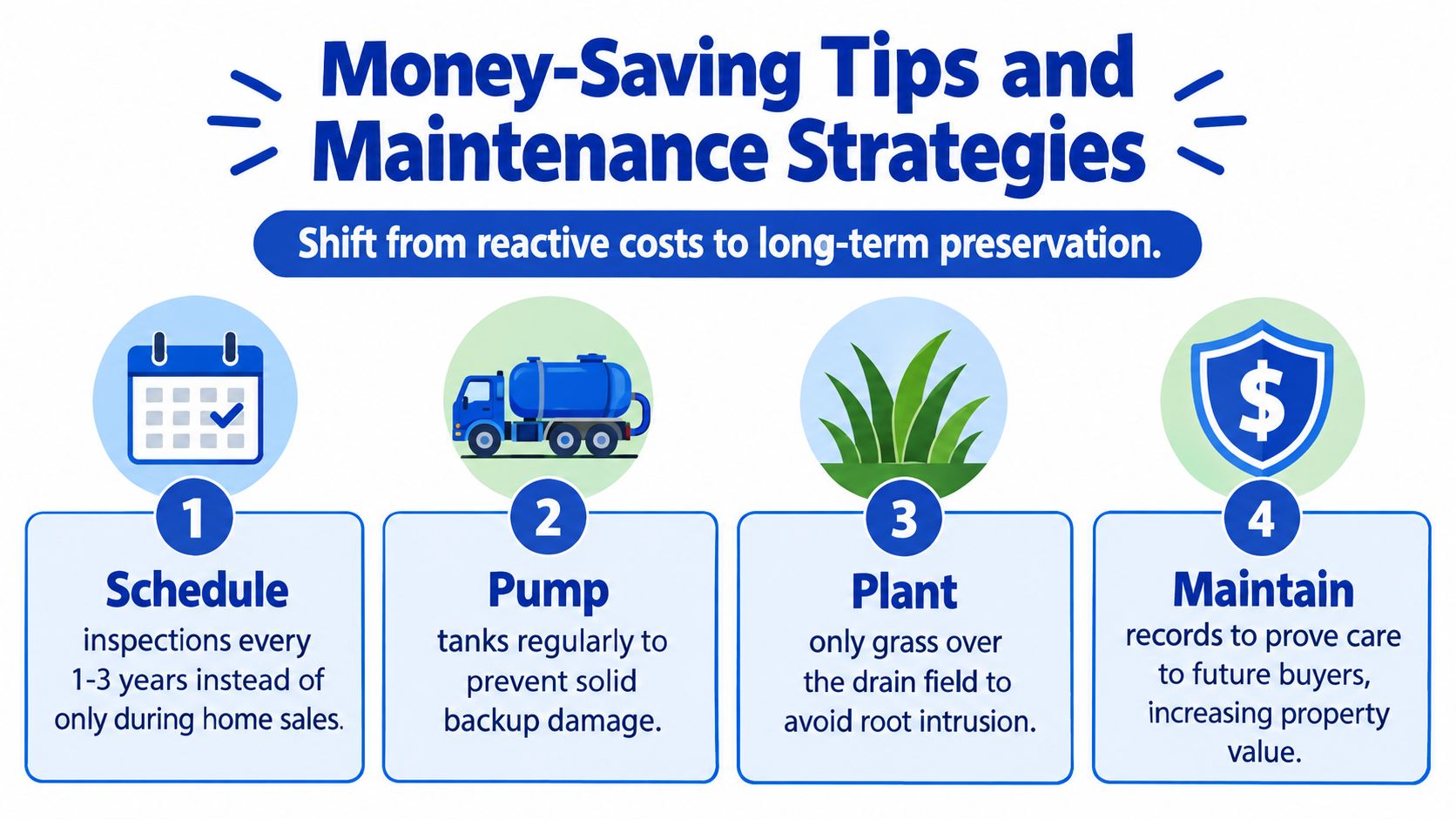
Protect the system between inspections
Spread laundry and other high-volume water use across the week instead of sending sudden surges into the system. Fix leaking toilets and faucets promptly. Excess water can overload a drain field and make a borderline system look worse.
Keep grease, harsh chemicals, paint, solvents, wipes, and non-degradable products out of the drains. Ordinary household use still creates solids, but careless disposal adds material the tank and soil weren't designed to handle.
Keep vehicles, sheds, pools, and heavy equipment off the drain field. Plant grass there rather than deep-rooted trees or shrubs, and maintain a visible record of the tank location. Easy access lowers future labor and prevents accidental damage.
Build a useful property record
Keep inspection reports, pumping receipts, repair invoices, permits, photographs, and contractor contact details in one file. A future buyer can evaluate the system more efficiently when you can show what was done and when.
Schedule maintenance before symptoms appear. Waiting for sewage odors, slow drains, wet ground, or backups turns a manageable service visit into an urgent investigation. A local professional can recommend an appropriate inspection and pumping schedule based on the system's design and household use.
For homeowners, the smart budgeting strategy is simple: reserve money for regular upkeep, keep the tank accessible, and don't treat a transaction inspection as the first time anyone has looked at the system. That approach won't eliminate every failure, but it gives you more control over the timing, scope, and cost of necessary work.
HomeProBadge helps homeowners find verified home service professionals and review credentials, insurance, licensing information, and proof of past work before booking. If you're budgeting for a septic inspection or preparing to sell, visit HomeProBadge to compare qualified local options and organize the documentation you may need.