

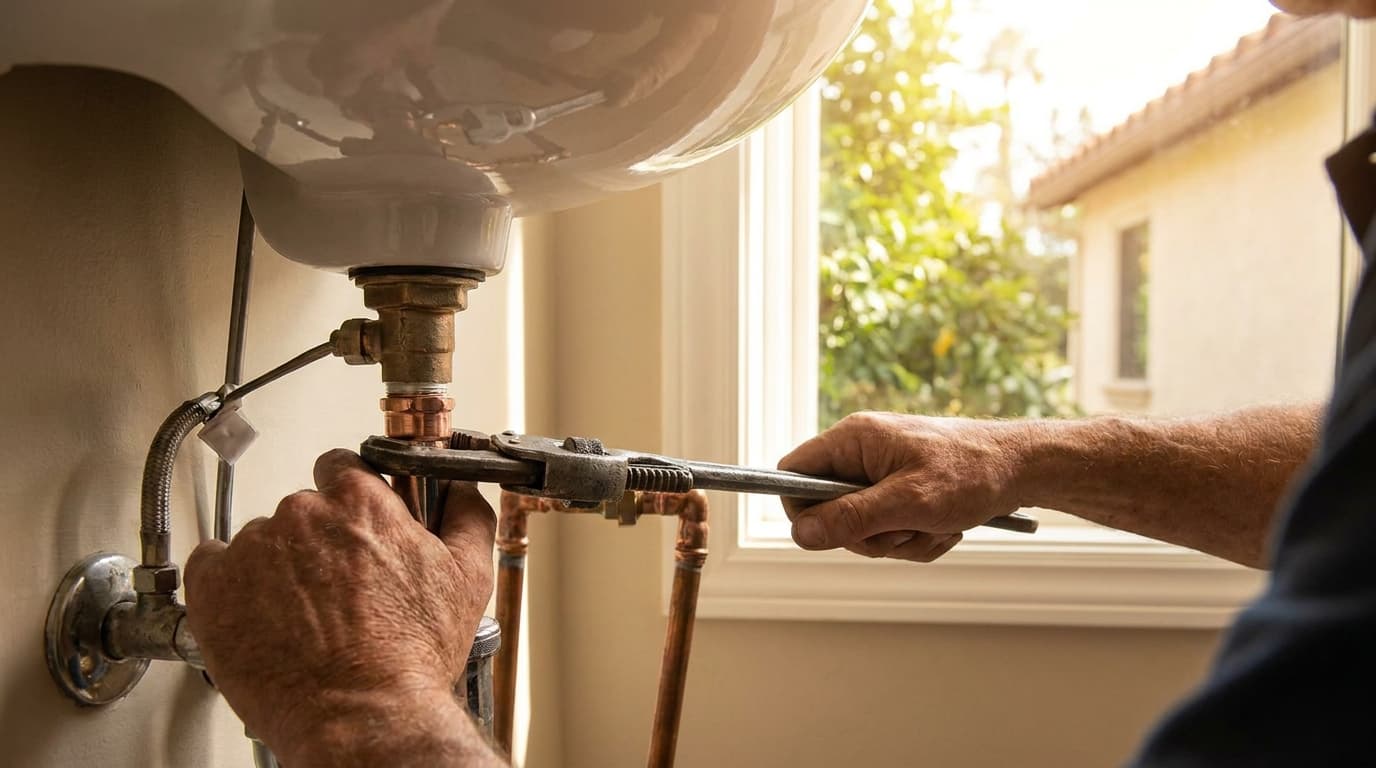

Permit compliance work is one of the most underutilized revenue streams for plumbing contractors in Brevard County. While most plumbers compete on price for new installations and repairs, a growing segment of homeowners are desperately searching for licensed professionals who can fix existing code violations and navigate the complex permitting landscape. These aren't price-sensitive customers—they're motivated, often stressed, and willing to pay premium rates for someone who knows exactly what they're doing and can resolve violations quickly.
Brevard County's rapid growth, aging housing stock in areas like Melbourne and Cocoa Beach, and increasingly strict enforcement by the Brevard County Building Department create a perfect storm of demand. Homeowners discover violations during home sales, insurance inspections, or when they finally get caught with unpermitted work from years past. They need help. But they don't know where to find a trustworthy, competent plumber who specializes in compliance.
This is your competitive edge. This guide walks you through exactly how to position yourself as the permit compliance expert in your county, attract these high-value jobs, and build a reputation that keeps the referrals flowing.
Step 1: Understand Brevard County's Plumbing Code Framework and Florida Statute 553
Before you pitch yourself as a compliance expert, you need to be one. Brevard County operates under Florida Statute 553 (the Florida Building Code), which incorporates the International Plumbing Code (IPC) with state and local amendments. This isn't optional knowledge—it's the foundation of your credibility.
Florida Statute 553 and What It Means for Your Business
Florida Statute 553.73 requires that all plumbing work meet the current Florida Building Code standards. Brevard County amended this in 2021 to align with the 2020 IPC, which means any plumbing installed or modified after that date must comply with updated standards—larger trap sizes, specific vent configurations, water pressure requirements, and backflow prevention mandates that didn't exist in older codes.
Most violations fall into these categories:
Spend 10 hours this week reviewing the 2020 IPC and Brevard County's amendments (available through the Brevard County Department of Building and Permitting). You'll spot patterns immediately. Knowing why a violation exists—not just that it does—is what separates a compliance expert from a generalist.
Why This Knowledge Becomes Sales Leverage
When a homeowner calls you about a permit violation they discovered during a home inspection, they're confused and stressed. They don't know if it's a $500 fix or a $5,000 project. They don't know if they need a permit to fix it (they usually do). You walk them through the code, explain why it was built wrong, and give them a clear path to compliance. That confidence is worth thousands in premium pricing.
Watch Related Videos on YouTube
plumbing permit compliance jobs Brevard County how to fix guide
Step 2: Build Your Compliance Expertise and Credentials
Knowledge is your first asset, but credentials and systems are what scale it.
Get Your CEU Hours in Building Code
Brevard County doesn't require special certification beyond your standard plumbing license, but the Florida Construction Industry Licensing Board offers Continuing Education Units (CEUs) specifically in building code and inspection. Completing a 4-hour or 8-hour building code course and documenting it positions you as someone who invests in expertise.
Recommended providers:
Cost: $150–$400 per course. ROI: Nearly infinite if you pitch this credential in your marketing.
Create a Compliance Audit Checklist
Develop a one-page checklist based on the 2020 IPC and Brevard County amendments. Include:
This becomes your free audit tool (you offer it during initial consultations) and your sales tool. When you walk through a home using a professional checklist, you look professional. You'll uncover issues the homeowner didn't even know about, which expands your project scope.
Document Your Permit Compliance Work
Every compliance job you complete is a marketing asset. Take before-and-after photos, document the violation description, the code reference, and the solution. Create a visual portfolio of your work. Later, you'll use these in your HomeProBadge contractor profile to build trust with new leads.
Step 3: Get Your Business Legally Positioned for Compliance Work
Compliance work involves interactions with county officials, permits, and inspections. You need proper documentation and insurance.
Ensure Your Plumbing License is Current and in Good Standing
This is non-negotiable. Brevard County's building department verifies license status immediately. Any lapse, complaint, or restriction kills your credibility. Check your Florida Construction Industry Licensing Board (CILB) status online at cilb.myflorida.com. If you have any flags, resolve them before pitching compliance work.
Carry Comprehensive General Liability and Workers' Comp Insurance
Compliance work isn't riskier than standard plumbing, but permit applications require proof of insurance. Get a Certificate of Insurance that lists Brevard County as an additional insured (standard for county projects). Cost: $1,200–$2,000 annually for a small plumbing contractor. Essential.
Set Up a Simple Project Documentation System
When you pull a permit, the county tracks it. Create a file for each compliance project with:
This protects you legally and gives you a library of evidence that you deliver results. Later, you'll reference these in conversations with hesitant homeowners.
Step 4: Develop a Tiered Service Offering for Compliance Work
Not every homeowner has the same problem or budget. Create offerings that meet them where they are.
Service Tier 1: Compliance Audit + Report ($150–$300)
What it includes:Service Tier 2: Permit Compliance Repair ($2,000–$8,000)
What it includes:Service Tier 3: Pre-Purchase Plumbing Compliance Package ($400–$600)
What it includes:| Service Tier | Price Range | Time to Complete | Primary Customer | Revenue Potential |
|---|---|---|---|---|
| Compliance Audit | $150–$300 | 2–3 hours | Homeowners, agents | $150–$300 per project |
| Permit Compliance Repair | $2,000–$8,000+ | 1–3 weeks | Motivated sellers, insurance | $2,000–$8,000+ per project |
| Pre-Purchase Package | $400–$600 | 4–5 hours | RE agents, buyers | $400–$600 per report |
Step 5: Master the Brevard County Permit and Inspection Process
Your ability to navigate permits quickly gives you a massive advantage over competitors. Most plumbers avoid this complexity. You embrace it.
Learn Brevard County's Digital Permit System
Brevard County uses Accela for permit applications (accessible at brevardcounty.us/permit). Spend a morning learning the system:
The learning curve is real, but once you're proficient, you can submit permits in 30 minutes instead of a homeowner wasting a full day. This is a selling point.
Know When a Permit Is Required (Critical for Compliance Sales)
This is where many plumbers lose credibility. Not all code violations require permits to fix—but most do in Brevard County. Here's the breakdown:
Permits ALWAYS required:
- Water heater replacement or relocation
- Drain line modifications
- Vent line changes or additions
- Backflow prevention device installation
- Any work involving new water supply lines
Permits often NOT required (self-certified):
- Trap seal repairs on existing fixtures
- Minor faucet replacement
- Supply line repairs on existing runs
Brevard County's rule of thumb: If it's structural to the drainage or venting system, it needs a permit. When you audit a home, you'll almost always find violations that do require permits. This is actually good—it's your path to a larger project scope.
Build a Relationship with the Brevard County Building Department
Call the plumbing inspector's office (321-633-2000). Introduce yourself. Ask if there are new code changes coming. Get the lead inspector's name. Follow up periodically. When you're on a project, coordinate inspections proactively.
Brevard County inspectors process 50+ projects weekly. They remember contractors who are organized, professional, and follow the rules. Being that contractor means faster approvals and goodwill that translates to homeowner referrals.
Create a Project Timeline You Can Guarantee
Most plumbing compliance work follows this timeline:
When you quote a project, say: "Permit approval in 3 days, work completed in 10 days, final inspection in 2 days. You'll have a signed-off certificate of compliance in under 2 weeks." Most homeowners expect months. You deliver weeks. This becomes your brand.
Step 6: Build Your Online Authority and Local Visibility
Permit compliance jobs are local. Homeowners search for solutions in their county. You need to be findable and trustworthy.
Create a Compliance-Focused Service Page on Your Website
Most plumbing websites describe general repairs. You create a page specifically for Brevard County homeowners with code violations. Include:
Optimize this page for keywords like "plumbing permit compliance Brevard County," "code violations Melbourne," "plumbing inspection fix Cocoa Beach," etc.
Get Listed on HomeProBadge
HomeProBadge is a verified contractor directory specifically for Brevard County and across Florida. When you create a free HomeProBadge profile at https://www.homeprobadge.com/florida/brevard-county, you get:
Homeowners using HomeProBadge are often already dealing with a permit violation and actively seeking a qualified, vetted professional. You're not competing on price—you're competing on credibility. That's your market.
Target Real Estate Professionals
Real estate agents encounter homes with plumbing violations in almost every transaction. Create a one-page flyer titled "Plumbing Code Compliance Solutions for Real Estate Transactions" and distribute it to:
Offer a referral commission or professional courtesy discount for agents who refer clients. Real estate is a relationship business. You become the plumbing expert they recommend, and you get steady referrals.
Create Educational Content Around Compliance
Write blog posts or make short videos about:
This content ranks for local search terms and positions you as the expert. It also gives you content to share with leads and referral partners.
Step 7: Price Your Compliance Services for Profitability
Compliance work is not commoditized. You're not bidding against five other plumbers on price. You're the solution. Price accordingly.
Pricing Framework for Compliance Audits
Bundle audits: "Three audits for $600" for real estate agents.
Pricing Framework for Compliance Repairs
Don't discount your rate for compliance work. Charge:
For a typical violation requiring vent line reconfiguration and trap replacement ($1,200 in materials, 20 hours labor at $75/hr):
A motivated homeowner selling a house or satisfying an insurance requirement will pay this without negotiating. You're not competing on price—you're delivering certainty.
Key Pricing Insight:
Compliance jobs are priced on value, not on commodity. The homeowner's motivation (sale deadline, insurance requirement, HOA demand) sets the ceiling for pricing. Price confidently.
Step 8: Systemize Your Compliance Intake and Project Delivery
Growth requires systems. You can't handle more compliance jobs if every project is custom.
Create a Compliance Intake Form
When a lead calls, you use the same form every time:
This 2-minute form tells you everything you need to know to scope the project and whether it's a qualified lead.
Create a Compliance Proposal Template
Your proposal should include:
This proposal takes you 15 minutes to customize. It looks professional. It closes deals.
Create a Post-Project Workflow
After you complete a compliance job:
This turns every project into a marketing asset and a relationship-building opportunity.
Step 9: Generate Leads Specifically for Compliance Work
You can't just wait for compliance leads. You have to create a lead generation engine.
Partner with Real Estate Professionals
Real estate agents, home inspectors, and title companies deal with compliance issues daily. Create a formal referral relationship:
One real estate agent referring you 2–3 compliance jobs per month = $6,000–$12,000 annual revenue from that single relationship.
Create a Targeted Google Local Services Ads Campaign
Google Local Services Ads (LSA) appear at the top of local search results. Create a campaign specifically for "plumbing permit compliance" and "code violation repair" in Brevard County.
Do the math: 3 leads/week × 50% close rate × $3,000 average project = $7,500/month from a $900/month ad spend. ROI: 8:1.
Sponsor a Free Compliance Workshop at a Local Library or Community Center
Host a 1-hour workshop: "Home Plumbing Code Violations: What Inspectors Found in 100 Brevard County Homes." Charge nothing. Collect emails. Follow up with a free audit offer.
Cost: $200–$400 for venue rental. Expected attendance: 15–30 people. Expected audits scheduled: 5–10. Expected conversions to paid work: 2–3.
This positions you as the local authority and generates leads with zero ad spend (you're paying for venue, not ads).
Use Nextdoor to Target Homeowners in Your Service Area
Nextdoor is hyperlocal. Homeowners post questions about contractors all day. Answer questions about plumbing code violations and compliance. Be helpful. Don't sell. Provide genuine advice. Reference your compliance expertise. Include your website link.
Cost: Free. Time: 20 minutes per day. Expected leads: 2–5 per month from genuine Nextdoor community members.
Step 10: Build Your Reputation and Get More Referrals
Your best lead source is word-of-mouth from satisfied customers and professional referrers. Build this systematically.
Ask for Reviews Strategically
After every completed compliance project, send an email:
"Thanks for choosing us for your plumbing compliance work. We'd love to hear about your experience. [Click here to leave a 2-minute review on Google/HomeProBadge]. As a thank you, we'll send you a $50 coupon code for your next service."
Make it easy. Direct link. Incentive. Most people will leave reviews if you ask.
Create a Referral Incentive Program
Offer $200 off the next service for every qualified referral that converts to a paid job. Communicate this to:
This turns your network into an active sales team.
Document Your Case Studies
After each compliance job, create a 1-page case study:
You now have a library of case studies to share with prospects. "This is exactly like your situation. Here's how we resolved it."
Common Mistakes to Avoid
Mistake 1: Competing on Price
Permit compliance work is not a commodity. If you're quoting the same price as every other plumber, you're positioning yourself incorrectly. You're solving a specific problem (code compliance) with expertise. Price for value.
Mistake 2: Skipping the Permit
Some plumbers suggest "fixing" violations without a permit to save time and cost. This is catastrophic for your reputation and liability. Always permit compliance work. The permit is your protection and your credibility.
Mistake 3: Not Documenting Your Work
Every compliance job should include before photos, during photos, code reference documentation, and final inspection sign-off. This is your marketing library and your legal defense if issues arise later.
Mistake 4: Ignoring Real Estate Professionals
Real estate agents, home inspectors, and title companies are your richest referral source in Brevard County. Invest time in relationships with these professionals. They'll send you steady, high-value leads.
Mistake 5: Not Specializing Your Marketing
If your website and marketing look like every other plumber's, you blend in. Create content, messaging, and visuals specifically around permit compliance. "We specialize in resolving plumbing code violations in Brevard County" is more powerful than "We do plumbing repairs."
FAQ
Q: Do I need a special license to do permit compliance work in Brevard County?
A: No. Your standard Florida plumbing license covers all plumbing work, including compliance repairs. However, demonstrating expertise through continuing education in building code strengthens your credibility and pricing power.Q: How long does a typical compliance project take from start to finish?
A: 2–3 weeks on average. Audit (1 day), permit application (1 day), county review (2–3 days), actual work (3–7 days depending on scope), inspection scheduling (1–2 days), work completion and final inspection (1–2 days).Q: What's the most common plumbing violation you'll encounter in Brevard County homes?
A: Undersized or missing traps and improper venting, especially in homes built before 2010. These are quick fixes (often $1,500–$3,000) but require permits and inspections.Q: Can I charge more for compliance work than standard plumbing repairs?
A: Absolutely. Compliance work is priced on value and urgency, not commodity rates. A homeowner facing a real estate deadline or insurance requirement will pay premium rates for quick, guaranteed resolution.Q: Should I offer warranties on compliance work?
A: Yes. Offer a 2-year warranty on workmanship and code compliance. If the county re-inspects and finds issues with your work, you fix it at no charge. This warranty is a powerful sales tool because it removes risk for the homeowner.Q: How do I find compliance jobs if I don't have previous experience?
A: Start by offering free or discounted audits to build your portfolio. Partner with real estate agents who'll refer clients. Create content around compliance. Build your presence on HomeProBadge. Once you have 5–10 completed projects, your portfolio and referrals will generate consistent leads.Q: What's the profit margin on a typical compliance project?
A: 40–50% on materials (after labor and overhead). Materials cost: $500. You charge $700–$750. Labor: 15 hours at $75/hour = $1,125. Permits: $250. Overhead/management: $200. Total revenue: $3,075. Total cost: ~$1,650. Profit: ~$1,425 (46%). These are solid margins.Q: How do I compete against larger plumbing companies that also do compliance work?
A: Specialize deeper. You're the compliance expert for Brevard County. You know the local inspector. You have case studies. You've built relationships with real estate professionals. Larger companies are generalists. You're the specialist. Specialists command premium pricing and generate referrals.Q: Is it worth getting certified in code inspection?
A: Not required, but valuable. The International Code Council (ICC) offers Plumbing Inspector certification (3-day course, ~$600). This isn't necessary to do compliance work, but it signals expertise to high-value clients and positions you for future consulting or inspection work.Q: How do I handle a project where the violation is more complex than initially quoted?
A: This happens. Build a scope change process: stop work, document the additional issue with photos, provide a supplemental estimate, get written approval from the homeowner before proceeding. Transparency prevents disputes and maintains trust.Final Action: Start This Week
You don't need to master everything before you start. Pick one action from this guide and execute it this week:
Within 30 days, you'll have the foundation. Within 90 days, you'll have your first 2–3 compliance projects and testimonials. Within 6 months, referrals will be flowing.
Brevard County has thousands of homeowners with plumbing code violations and zero idea where to find a trustworthy expert. That expert can be you.
Start now. Create your free HomeProBadge verified contractor profile at https://www.homeprobadge.com/florida/brevard-county and begin building your compliance expertise reputation today.