

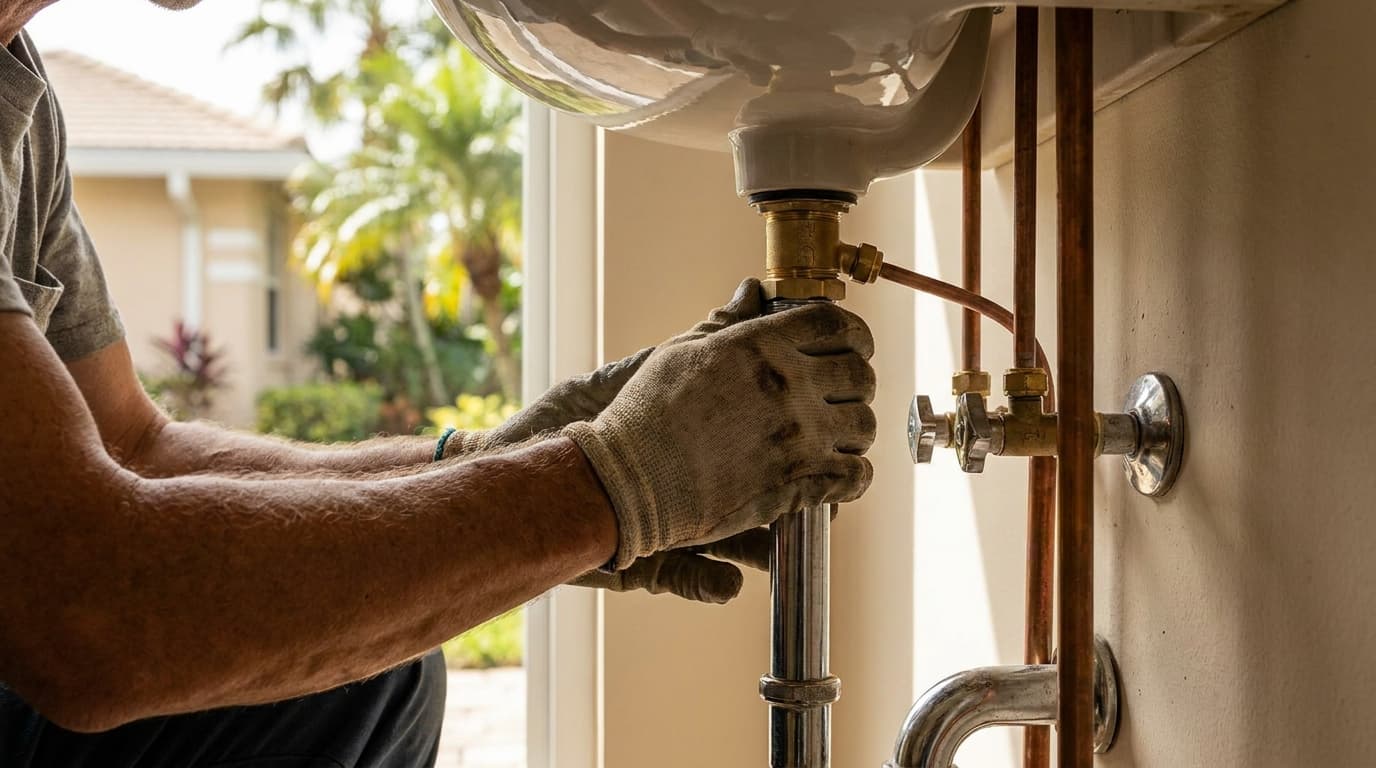

Permit violations are a silent revenue killer for Bay County homeowners—and a golden opportunity for plumbing contractors smart enough to position themselves as the solution.
If you're running a plumbing service business in Panama City, Mexico Beach, or anywhere across Bay County, you already know that most homeowners don't wake up thinking about permit violations. But when their banks, insurance companies, or code enforcement officers knock on the door, they're desperate. They need a licensed, trustworthy plumber who understands the compliance process, knows the local inspector's standards, and can navigate the paperwork maze without racking up additional fines.
This is where specialization wins. Instead of competing on price with every other plumber in the county, you can command premium rates by solving a specific, high-value problem: bringing non-compliant plumbing systems into code.
In this guide, I'll walk you through exactly how to build and market a plumbing permit compliance practice in Bay County—from identifying your target market to closing jobs, documenting your work for trust, and turning one-off compliance jobs into referral engines that feed your business all year long.
Step 1: Understand Bay County's Permit Compliance Landscape
Before you can sell permit compliance work, you need to know what's broken—and what Bay County's rules actually are.
Florida Statute 553 and Bay County's Building Code Requirements
Florida Statute 553 establishes the Florida Building Code (FBC), which Bay County adopts and enforces. Here's what matters for plumbing:
Key Warning: Under Florida law, unpermitted plumbing work can void homeowner insurance, block property sales, and trigger fines of $100–$500 per day per violation. As a contractor, you position yourself as the fixer—not the problem.
Where Compliance Issues Originate in Bay County
Understanding where violations come from helps you target the right homeowners:
Step 2: Build Your Compliance Expertise and Credentials
You can't sell something you don't understand. Specialize before you market.
Get Formal Compliance Training
Document Your Successful Compliance Projects
Start now, even if you've only done 2–3 compliance jobs:
These become your portfolio—your proof of competence. Upload them to HomeProBadge's contractor profile, which includes a before/after job portfolio feature specifically designed for compliance work. This differentiation is critical when homeowners are comparing you to general plumbers.
Understand Common Bay County Violations
Familiarize yourself with the most frequent violations inspectors find:
| Violation Type | Common Cause | Compliance Fix | Estimated Cost Range |
|---|---|---|---|
| Undersized drain lines | DIY installation | Replace with code-sized PVC | $800–$2,500 |
| Missing vent stack | DIY or old unlicensed work | Add proper venting to roof | $1,200–$4,000 |
| Non-approved materials | Old galvanized steel, copper | Replace with PEX, copper, or CPVC | $1,500–$6,000 |
| Improper grading/pitch | Horizontal runs without slope | Reroute drain for proper 1/4" per foot pitch | $600–$2,000 |
| Backflow prevention missing | No device on main supply | Install approved backflow preventer | $400–$1,200 |
| Cross-connections | Garden hoses connected to potable supply | Remove/disconnect non-compliant connections | $200–$800 |
Step 3: Position Yourself as the Bay County Permit Compliance Specialist
Now that you know the landscape, it's time to own a specific market position. Generic plumbing ads won't work here.
Craft Your Compliance-Focused Value Proposition
Here's the formula:
"I help Bay County homeowners resolve permit violations and bring their plumbing into code—so they can refinance, sell, or renew insurance without delays or fines."Compare that to:
"Quality plumbing service. Licensed, insured, 24/7."The first one speaks directly to the pain. The second is invisible noise.
Key Messages for Your Marketing
Step 4: Identify and Target Your Ideal Customers
Permit compliance buyers have specific motivations. Find them where they're searching.
Where Bay County Homeowners Look for Compliance Help
Actionable Tip: Contact the Bay County Building Department's Public Information Office and ask to be added to their recommended contractor list for permit compliance work. It costs nothing and generates 2–4 referrals per month in most counties.
Create a Compliance-Focused Buyer Profile
Understand who buys this work:
Step 5: Build Your Online Presence for Permit Compliance Visibility
Optimize Your Website for Compliance Keywords
Create a dedicated landing page on your website:
Page title: "Permit Violation Solutions for Bay County Homeowners" Content should include:Get Verified and Build Trust Signals
Homeowners facing violations are risk-averse. They want proof you're legitimate.
Step 6: Create a Compliance Sales Process
Once someone contacts you about a violation, you need a repeatable system to close the job.
The 4-Step Compliance Consultation Process
Step 1: Free Violation Assessment (Phone or In-Person)Ask the homeowner these questions:
Your job: Understand the problem and build confidence that you can solve it.
Step 2: On-Site Inspection ($75–$150 fee, waived if they hire you)Bring:
Inspect thoroughly. Take photos. Show the homeowner exactly what's wrong and why it fails code.
Step 3: Written Compliance Plan and QuoteWithin 24 hours, email them:
```
VIOLATION: Missing vent stack on master bath drain
WHY IT MATTERS: Without proper venting, drains will be slow, fixtures can siphon,
and harmful gases can enter the home. Bay County code requires all drains to be vented.
SOLUTION:
TIMELINE: 3–5 business days
COST: $2,100 (labor, materials, permit, inspection)
```
Step 4: Close and Schedule WorkCall the homeowner. Ask directly:
"Does this plan make sense? Are you ready to move forward?"If yes, get a signed agreement and deposit (50% is standard). Schedule the work.
If no, ask why. Is it budget? Timeline? A competing quote? Address the objection, don't disappear.
Pro Tip: Homeowners facing violations are often comparing 2–3 quotes. Your compliance plan—with clear photos, code citations, and timeline—is what separates you from generalist plumbers. Use it to sell, not just quote.
Step 7: Execute and Document for Trust-Building
How you perform the work is just as important as the work itself—because homeowners need proof for the bank, insurance company, or real estate agent.
During the Job
Document for Resale Value
When the job is done:
The Follow-Up: Turn One Job into Five
After final inspection:
Step 8: Scale Through Strategic Partnerships
Once you've done 3–5 compliance jobs successfully, you're ready to scale.
Partner with Real Estate Agents
Realtors are your best source of high-quality leads.
Your pitch: "I help your clients resolve plumbing violations quickly so deals don't stall. You refer to me, I give them a fast timeline and a guarantee, they pass inspection, your deal closes on time." Actions:Build Relationships with Bay County Building Department
Partner with Home Warranty and Title Companies
These companies often need reliable contractors for compliance work. Some have approved lists.
Action: Contact 3–5 home warranty companies and title companies in Bay County. Ask if they have a contractor referral network and how to join.Step 9: Price Your Compliance Work for Profit
Compliance work is premium work. Price it that way.
Pricing Strategy
Compliance jobs aren't commodities. You're solving a high-stress, deadline-driven problem. Your pricing should reflect that.
Labor rates:Step 10: Track Your Compliance Pipeline and Metrics
You can't improve what you don't measure.
Key Metrics to Track
```
Lead Date | Source | Violation Type | Quote Date | Close Date | Job Value | Time to Close | Review?
1/2/2024 | Google | Vent stack | 1/3 | 1/8 | $2,100 | 6 days | ⭐⭐⭐⭐⭐
1/5/2024 | Realtor | Drain pitch | 1/6 | Pending | $1,800 | — | —
```
After 3 months, you'll know:
FAQ: Permit Compliance Jobs in Bay County
Q: Do I need a special license to do permit compliance work?A: No. Your current Florida plumbing license covers compliance work. However, you need to obtain the permit on the homeowner's behalf and ensure it passes Bay County inspection. Some contractors are also bonded and carry professional liability insurance for added credibility.
Q: How much should I charge for a compliance inspection?A: $75–$150 is standard. Many contractors waive the fee if the homeowner hires them. This reduces friction and increases close rates.
Q: What if the violation is more severe than I thought?A: That's why you do a thorough on-site inspection. If the issue is bigger than your original quote, prepare a revised estimate and explain the additional work to the homeowner. Transparency builds trust, not breaks it.
Q: How do I get homeowners to call me instead of my competitors?A: Differentiation. Create a website and Google My Business profile specifically for "permit compliance." Share before/after photos. Get verified through HomeProBadge. Collect reviews. Focus on certainty and speed, not price. Partner with realtors and the Building Department.
Q: Can I guarantee a job will pass final inspection?A: Yes—if you know your code and the inspector's standards. After you've done 10–15 compliance jobs with Bay County, you'll understand what passes. At that point, you can confidently guarantee it. Until then, be cautious, but still project confidence in your quote.
Q: What's the typical timeline for a compliance job in Bay County?A: Most violations take 2–4 weeks from inspection to final sign-off. That includes permit processing (3–5 days), your work (2–7 days), and final inspection scheduling (3–5 days). Communicate this timeline to homeowners upfront.
Q: Should I focus only on permit compliance, or keep doing general plumbing?A: Do both. General plumbing keeps cash flowing. But specialize your marketing and sales around compliance. You'll attract higher-value customers and command better rates.
Q: How do I get on the Bay County Building Department's recommended contractor list?A: Call the Bay County Building Department at (850) 248-8088 and ask about the process. Some counties have formal lists; others don't. Either way, ask the inspectors directly if you can come observe inspections and build a relationship. Word-of-mouth from inspectors is gold.
Q: What's the difference between a homeowner exemption and unpermitted work?A: A homeowner exemption means a homeowner did the work themselves on their own single-family home without a permit—and that's legal under Florida law. Unpermitted work means someone other than the homeowner (often a contractor) did work without a permit, or the work exceeded exemption limits. As a contractor, you can't rely on the exemption; you must pull permits.
Q: How do I know what violations Bay County inspectors will catch?A: The best way is to attend pre-inspections with the inspector on a few jobs, with the homeowner's permission. You'll see what they look for, what they measure, and what they reject. Alternatively, study Florida Building Code Chapter 4 and call the inspector before your job is ready.
Your Next Move: Get Verified and Start Winning Compliance Jobs
The opportunity in Bay County is clear: homeowners with permit violations are desperate for a trusted solution, and they'll pay premium rates for certainty and speed.
You have the license and the skills. Now you need visibility and proof of competence.
Start here:Permit compliance is a high-margin, sustainable revenue stream for plumbing contractors who position themselves correctly. Bay County's market is primed. The homeowners are there. The demand is real.
Now it's time to claim the work that's rightfully yours.
Start building your verified profile today at HomeProBadge and show Bay County homeowners why you're the contractor they can trust with their most stressful problem.