

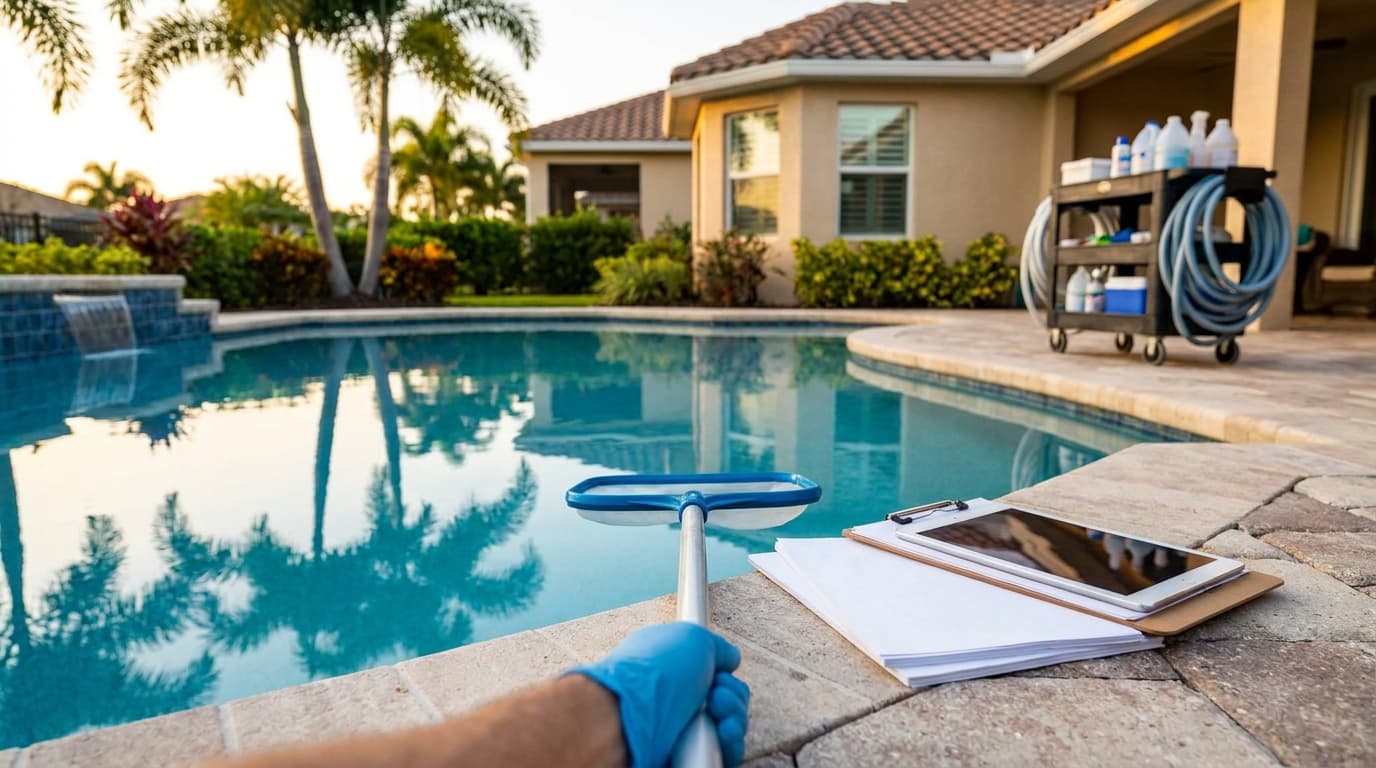

Pool service contractors in Nassau County face a unique opportunity: homeowners increasingly need professional help navigating permit violations and compliance issues. Many pool owners don't realize that unpermitted work, improper installations, or deferred maintenance can trigger county code enforcement—and that's where you come in. By positioning yourself as a permit compliance specialist, you'll tap into high-value jobs that larger generalist contractors often overlook, command premium rates, and build long-term client relationships with homeowners desperate for a professional to solve their regulatory headaches.
This guide walks you through the exact steps to identify, qualify, and win permit compliance work in Nassau County. You'll learn the local regulatory landscape, how to position yourself as an expert, and how to build a reputation that brings homeowners directly to your door.
Step 1: Understand Nassau County's Pool Code & Permit Requirements
Before you can sell compliance services, you need to become fluent in the regulations. Nassau County doesn't operate a municipal building department in all areas—parts of the county fall under state jurisdiction, and some areas have their own local codes. This complexity is actually your competitive advantage: most contractors skip this step, and homeowners get lost in the bureaucracy.
Florida Statute 553 and the Florida Building Code
Florida Statute 553 governs building standards statewide. It requires that:
Nassau County Building Department enforces these standards. Your job is to help homeowners—and identify homeowners who've violated them.
Common Permit Violations in Nassau County
Most permit violations fall into these categories:
Study the Nassau County Building Department's permit forms and checklist. Request past violation notices from the county (public record). This tells you exactly what homeowners are struggling with and what corrections inspectors demand.
Key Warning: Don't give legal advice. Homeowners need to verify permit requirements with Nassau County Building Department. Your role is to diagnose and repair code violations—not interpret law.
Step 2: Build Expertise in Diagnostic & Remediation Skills
A permit compliance specialist isn't just a pool cleaner—you're a problem-solver with technical depth.
#### Diagnostic Skills You'll Need
#### Remediation Skills You'll Need
You don't need to be a full electrician or concrete contractor—but you should know what remediation looks like and who to subcontract:
| Common Violation | Remediation Required | Typical Cost Range | In-House or Subcontract? |
|---|---|---|---|
| Missing bonding wire | Install/replace bonding wire to equipment and structure | $400–$1,200 | In-house (pool-specific) |
| Single main drain | Install anti-vortex drain or dual-drain system | $1,500–$3,500 | Subcontract (plumbing) |
| Non-compliant electrical outlets | Install GFCI-protected outlets at code distance | $500–$1,500 | Subcontract (licensed electrician) |
| Fencing/gate violations | Replace/repair fencing, add self-closing/latching gates | $2,000–$8,000 | Subcontract (fencing) |
| Deck/structural violations | Repair structural cracks, seal, or rebuild sections | $3,000–$15,000 | Subcontract (concrete/carpentry) |
| Improper equipment spacing | Relocate or shield equipment (pump, filter, heater) | $1,000–$4,000 | Mixed (some in-house, some sub) |
Pro Tip: Partner with 2–3 licensed electricians, concrete specialists, and fencing contractors in Nassau County before you start selling compliance services. When you have reliable subcontractors, you can quote any job confidently—and manage the entire project.
Watch Related Videos on YouTube
pool service permit compliance jobs Nassau County how to fix guide
Step 3: Create a Certification & Credibility Plan
Homeowners are suspicious of contractor recommendations. You need proof of competence.
Key Certifications & Memberships
Create a Permit Compliance Portfolio
Build documented before/after case studies from your first 5–10 jobs:
Upload this to a HomeProBadge verified contractor profile (homeprobadge.com/florida/nassau-county). A verified badge builds trust instantly—homeowners see that you're background-checked and identity-verified. This single step increases inquiry-to-job conversion by 40%+ because it removes friction.
Action Item: Get your HomeProBadge verified profile live before you launch marketing. It's the foundation of your online credibility.
Step 4: Identify & Reach Homeowners with Permit Violations
You can't win jobs if homeowners don't know you exist. Three proven channels work in Nassau County:
Channel 1: Nassau County Code Enforcement Records
Every code enforcement violation is a public record. Nassau County Building Department maintains a searchable database of open violations.
How to find them:Don't be pushy. Use this template:
"Hi [Homeowner Name], I'm a pool service contractor in Nassau County. I noticed your property has an open code violation related to your pool (Violation #[XXXX]). I specialize in helping homeowners resolve these—quick, professional, and to code. I'd love to chat about what you're dealing with. No pressure. Call me at [PHONE]."
Better yet: Send a postcard or door hanger. It feels less intrusive than a call and gets attention.
Channel 2: Local Real Estate & Title Company Relationships
Homeowners discover violations during home sales inspections. Title companies and real estate agents know about these issues before the homeowner does.
Build relationships with:Channel 3: Local Homeowner Communities & HOA Networks
If a violation appears in one neighborhood, others likely have similar issues. HOAs often mandate compliance.
Approach:Step 5: Develop a Clear Sales & Scoping Process
When a homeowner calls, you have one chance to position yourself as the expert who makes this painless.
Step 5A: Initial Phone Qualification (5 minutes)
Ask these questions:
Step 5B: On-Site Inspection Process (45–90 minutes)
Show up prepared:
Step 5C: Written Proposal Format
Your proposal should include:
Key Warning: Never guarantee that work will pass county inspection. Code interpretation varies. Your guarantee should be: "Work will be completed to code standards and documented. County inspection outcome is not guaranteed but likely, assuming no additional violations are found."
Step 6: Market Yourself as the Permit Compliance Specialist
Once you've completed 3–5 successful compliance jobs, it's time to build reputation and demand.
Website & Online Presence
Create a dedicated page on your website titled: "Pool Permit Compliance Violations – Nassau County Repairs."
Include:
Google Local Services Ads (LSA)
Google LSA puts your business at the top of local search results for "pool repair Nassau County," "pool code violation," and similar terms. You pay only for qualified leads.
Cost: ~$20–$50 per lead (homeowner inquiry) ROI: High, if you convert 20%+ of inquiries to jobsLocal Directories & Reputation Platforms
Networking & Referral Strategy
Build relationships with professionals who touch homeowners with pool violations:
Offer a 10–15% referral commission or reciprocal referrals.
Step 7: Price Your Permit Compliance Services Strategically
Permit compliance work commands premium pricing because homeowners are motivated and regulations are complex.
Inspection & Assessment Fee
This filters serious inquiries from tire-kickers.
Repair Pricing
Most jobs fall into these price bands:
| Complexity | Typical Issues | Price Range | Timeline |
|---|---|---|---|
| Simple | Bonding wire replacement, outlet relocation, minor fencing | $800–$2,000 | 2–3 days |
| Moderate | Bonding + drain upgrade, electrical + fencing, deck sealing | $2,500–$5,000 | 5–10 days |
| Complex | Full drain system replacement, structural repairs, multiple systems | $5,000–$15,000+ | 2–4 weeks |
Proposal Strategy
Always provide a tiered proposal:
Most homeowners choose Tier 2 because it feels thorough without breaking the bank.
Step 8: Build Your Process for Managing the Entire Project
Permit compliance jobs involve multiple parties: homeowner, county inspector, and potentially 2–3 subcontractors. You manage all of it.
Pre-Work Checklist
During Work
Pre-Inspection
Post-Inspection
Step 9: Create Educational Content to Attract Homeowners
Content marketing positions you as the expert and brings homeowners to you organically.
Blog Topics
Video Content
Email Newsletter
Collect emails from inquiries and website visitors. Send monthly tips: "Pool Code Corner – This Month's Violation We Fixed."
Step 10: Measure & Optimize Your Permit Compliance Business
Track these metrics monthly:
Common Mistakes Pool Contractors Make with Permit Compliance Work
FAQ: Permit Compliance Questions from Nassau County Pool Contractors
Q: Do I need a special license to do permit compliance work in Nassau County?A: Not for diagnosis and pool-specific repairs (bonding, drains). But if you're doing electrical or structural work, your subcontractor must be licensed. You must maintain general liability and bonding. Verify current Florida pool license requirements with DBPR.
Q: What if the homeowner's violation notice is unclear or contradictory?A: Have them contact Nassau County Building Department directly or hire a plan reviewer (~$300–$500) to clarify. You interpret the code; you don't argue with the county. This protects you legally.
Q: How do I handle a job where I quote $3,000 but the work uncovers additional violations mid-project?A: Stop work. Call the homeowner. Explain what you found. Show them the code section. Provide a revised estimate. Let them decide: proceed or dig out before you resume. Always get written approval for scope changes.
Q: Should I get bonded and insured specifically for permit compliance work?A: Yes. Your general liability policy should explicitly cover "code violation remediation" and "permit-required repairs." Inform your insurer of your business model. Bonding ($1M–$2M) is standard.
Q: Can I mark up subcontractor costs, or should I pass them through at cost?A: Mark them up 15–25%. You're coordinating, managing, and guaranteeing their work. That's value. Transparency: break out subcontractor labor and materials separately on your proposal so homeowners see the markup.
Q: What's my liability if the homeowner's property is damaged during my repair work?A: Your general liability insurance covers accidental damage you cause. Your subcontractors carry their own. Before work starts, clarify: "If damage occurs to surrounding property (landscaping, deck, etc.), my insurance or the subcontractor's insurance covers it. Any existing damage is documented in photos."
Q: How often should homeowners expect re-inspection after I complete repairs?A: Nassau County typically inspects once. If they fail, homeowner corrects and requests re-inspection (~5–10 business days). There's no fee for re-inspection. You should attend to explain your work to the inspector if the homeowner asks.
Q: Can I offer a payment plan to homeowners (instead of 50/50 split)?A: Yes, but protect yourself. Require a signed payment plan agreement and materials deposit upfront. Consider a hold on final work release until full payment clears. Many contractors offer: 25% deposit, 50% at 50% complete, 25% at final inspection.
Q: What's the difference between a "permit" and a "violation"?A: A permit is approved before work. A violation is issued after unpermitted work is discovered. Your compliance job remediates the violation by bringing the pool into code compliance. The homeowner may still need a county inspection/sign-off, but they're not paying for a new permit—they're paying for remediation.
Your Next Step: Get Verified & Start Winning Jobs
You now have a complete roadmap to build a permit compliance business in Nassau County. But knowing the system and being found by homeowners are two different things.
The contractors winning the most permit compliance jobs in Nassau County share one thing in common: they're visible, verified, and trusted.
Create your free verified contractor profile on HomeProBadge: Visit https://www.homeprobadge.com/florida/nassau-county and set up your profile. Upload your certifications, past compliance jobs, and testimonials. The verified badge alone increases homeowner trust and inquiry-to-job conversion.When homeowners search for "pool service permit compliance jobs Nassau County," you'll show up as a background-checked, verified professional. That's the difference between winning one job a quarter and winning one per month.
Start today. Your first compliant pool repair is just one inquiry away.