

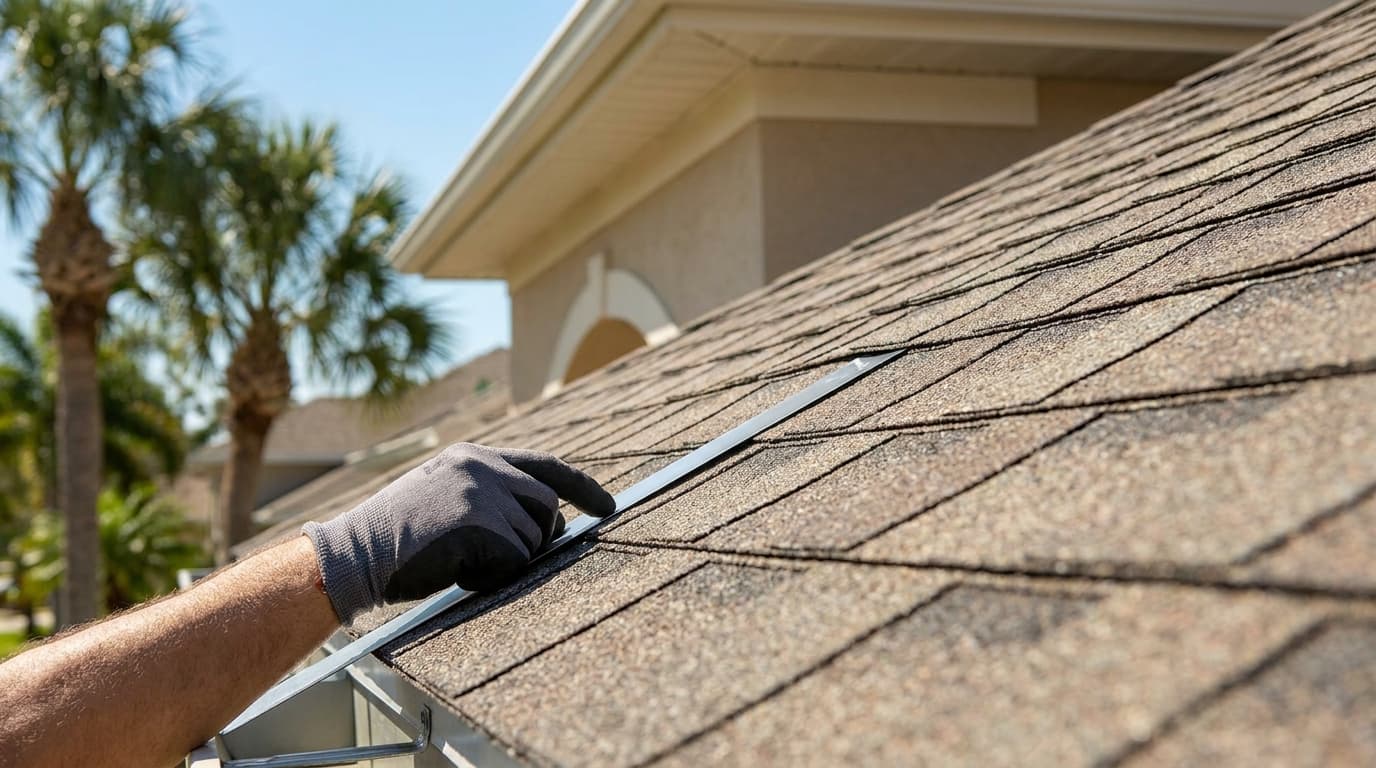

You usually notice a missing or badly installed drip edge after the damage starts. The paint on the fascia begins to peel. The board below the shingles stays damp. Water marks show up where the roof edge should have been shedding cleanly into the gutter, but instead it's sneaking backward.
This is when the process of installing drip edge is commonly researched. The problem is that a lot of guides stop at the easy part. They tell you to nail metal to the edge of the roof and overlap the next piece. They don't spend enough time on the two places where jobs go wrong most often: corners and retrofits on existing roofs.
This guide handles both. If you're working on a new roof, you need the correct sequence at the eaves and rakes so water always sheds in the right direction. If you're adding drip edge to a roof that's already shingled, you need a different approach entirely, because one careless move can crack shingles, miss old nail lines, or open a leak path you didn't have before.
Why Drip Edge Is a Non-Negotiable Part of Your Roof
A lot of roof-edge damage gets blamed on “bad weather” when the underlying issue is poor water control. Water reaches the shingle edge, curls under, wets the fascia, and keeps feeding moisture into the roof edge. That cycle doesn't need a dramatic leak to cause trouble. It only needs time.
Drip edge is the metal detail that breaks that cycle. It directs runoff away from the fascia board, soffits, and roof decking so water drops clear instead of clinging back to the structure, as explained by Elevated Roofing's overview of why drip edge matters. That's the practical reason roofers treat it as part of the drainage system, not trim.Homeowners sometimes think of it as an optional accessory because older roofs were often built without it. That thinking is outdated. In many markets, drip edge has moved into code-level roofing practice, and even where inspectors don't make a big show of it, manufacturers and experienced installers do.
Practical rule: If water can touch fascia, soffit edges, or the end grain of roof sheathing on its way down, the roof edge detail isn't doing its job.
The sequence matters as much as the metal itself. At the eaves, the system is arranged one way so runoff moves toward the gutter. At the rakes, it's arranged differently so wind-driven water doesn't get invited under the edge. If you reverse that logic, the roof may still look finished from the yard, but it won't shed water the way it should.
If you want a plain-language companion reference before starting, Four Seasons Roofing's drip edge guide does a good job of explaining what homeowners should look for at the roof perimeter. And if edge repairs are already on your radar because the roof budget is tight, it also helps to review a broader roofing pricing guide before deciding whether you're patching, retrofitting, or replacing.
Prep Work Gathering Your Tools Materials and Code Knowledge
Most bad drip edge jobs start before the first piece of metal reaches the roof. The installer bought whatever flashing looked close enough, didn't check local requirements, and treated layout like a minor detail. Then the pieces wander, the corners gap open, and the fasteners end up where water can find them.

Know the minimum standard before you buy anything
The baseline isn't guesswork. The Asphalt Roofing Manufacturers Association states that drip edge should extend at least 2 inches onto the roof sheathing and at least 1/4 inch below the sheathing, and it should be fastened with roofing nails at 8 to 10 inches on center, with no more than 12 inches between fasteners, as laid out in ARMA's drip edge installation guidance. If your metal profile or fastening plan can't meet that, don't install it.
That's one reason it's smart to check code and permit expectations before you touch the ladder. Some areas treat roof edge details more aggressively than others, and if you're already dealing with inspection concerns, county-level guidance such as permit violation help can clarify what local enforcement may care about.
A few ground rules matter right away:
Choose materials and tools that fit the roof
Material choice is usually straightforward, but not trivial. Aluminum is easy to cut and bend. Galvanized steel is tougher and often feels stiffer in the hand. The right answer depends on the roof system, local exposure, and what profiles are available in a finish that suits the home.
If you need a quick primer on edge profiles before buying, understanding drip edge from Arizona Roofers is useful because it walks through the common shapes homeowners and apprentices see in the field.
Bring more than the obvious tools. A solid setup usually includes:
A straight line at the roof edge doesn't happen by accident. Roofers mark it, check it, and keep checking it as they go.
One more trade-off. Fancy material won't rescue bad layout. I'd rather see standard drip edge installed straight, tight, and in the correct sequence than premium metal with reverse laps, exposed mistakes, and corner gaps.
The New Roof Installation Sequence Eaves and Rakes
When you install drip edge on a new roof, the work goes fast if the sequence is right and fights you the whole time if it's wrong. New construction and full tear-offs are the easiest conditions because you can see the deck, check the edge, and build the drainage path in the correct order from the start.

Start at the eaves
The eaves are the lower horizontal edges where water exits toward the gutter. On this edge, install the drip edge first, then bring the underlayment over it. That creates a simple gravity path. Water that gets under the shingles still lands on the underlayment and continues out over the metal instead of slipping behind it.
The work should look controlled, not rushed:
On straight runs, keep the pieces aligned like trim work. The eye catches roof-edge wobble from the driveway faster than generally anticipated.
The eave edge is where you establish the line for the whole job. If the first pieces drift, the rest of the perimeter usually follows them.
Finish at the rakes
The rakes are the sloped edges on the sides of the roof. Here, the order changes. The underlayment goes down first, and the rake drip edge goes over it. That arrangement helps keep wind-driven water from lifting the edge and tracking underneath the underlayment at the roof perimeter.
A simple but costly mistake frequently occurs: people assume every edge gets treated the same. It doesn't. Eaves and rakes have different water behavior, so the assembly changes with the edge.
Use this checklist as you move up the rake:
A quick comparison helps:
| Roof edge | Installation order | What you're protecting against |
|---|---|---|
| Eaves | Drip edge first, underlayment over it | Water backing under the roof edge |
| Rakes | Underlayment first, drip edge over it | Wind-driven water getting under the edge |
On overlaps, different guidance allows different lap lengths depending on product and context. In practice, what matters most is that the seam is clean, properly oriented, and not left fighting the flow of water. Sloppy short scraps and reverse laps fail long before the straight runs do.
Mastering Corners and Seams Like a Pro
Straight sections are simple. Corners are where roofers earn their pay. If the corner is cut badly, overlapped lazily, or left open, water finds it fast. That's why edge failures show up at transitions far more often than on the middle of a long run.

How to form a clean outside corner
The professional move isn't to jam two pieces together and hope sealant hides the problem. Lowe's lays out the better method in its drip edge installation instructions: mark the overhang point, make a perpendicular cut to the bend, remove a square section, and bend the flap so the metal forms a 90-degree corner that sheds water cleanly.
That method matters because it creates shape, not just coverage. Water isn't being asked to cross an open seam at the corner. It's being guided around it.
The sequence is simple if you slow down:
Cut for water flow, not just for fit. A corner can sit tight and still shed badly if the lap geometry is wrong.
Seams that shed water instead of trapping it
Seams on straight runs need the same mindset. The lap direction should follow the flow of water, and the joint should stay flat and straight. Some installers like a more generous overlap. Others use a tighter lap in ordinary residential work. Either way, the seam has to act like part of the roof, not like a speed bump for runoff.
A few field habits separate solid work from amateur work:
Inside corners take patience too. They often need relief cuts, careful piece order, and sometimes a small sacrificial approach so the visible edge stays neat while the water path stays continuous. That's not where you want to learn by trial and error on a finished roof.
Retrofitting Drip Edge on an Existing Roof
Adding drip edge to an existing roof sounds simple until you're under brittle shingles with a pry bar in your hand. Retrofit work is different from new installation because you're not building the system in open view. You're sliding new metal into a roof assembly that already has fixed nail locations, bonded shingle strips, and very little tolerance for rough handling.

When retrofit makes sense
Retrofit is worth considering when the shingles still have service life left, but the roof edge is missing drip edge or the existing metal was installed badly enough to justify correction. It's also common when a homeowner notices fascia damage and discovers there was never a proper edge detail at all.
The procedure is more delicate than many guides admit. IKO notes in its guide to drip edges for shingle roofs that retrofitting requires lifting existing shingles, removing nails, sliding out old metal if present, and reinstalling carefully. That's exactly why this job scares off careful DIYers and keeps roofers patient.
A good supplemental read for homeowners comparing methods is reliable roofing updates for homes from Penn Ohio Roofing & Siding Group, because retrofit questions rarely get the same practical treatment as new-install walkthroughs.
How to work under existing shingles without wrecking them
Start with the weather. Don't try to lift cold, stiff shingles if you can avoid it. The older and drier the roof, the less forgiving it becomes.
Then move in a deliberate order:
Here's a useful visual on the process:
Some retrofit jobs also need face-nailing in limited situations, followed by careful sealing of those nail heads. That's not my first choice, but sometimes the existing roof leaves you no other clean fastening option. The key is understanding that every exposed decision at the roof edge has to be justified by the water path you're creating.
Retrofit drip edge is a finesse job. If the shingles crack, the tabs won't reseal, or the old nail pattern fights the new metal, the repair can get more complicated in a hurry.
If you're working alone, a second set of hands is helpful. One person can hold shingles up while the other lines up the metal, checks the fit, and avoids bending the edge into a corkscrew.
Common Mistakes and When to Hire a Verified Professional
Most drip edge mistakes don't happen because the installer doesn't own tin snips. They happen because the installer underestimates details. Straight runs create confidence. Corners, transitions, and retrofits punish overconfidence.
The most common trouble spots look like this:
Brandon J Roofing points out in its installation guide discussion of edge transitions that failures are often concentrated at transitions rather than straight runs, and that even experienced pros debate the cleanest way to handle corners and relief cuts. That matches what happens in the field. The tricky parts aren't theoretical. They're where roofs leak.
A capable homeowner can install drip edge on a simple, low-complexity roof if the roof is accessible, the edge conditions are straightforward, and the work is on a new or stripped deck. If the roof is steep, chopped up with multiple corners, or already shingled and you're attempting a retrofit, hiring out is usually the smarter call.
When you do hire, verify more than a truck logo and a verbal promise. Check license status, insurance, and whether the contractor can document completed roofing work clearly. A practical place to start is contractor license verification, especially if you want to avoid hiring someone who can shingle a field but fumbles the details that ensure water stays out.
If you're hiring help for drip edge installation, reroofing, or a careful retrofit, HomeProBadge gives homeowners a way to review verified contractor credentials and documented proof of past work before making the call.