

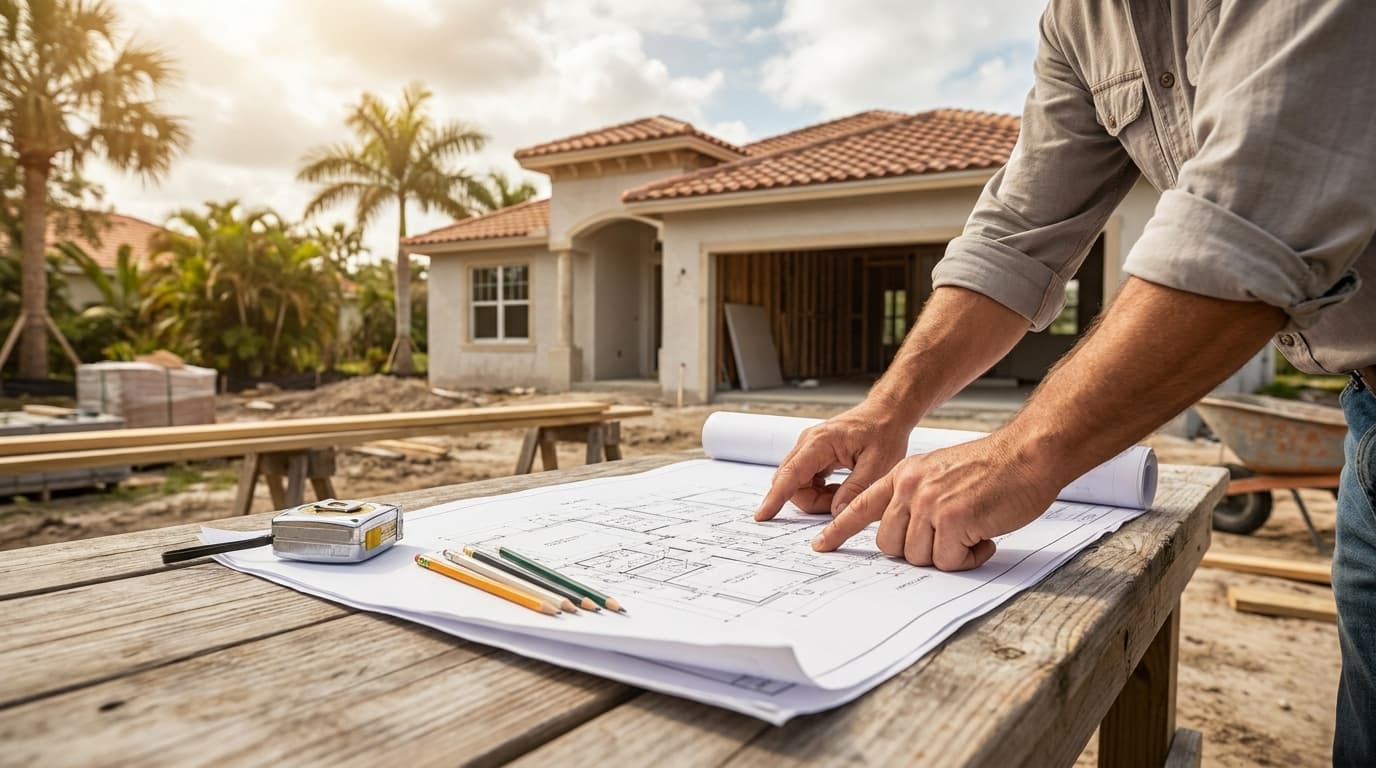

The U.S. residential construction sector sits at the center of one of the most consequential economic tensions of our time: a country that desperately needs more housing is struggling to build it fast enough, affordably enough, or with enough workers. Whether you're a homeowner trying to understand what drives costs and timelines, or a home service professional gauging where the market is headed, the numbers tell a striking story. This article brings together the most current, authoritative residential construction statistics available for 2026 — sourced directly from the U.S. Census Bureau, Bureau of Labor Statistics, NAHB, Harvard's Joint Center for Housing Studies, and the Associated Builders and Contractors — so you can plan, price, and act with confidence.
Residential Construction by the Numbers: 2026 Snapshot
1. Overall Construction Spending
The scale of U.S. construction activity is immense.
The total U.S. construction market size reached approximately $2.2 trillion in annual spending in 2025, accounting for 4.4% of U.S. GDP and employing 8.3 million workers.
As of April 2026, construction spending was running 0.9 percent above the April 2025 estimate, with the first four months of 2026 totaling $657.2 billion — up 0.2 percent from the same period a year earlier, per the U.S. Census Bureau.
Within this total, residential is the dominant private-sector category.
Residential construction was at a seasonally adjusted annual rate of $892.8 billion in April 2025, according to the U.S. Census Bureau's Monthly Construction Spending report.
2. Housing Starts: Full-Year 2025 and Early 2026
Housing starts are the clearest real-time gauge of residential construction activity. The 2025 annual picture showed a market under pressure.
Total housing starts for 2025 were 1.36 million, down 0.6% from the 1.37 million total in 2024, per NAHB's Eye on Housing analysis of Census Bureau data.
Single-family starts in 2025 totaled 943,000, down 6.9% from the prior year, while multifamily starts ended the year up 17.4% compared with 2024.
The pipeline of homes under construction also contracted.
The total number of housing units under construction stood at 1.3 million in December 2025, down 10.5% from a year earlier, with single-family homes under construction falling to 587,000 units — an 8.4% year-over-year decline and the lowest level since November 2020.
Early 2026 brought more turbulence.
U.S. housing starts fell 15.4% month-on-month in May 2026, reaching a seasonally adjusted annual rate of 1.177 million — the lowest since May 2020 — falling short of market forecasts of 1.43 million.
The data indicates that high mortgage rates are curbing builder activity, with contractors adopting a cautious approach as they reduce the inventory of new homes for sale due to sluggish demand.
The most recent Census Bureau data confirms the May 2026 breakdown by structure type:
| Metric | May 2026 (SAAR) | vs. April 2026 | vs. May 2025 |
|---|---|---|---|
| Total Housing Starts | 1,177,000 | −15.4% | −8.7% |
| Single-Family Starts | 882,000 | −1.9% | — |
| 5+ Unit Starts | 284,000 | −41.6% | — |
| Total Completions | 1,313,000 | −8.1% | −14.2% |
| Single-Family Completions | 872,000 | −1.6% | — |
| Building Permits Issued | 1,413,000 | −0.7% | −0.2% |
Source: U.S. Census Bureau & HUD, New Residential Construction, June 16, 2026.
Privately-owned housing units authorized by building permits in May 2026 were at a seasonally adjusted annual rate of 1,413,000, with single-family authorizations at 886,000.
3. Affordability: The Core Structural Challenge
New home construction activity doesn't exist in a vacuum — it's shaped overwhelmingly by who can actually afford to buy. The affordability picture entering 2026 is historically grim.
Housing affordability remains a critical issue, with 74.9% of U.S. households — approximately 100.6 million out of 141.1 million total households — unable to afford a median-priced new home in 2025, according to NAHB's latest analysis.
The analysis is based on a median new home price of $459,826.
As of early 2025, home prices are up 60 percent nationwide since 2019 and still rising at a rate of 3.9 percent year over year. The median existing single-family home price hit a new high of $412,500 in 2024.
The Harvard Joint Center for Housing Studies' landmark 2026 annual report paints the picture in stark terms:
Existing home prices are up 54 percent nationwide since 2020 and remain nearly 5 times median incomes. With interest rates holding over 6 percent, payments on the median-priced home reached $3,100 in Q4 2025, up from $1,700 in early 2020.
Households would need an income of over $120,000 to afford that payment, up from $66,000 in 2020.
High home prices and interest rates have pushed sales to their lowest level in 30 years, according to The State of the Nation's Housing 2025, released by the Harvard Joint Center for Housing Studies.
Builders have adapted.
New home sales increased by 3 percent last year. Contending with the same affordability pressures as existing home sellers, many builders responded by producing homes that were smaller or had fewer amenities.
The affordability squeeze is not evenly distributed:
The typical homebuyer in 2024 was older, more affluent, and more likely to previously own a home. For first-time homebuyers, the median age was 38 — a record high.
4. The Housing Shortage: Supply Gap Context
Understanding why builders are building — even in a market with dampened demand — requires understanding the structural supply deficit.
Many economists suggest that there is some degree of housing shortage in the United States, typically found to be somewhere on the order of 4–5 million units, although there is considerable disagreement on the exact figure.
The highest estimate on record comes from a report commissioned by the National Association of Realtors (NAR), which suggests a 5.5 million unit shortage of housing.
Meanwhile, Freddie Mac's estimated 3.8 million unit shortfall is based on how much lower the current vacancy rate is than historical norms.
According to the National Low Income Housing Coalition's most recent Gap report, 11 million extremely low-income renters compete for just 3.8 million units affordable and available to them, amounting to a gap of 7.2 million units.
The number of homes listed for sale that are affordable to households earning $75,000 or less in March 2026 was down 60 percent from March 2019 levels, according to NAR/Realtor.com data.
For home service professionals, this context matters enormously: a structural shortage in new construction keeps renovation and remodeling demand elevated, as homeowners upgrade existing stock rather than move. Explore more on renovation demand in our home renovation cost statistics 2026 deep dive.
5. Construction Labor Market: Workforce & Wages
No conversation about residential construction statistics is complete without addressing the labor side. The industry is simultaneously understaffed and seeing record wage levels.
Employment levels:Total construction employment rose to 8,317,000 in January 2026 (revised), edged down slightly in February, recovered to 8,312,000 in March, and reached 8,321,000 in April 2026 (preliminary), per BLS Current Employment Statistics data.
The demand gap:ABC predicts that construction will need 350,000 net new workers to meet demand in 2026.
That figure, reported by Construction Dive in January 2026, reflects a slight improvement from prior years but remains a substantial structural gap.
Firms reporting difficulty filling hourly craft positions reached 82%, and firms reporting difficulty filling salaried positions reached 80%, per the AGC/Sage 2026 Outlook survey.
Wages:The average hourly wage in construction rose to $39.69 in July 2025, compared with $36.44 across the broader private sector. Construction employees worked an average of 39.1 hours per week, resulting in average weekly pay of $1,552 — a $302, or 24%, weekly pay premium over all private-sector workers.
Occupation outlook:Overall employment in construction and extraction occupations is projected to grow faster than the average for all occupations from 2024 to 2034. About 649,300 openings are projected each year, on average. The median annual wage for this group was $58,360 in May 2024 — higher than the median annual wage for all occupations of $49,500.
The construction industry is projected to grow 4.7 percent from 2023 to 2033, faster than the 4.0 percent projected for all industries, resulting in the addition of about 380,100 new jobs — bringing projected employment in the construction industry to nearly 8.4 million by 2033, per the BLS.
Foreign-born workforce:Foreign-born workers represent roughly a quarter of payroll employment and a third of craft workers in the construction industry.
For home service professionals building a qualified team, establishing a verified digital profile is increasingly important for winning trust in a tight labor market. Claim your HomeProBadge profile to stand out to homeowners actively seeking vetted contractors.
6. Regional Permit Trends
Regional construction activity is far from uniform.
Looking at regional permit data for 2025, total permits were 7.7% lower in the Northeast, 3.0% higher in the Midwest, 5.2% lower in the South, and 1.9% lower in the West.
At the metro level, permit activity tells an even more differentiated story:
In the Austin metro area — where there has been significant construction — the apartment vacancy rate is up by 5 percentage points since 2021 and for-sale listings nearly tripled. But in the Chicago metro — where construction levels have been more subdued — the apartment vacancy rate is up just 0.5 percentage points during that time, and for-sale listings are down 20 percent.
Home prices rose annually in 88 of the 100 largest metro areas in the first quarter of 2025, according to Harvard JCHS tabulations of the Freddie Mac House Price Index.
7. Tariffs, Material Costs & the 2026 Outlook
One of the most significant emerging headwinds for residential construction in 2026 is material cost escalation tied to tariffs.
According to one estimate by John Burns Research and Consulting, tariffs will likely add $12,800 to $25,500 to the cost of building a new single-family home. Meanwhile, homebuilders anticipate that such tariffs will push up new home prices by $10,900, per Harvard JCHS reporting.
To attract buyers, many builders have lowered prices, provided mortgage rate subsidies, and slowed the construction of spec homes — properties built without a signed contract.
The construction industry continues to contend with weaker demand from the headwinds of tariffs and supply disruptions pushing building materials prices up, increasing insurance costs, and an uptick in immigration enforcement contributing to a shortage of skilled construction workers, which has added pressure to raise wages and salaries.
For a broader data landscape on how these trends ripple across renovation and remodeling, explore our full statistics hub.
Verify Your Credentials. Win More Homeowners.
HomeProBadge helps residential construction pros build verifiable trust with homeowners who are spending more carefully than ever. Display your licenses, reviews, and completed projects — all in one place.
Get Your Badge Free →Frequently Asked Questions
How many new homes were built in the U.S. in 2025?
What is the current housing shortage in the United States?
What is the average wage for a construction worker in 2025–2026?
Why are housing starts declining in 2026?
How does the residential construction labor shortage affect homeowners?
⬇ Download the underlying data (.xlsx)