

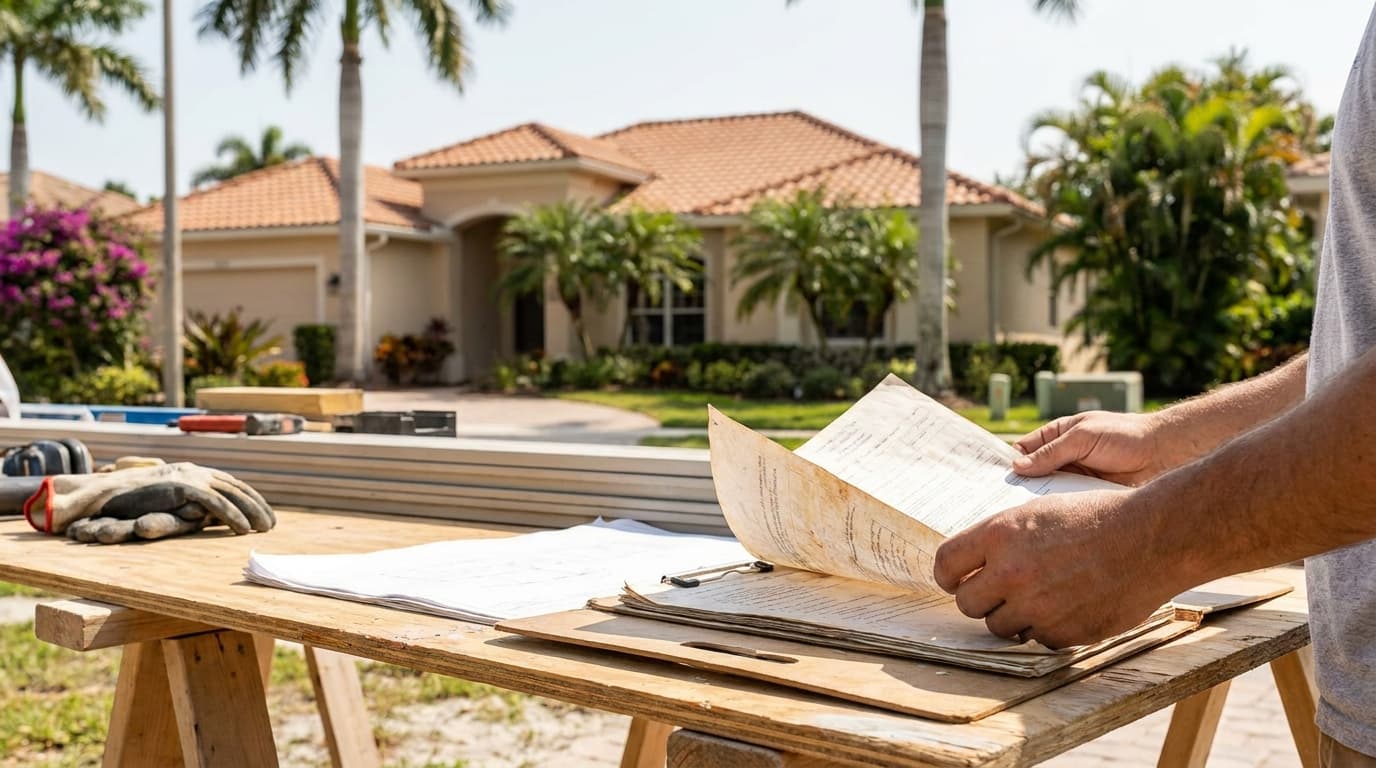

If you've recently received a code enforcement notice, discovered unpermitted work in your home, or are preparing to sell and realized renovations were done without permits—you're not alone, and you do have options. In Broward County, Florida, the process of filing an after-the-fact permit (also called a retroactive permit or amended permit) is designed to bring non-compliant work into legal standing while protecting both your property rights and public safety.
This guide walks you through exactly what after-the-fact permits are, why Broward County has specific procedures for them, and the concrete steps you need to take to resolve the situation. Whether you're dealing with a kitchen remodel, an unpermitted addition, or electrical work done by a contractor who cut corners, understanding the process will reduce stress and help you move forward.
What Is an After-the-Fact Permit in Broward County?
An after-the-fact permit is a retroactive building permit filed for work that was completed without a permit or in violation of an issued permit. It's a legal mechanism that allows homeowners to bring unpermitted or non-compliant work into code compliance after the fact.
In Broward County, the Building Department (operated under Broward County Code Chapter 8 and aligned with Florida Statute 553, which governs building code and construction standards) allows homeowners to file after-the-fact permits, but the process is more stringent than filing a permit before work begins. This is because:
Key Warning: Not all unpermitted work can be brought into compliance with an after-the-fact permit. Work that is structurally unsafe, violates zoning restrictions, or was performed by unlicensed contractors may be subject to demolition orders or code enforcement fines regardless of your retrofit efforts.
Why This Matters in Broward County
Broward County includes high-value municipalities like Fort Lauderdale, Deerfield Beach, Coral Springs, and Pembroke Pines. The county's building department enforces both state-level Florida Building Code (based on the International Building Code) and local amendments. This dual enforcement means:
Why You Might Need an After-the-Fact Permit
Unpermitted work happens for several reasons:
Regardless of how you got here, the path forward is the same: document the work, file the after-the-fact permit, pass inspections, and obtain a Certificate of Completion.
Watch Related Videos on YouTube
after the fact permit Broward County Florida how to fix guide
Step-by-Step Guide to Filing an After-the-Fact Permit in Broward County
Step 1: Assess the Scope and Nature of the Work
Before you contact the Broward County Building Department, you need to understand exactly what work was done and whether it's likely to be acceptable for retroactive permitting.
What qualifies for after-the-fact permits:Actionable Tip: If the work involved structural changes, pool installation, or electrical/plumbing by an unlicensed contractor, consult with a Florida-licensed contractor or engineer before proceeding. Some issues require professional assessment before filing.
Step 2: Gather Documentation of the Work Completed
The Broward County Building Department will require evidence that the work exists and meets code. Start collecting:
If you don't have original as-built drawings, you have two options:
Step 3: Contact the Broward County Building Department
Reach out to the Building Department to understand your specific situation before formally filing.
Broward County Building Department Contact:Many jurisdictions within Broward County have slightly different requirements, so calling your specific city's building department (e.g., City of Fort Lauderdale Building Services, City of Deerfield Beach) may yield more precise guidance than calling the county main line.
Step 4: Obtain Required As-Built Drawings or Plans
Most after-the-fact permits require at least a basic set of plans showing what was constructed. These don't need to be elaborate, but they must be accurate and dimensioned.
Options for obtaining plans:| Option | Cost | Timeline | Best For |
|---|---|---|---|
| Licensed architect creates as-built plans | $1,000–$3,000+ | 5–10 business days | Complex additions, structural work |
| Licensed engineer creates as-built plans | $800–$2,500 | 5–10 business days | Electrical, plumbing, HVAC systems |
| Contractor who did the original work creates plans | $300–$800 | 3–5 days | Simple renovations if contractor is available |
| Building Department reviews sketch/photos first | FREE | 3–5 days | To see if formal plans are required |
Step 5: Complete the Broward County Building Permit Application
You'll need to submit:
For after-the-fact permits specifically, include a cover letter requesting retroactive permit status and acknowledging that the work was completed without a permit.
Step 6: Submit the Application and Pay Application Fees
Submit your completed application package to your local building department office. Broward County does not accept after-the-fact permit applications via email—they must be submitted in person or through a contractor/representative.
Fee structure for Broward County (as of 2024):Application fees are based on the value of the work. For after-the-fact permits, the department typically applies standard permit fees plus a late filing fee (often 50% of the base permit fee). Example:
Important Note: Fees vary by municipality within Broward County. Fort Lauderdale, Coral Springs, and Deerfield Beach have different fee schedules. Confirm the exact fee with your local building department before submitting.
Step 7: Undergo Building Department Review and Request for Information (RFI)
After you submit your application, a plan reviewer will examine your documentation. Most after-the-fact permits receive at least one Request for Information (RFI), asking for:
Step 8: Hire a Licensed Contractor (If Necessary) and Address Code Deficiencies
If the review identifies code violations—for example, incorrect electrical wiring, inadequate ventilation, or structural concerns—you'll need to hire a contractor to bring the work into compliance.
Common after-the-fact issues and remediation:| Issue | Typical Remedy | Cost |
|---|---|---|
| Electrical work by unlicensed person | Re-work by licensed electrician and re-inspection | $500–$2,000 |
| Bathroom ventilation inadequate | Install/upgrade exhaust fan to code | $200–$600 |
| Roof installed over existing roof (exceeds 2-layer limit) | Remove old roof; install new roof to code | $3,000–$8,000 |
| Deck posts not on proper footings | Add concrete footings below frost line | $500–$1,500 |
| Electrical panel upgrade without proper grounding | Hire electrician to verify/upgrade grounding | $300–$1,000 |
Once remediation work is complete, request a Revision Review from the Building Department (no additional fee). They'll verify the corrections and proceed to the inspection phase.
Step 9: Pass Building Inspections
Once the plan review is complete and approved, you'll schedule inspections. Inspections vary based on the work type:
Typical inspection sequence:If the work passes all inspections, the Building Department will issue a Certificate of Occupancy (CO) or Certificate of Completion.
Step 10: Obtain the Certificate of Completion and Update Your Records
Once all inspections pass, the Building Department will issue official documentation:
County-Specific Considerations for Broward County
Florida Building Code and Local Amendments
Broward County follows the 2023 Florida Building Code (updated every three years). However, several municipalities within the county have local amendments:
When you file your after-the-fact permit, confirm which code version and local amendments apply to your property.
Flood Hazard Zone Requirements
Much of Broward County is in flood hazard zones (AE, VE, or X zones). If your property is in a high-risk zone (AE or VE), after-the-fact permits for any work within the flood elevation will require:
This often adds significant cost and complexity to after-the-fact permits. If your property is in a flood zone, contact a Florida-licensed surveyor or engineer for an elevation assessment before filing.
Code Enforcement History
If you already have a code enforcement case open against your property, the Building Department will cross-reference it. The good news: filing an after-the-fact permit demonstrates good faith and often satisfies code enforcement requirements. However, accumulated fines may still apply.
If you receive a code enforcement notice:Common Challenges and Solutions
Challenge: The Original Contractor Is Unavailable
Problem: The contractor who did the work has closed their business, moved out of state, or refuses to help with documentation. Solution:Challenge: Work Was Performed by an Unlicensed Contractor
Problem: The person who did the electrical, plumbing, or HVAC work was not licensed, and the work doesn't meet code. Solution:Challenge: Structural Work or Additions That Exceed Zoning Limits
Problem: An addition was built that exceeds the setback limits, height restrictions, or floor area ratio for your zone. Solution:Challenge: Multiple Issues and High Remediation Costs
Problem: The review uncovers multiple code violations, and remediation costs are substantial. Solution:Warnings and Red Flags
Critical Warning: If you receive a code enforcement notice mentioning demolition, stop work immediately and consult an attorney. Demolition orders typically require legal intervention and cannot be resolved with an after-the-fact permit alone.
FAQ: After-the-Fact Permits in Broward County
Q: How long does an after-the-fact permit take from start to finish?
A: Typically 4–12 weeks, depending on:Simple projects (roof replacement, window replacement) may take 4–6 weeks. Complex projects (additions, pool installations) may take 12+ weeks.
Q: Will I be fined for unpermitted work?
A: Possibly. Broward County can impose:However, filing an after-the-fact permit demonstrates good faith and often reduces or eliminates fines, especially if you file before receiving a code enforcement notice.
Q: Can I sell my home with unpermitted work if I file an after-the-fact permit?
A: Once you file, you've initiated the compliance process. However, the sale may be contingent on passing inspections and obtaining the Certificate of Completion. Some lenders and title companies will allow the sale to close with a permit pending, provided you submit evidence of filing. Discuss with your real estate agent and lender before listing.Q: What if the Building Department says the work cannot be permitted retroactively?
A: You have limited options:Q: Do I need a contractor's license to file an after-the-fact permit?
A: No. As a homeowner, you can file the permit yourself. However, if the work involves licensed trades (electrical, plumbing, HVAC) and was performed by unlicensed workers, you'll need to hire a licensed contractor to verify or remediate the work.Q: Will my homeowner's insurance cover unpermitted work?
A: Usually not. Most homeowner's policies exclude claims related to unpermitted work. Once you obtain the Certificate of Completion, notify your insurance company—they may then cover the completed work and may even adjust your premium if the improvements increase home value.Q: What's the difference between a Certificate of Completion and a Certificate of Occupancy?
A:Both documents are equally valid for proving the work is permitted.
Q: Can I do the remediation work myself, or do I need to hire a contractor?
A: It depends on the trade:Q: What if I disagree with the Building Department's interpretation of the code?
A: You can:These processes add time and cost but are available if you believe the Building Department's determination is incorrect.
Protect Yourself: Document Everything Going Forward
If you successfully obtain an after-the-fact permit and Certificate of Completion:
Next Steps: Get Professional Guidance
Navigating an after-the-fact permit in Broward County can be complex, especially if code violations are involved. While this guide provides a comprehensive roadmap, your specific situation may require professional expertise.
Get a County-Specific Permit Violation Action Plan
If you've received a code enforcement notice or discovered unpermitted work and aren't sure where to start, HomeProBadge offers a Permit Violation Action Plan specifically designed for Broward County homeowners.
Here's what you'll get:
The Permit Violation Action Plan removes the guesswork and gives you a clear, prioritized roadmap. It costs a fraction of a single consultation with a code consultant and saves you weeks of research.
Visit HomeProBadge.com to get started. Answer a few questions about your property and the unpermitted work, and you'll receive a customized action plan within hours.You can also use HomeProBadge to find and vet licensed contractors in your area for remediation work. All contractors on the platform are identity-verified and background-checked, so you know you're working with legitimate professionals.
Consider Professional Help
Final Thoughts
Unpermitted work is stressful, but it's also common and solvable. Broward County's after-the-fact permit process exists precisely for situations like yours—when work is done without permits and needs to be brought into compliance.
The key is to act quickly. The longer unpermitted work sits, the higher fines accumulate and the more difficult it becomes to remediate. By filing an after-the-fact permit now, you're taking control of the situation, demonstrating good faith, and protecting your home's value and your peace of mind.
Start with Step 1 above, gather your documentation, and contact your local building department. You've got this.