


You finish a textbook water heater swap, clean up the work area, collect the homeowner's thanks, and pull away. By the time you reach the next call, that excellent job has vanished from public view. A competitor with less experience but a phone full of job photos may look more established because homeowners can see what they do.
That's the practical purpose of learning how to create social media content as a home service professional. You're not auditioning to become an influencer. You're documenting proof of work, explaining decisions, and giving nearby homeowners a reason to trust your company before they call.
The audience is already there. Social media reached 5.24 billion active user identities in 2025, equal to 63.9% of the world's population, while adoption among internet users reached 94.2%, according to DataReportal's Digital 2025 global overview. Your job is to build a system that turns real work into useful content without stealing your evenings.
The system is straightforward: plan, capture, edit, caption, publish. Once those five steps become part of the job closeout, one completed project can support several platform-native assets instead of disappearing when the truck leaves.
Why Your Best Marketing Is Already in Your Work Truck
A homeowner doesn't know how carefully you diagnosed the failing water heater unless you show the evidence. They can't see the unsafe splice behind a wall, the storm damage beneath lifted shingles, or the drainage problem hidden under an overgrown yard. They see the finished result, your explanation, and the confidence that comes from a professional who documents the work.
That makes social media a proof-of-work channel, not a performance contest. A clear before photo, a short clip of the repair in progress, and a finished image tell a stronger story than a generic graphic saying your company is reliable.
Practical rule: Don't ask, “What should I post?” Ask, “What did we solve today that a homeowner would want explained?”
The platforms themselves have evolved toward this kind of visual, real-time communication. SixDegrees launched in 1997, MySpace expanded customizable brand pages in 2003, Facebook introduced brand pages and scalable social advertising in 2004, YouTube opened video marketing in 2005, Twitter enabled real-time customer communication in 2006, Instagram accelerated visual storytelling in 2010, and TikTok made algorithm-driven short-form discovery central after its 2016 launch, as outlined in this history of social media marketing milestones. Those changes explain why a copied text update rarely works as well as a platform-native job story.
The five-part job-content pipeline
Start before the job is finished. During scheduling or morning dispatch, identify which project might produce useful evidence. You don't need to turn every service call into a production. Choose work with a visible problem, a meaningful process, or a clear transformation.
The approach works because it fits the trade. You already carry the subject matter in the truck. The camera preserves it.
Capturing Job Photos and Videos That Tell a Before-and-After Story
The most useful job documentation follows a sequence. A finished photo alone proves that something looks better, but it doesn't show the starting condition or the professional judgment behind the result. Capture enough context for a stranger to understand the problem without revealing private information.
Use a four-shot field checklist
Begin with a wide establishing shot. Show the room, exterior elevation, yard, panel location, or roof section so viewers understand where the work happened. Keep identifying details such as house numbers, mail, paperwork, and personal photographs out of frame unless the homeowner has clearly approved them.
Next, move closer to the problem. Photograph the corroded connection, failed component, damaged flashing, blocked drain, overgrown bed, or residue left behind by a deep clean. This close-up carries the tension in the story. Without it, the final image looks like a claim rather than evidence.
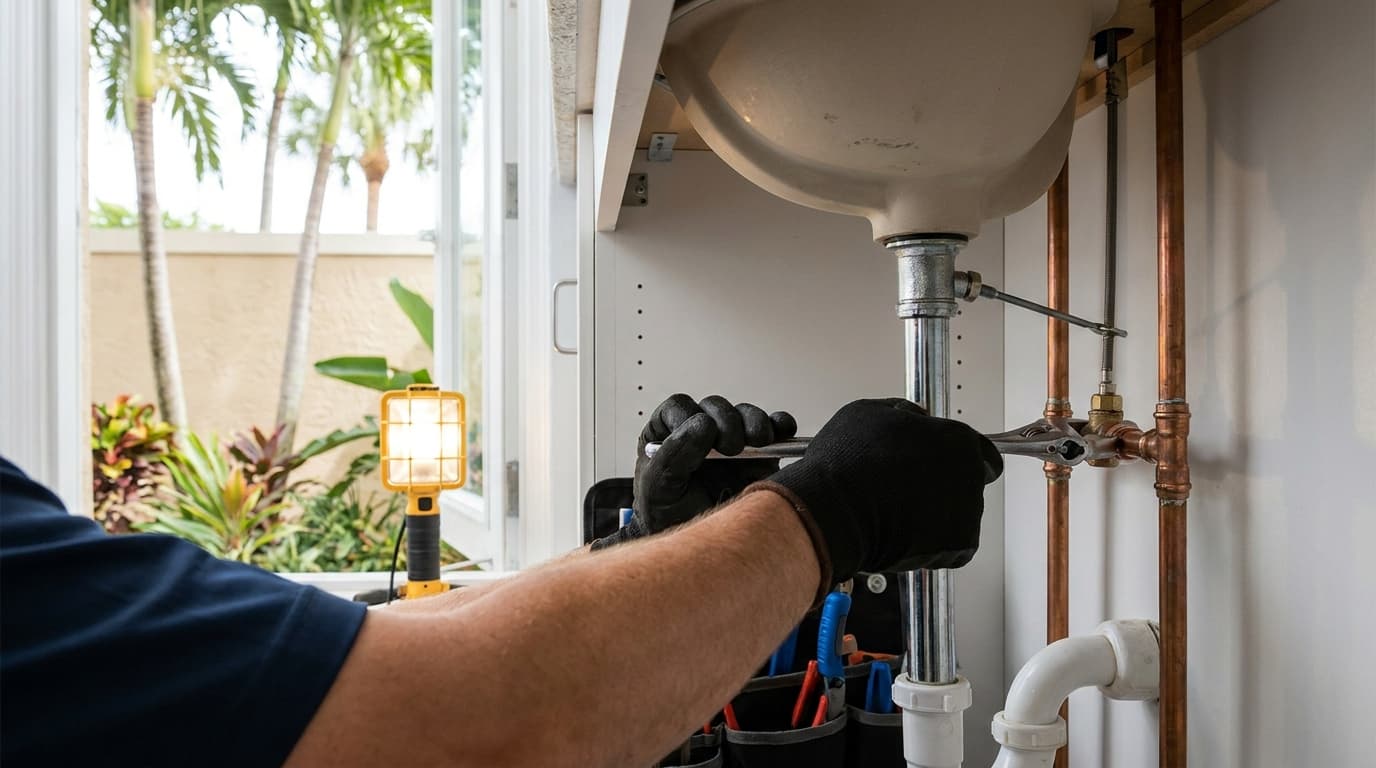
Capture a mid-process shot while the work is underway. A wrench on the fitting, conduit being installed, damaged material being removed, or soil being shaped gives the viewer a sense of craft. Then take the final reveal after cleanup. Shoot from a similar angle to the before image whenever possible, because visual comparison becomes immediate.

Hold the phone steady, clean the lens, and use available light instead of placing the subject in a dark corner. You don't need a cinematic camera. You need a sharp image where the condition is obvious and a video that doesn't shake so badly viewers leave before the explanation begins.
Turn one job into several assets
One drain-cleaning call might produce a short vertical video showing the obstruction, a photo set pairing the backed-up fixture with the restored flow, and a written recap explaining the warning signs. Those are different assets built from the same verified work, not three invented stories.
This human-led process matters. Hootsuite's trend reporting emphasizes original content based on insights unique to a brand and its customers, with AI supporting planning, repurposing, and distribution rather than replacing the underlying experience, as summarized in this coverage of the 2025 social media trends report.
Write the caption in the order the homeowner experienced the job:
If you're documenting larger projects, construction photo documentation guidance can help you build a more consistent record instead of relying on whichever images happen to remain in a technician's camera roll. For adjacent property-focused marketers, the resource on social media content for real estate offers another useful perspective on turning visual property evidence into audience-friendly stories.
Writing Captions in Each Platform's Native Style
A good job story can fail when the caption ignores the behavior of the platform. Facebook readers often respond to neighborhood context and a question. Instagram needs the image or carousel to carry the first impression. TikTok needs an immediate visual hook. X favors compact observations and conversation. LinkedIn gives you room to explain the operational lesson or technical decision.
The underlying proof can stay the same. The presentation cannot.
A 2026 benchmark comparison reports TikTok engagement around 4.90%, while Instagram is reported at under 1.0% in the same comparison set, according to the cited social media benchmark analysis. The same reporting says Facebook Live delivers about four times more engagement than link posts and six times more than image posts. Those figures don't guarantee results for your company, but they do support a practical conclusion: format-fit matters.

One drain job, five native versions
Suppose you cleared a recurring kitchen drain blockage, found buildup in the line, tested the system, and left the cabinet area clean. Here's how the same evidence changes by channel.
| Platform | Native Tone | Best Format | Example Opening Line |
|---|---|---|---|
| Neighborly and conversational | Photo set, community post, or live walkthrough | “A homeowner called after the kitchen sink started backing up during normal use.” | |
| Visual and concise | Before-and-after carousel or short video | “From slow drain to clear flow. Here's what we found.” | |
| TikTok | Fast and hook-first | Vertical short-form video | “The plunger wasn't reaching this blockage.” |
| X | Terse and responsive | Short observation with image or video | “Recurring drain backups often point beyond the fixture.” |
| Credibility-forward | Project recap with technical takeaway | “This service call was a useful reminder to diagnose the line, not just the symptom.” |
On Facebook, add a local question such as, “Have you noticed this before?” Keep the tone helpful rather than alarmist. On Instagram, let the carousel show the contrast and use a short caption that points viewers toward the result. TikTok should open with the problem in the first moment, then show the inspection and fix. X can turn the job into a compact maintenance observation. LinkedIn can explain the diagnostic process and the value of documenting completed work.
Reuse the evidence, not the wording.
Blind cross-posting wastes the advantage of each network. Publish the core proof asset once, then rewrite the opening, pacing, call to action, and format for the people using that platform. That's more work than pressing “share everywhere,” but it's less work than creating five unrelated posts from scratch.
Ready-to-Use Post Templates for Every Trade
The easiest way to start is to keep a few fill-in-the-blank captions in your notes app. Replace the brackets with facts from the job, remove anything that doesn't apply, and attach the clearest evidence.

Plumber emergency repipe
“[Homeowner situation] led to an urgent repipe at [general area]. We found [visible condition or cause], replaced [system or section], and tested [specific function] before cleanup. The finished result is shown beside the original condition. If your home is showing [warning sign], schedule an inspection before the problem spreads.”
Electrician panel upgrade
“The existing panel had [condition], which made [symptom or limitation] difficult to address. We installed [approved equipment or upgrade], labeled the circuits, and verified operation before leaving. The final photo shows the completed, organized setup. Questions about an older electrical panel? Send a photo of the exterior label, without sharing personal information.”
Roofer storm-damage repair
“After [weather event or homeowner observation], we inspected [roof area] and found [damage]. We removed the affected material, repaired [underlying issue], and finished with [new material or protection]. The before-and-after images show the section we worked on. A roof inspection can help identify damage that isn't visible from the ground.”
Landscaper backyard transformation
“This yard started with [initial condition]. We redesigned [bed, drainage area, patio edge, or planting zone], installed [materials or plants], and finished with [cleanup or maintenance detail]. The final view shows how the space now functions for [use]. Which part of your outdoor space needs the most attention?”
Cleaner move-out deep clean
“The property needed a move-out clean after [tenancy, renovation, or general condition]. We focused on [kitchen, bathrooms, floors, appliances, or another area], removed [type of buildup], and completed a room-by-room check before handoff. The final photos show the surfaces ready for the next occupant.”
Don't let every post become a portfolio reveal. Mix in a short answer to a homeowner question, a tool or material explanation, a local maintenance reminder, and a team or process post. If you're evaluating AI-assisted drafting, compare the result against the actual job record. Guidance on AI-generated social media posts is useful when the goal is speed, but the caption still needs your verified details and trade judgment.
Here's a practical publishing aid for showing how a job can be repackaged without repeating the same caption.
Staying Legal and Turning One Job Into a Month of Content
A homeowner's property isn't automatically your marketing asset. Ask for permission before posting recognizable interiors, exteriors, vehicles, children, pets, names, addresses, paperwork, or other details that could identify the customer. A simple written approval attached to the job record is easier to manage than trying to reconstruct consent after a post attracts attention.
If consent is unclear, crop faces and addresses, blur identifying details, and avoid showing documents. Don't use a dramatic project photo if it exposes more of the homeowner's private life than the marketing value justifies.
Permits need similar care. Don't imply that a project was permitted, inspected, or approved unless your records support that statement. You can describe the work completed and note that permit requirements vary by location, but don't turn a social caption into a legal guarantee. HomeProBadge provides county-specific permit violation action plans across all 50 U.S. states and 3,143 counties, which is relevant context for pros who want to treat compliance awareness as part of customer trust.
Build a content bank around real work
A small set of repeatable pillars keeps your feed from drifting into random job photos. Neutral 2026 strategy guidance recommends four to six recurring themes with a balanced mix of educational, entertaining, inspiring, and promotional posts, and treats three high-quality posts per week as a sustainable operating benchmark, as described in this 2026 social media strategy framework.
Your pillars might include:
One job can feed several pillars without pretending the work was different. A roof repair becomes a proof post, a homeowner education clip about warning signs, and a process recap about inspection and cleanup. Keep the raw files in a labeled folder with the job date, service type, location area, consent status, and approved caption notes.
A scheduling system can reduce the last-minute scramble. Tools such as automatic social media posting can help organize platform-specific versions, but review every scheduled post before it goes live. Automation should handle repetition, not make claims your crew can't verify.
Metrics That Matter and Your 30-Day Starting Plan
Follower count tells you how many accounts clicked a button. It doesn't tell you whether a nearby homeowner saved the post for a future repair, shared it with a neighbor, watched the explanation, or sent a message asking for an estimate.
For a local service company, track the actions that show intent. Saves indicate future usefulness. Shares indicate that the post traveled through personal recommendations. Watch time shows whether the explanation held attention. DM volume reveals direct buying questions, especially when messages mention a service area, symptom, or project type.
Social search changes the job further. Sprout Social's trend reporting describes a move away from chasing virality and toward purposeful communities, social search and answer-engine optimization, plus video strategies matched to platform behavior, as reported in the social trends report coverage. That favors captions and videos built around questions homeowners often ask, such as “Why does my breaker trip when the dryer runs?” or “What does storm damage look like from the ground?”
The post that gets saved by three serious homeowners can be more valuable than the post that gets seen by a crowd outside your service area.
A practical 30-day starting plan
Week one, capture and publish one complete job story. Use the wide shot, problem detail, process image, and final reveal. Write the caption from the homeowner's symptom through the completed fix. Week two, add a second format. Turn the same job into a short vertical video, carousel, or written recap. Change the hook and pacing for the platform instead of duplicating the original caption. Week three, establish your pillar rotation. Choose your recurring themes, then assign the next posts across proof, education, process, local trust, people, and offers. If planning feels scattered, use a guide on how to plan posts with a content calendar to organize the sequence. Week four, review the signals. Compare saves, shares, watch time, DMs, website clicks, and calls or inquiries you can connect to the posts. Repeat the topics and formats that generated useful homeowner action. Drop the posts that consumed time without producing meaningful response.Consistency with real proof beats perfection. Your first useful post can come from the phone already sitting in the work truck, provided you have permission and a clear story.
HomeProBadge helps home service professionals turn verified job evidence into before-and-after visuals, platform-native captions, public proof of work, and scheduled social posts. Visit HomeProBadge to create a profile, organize your reputation, and turn the next completed job into content that can help local homeowners find and trust you.