

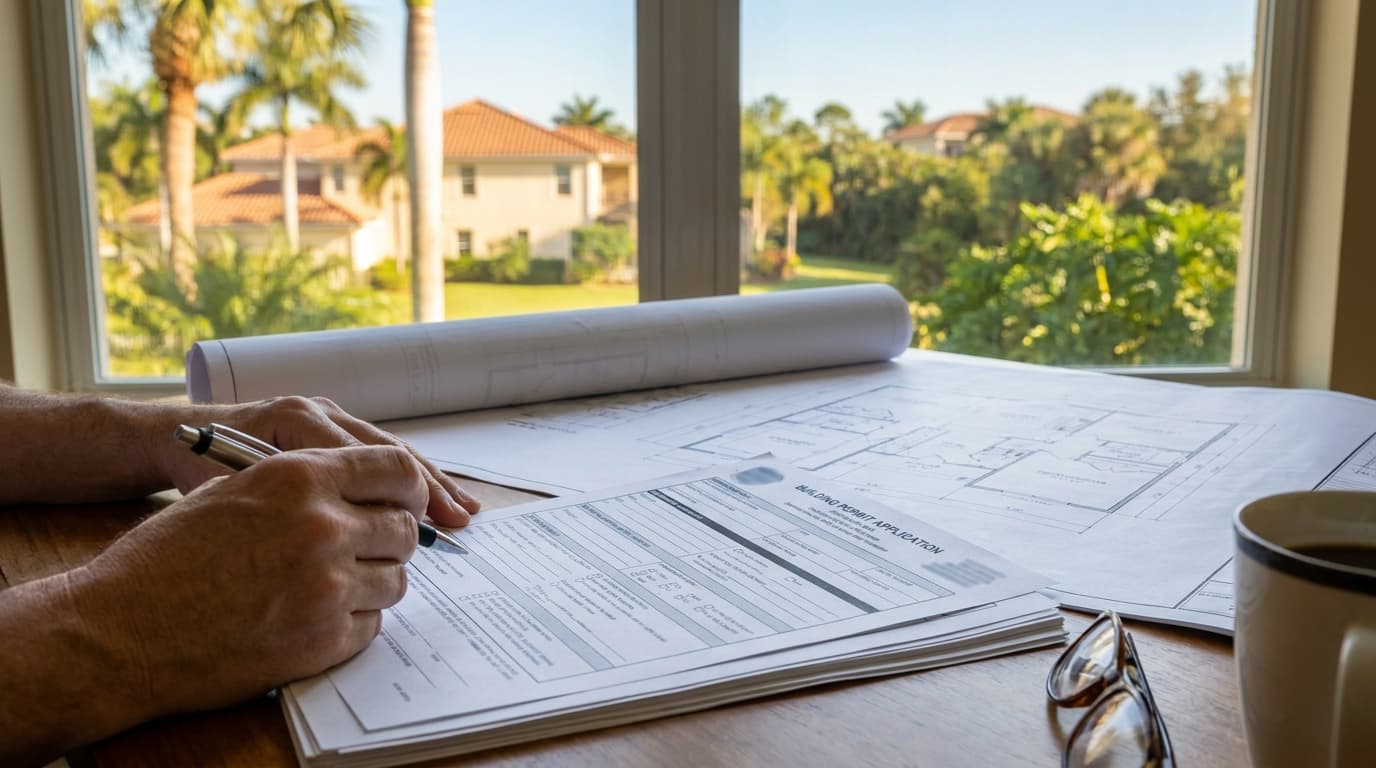

If you've just received a code enforcement notice in Charlotte County, or you're wondering whether that deck your contractor built needs a permit, you're not alone. Every year, hundreds of Charlotte County homeowners find themselves confused about local building codes, permit requirements, and what happens when work gets flagged by the county.
The good news: Charlotte County has clear rules, and violations are fixable. The faster you understand the system, the faster you can move forward—whether that means getting permitted work legalized, hiring a licensed contractor, or working with the county to resolve the issue.
This guide walks you through everything a Charlotte County homeowner needs to know about building permits, why they matter, and exactly what to do if you've got unpermitted work on your property.
What Is a Building Permit—and Why Does Charlotte County Require One?
A building permit is an official approval from Charlotte County that allows you to perform construction, renovation, or installation work on your property. It's not optional for most projects—it's the law.
Under Florida Statute 553 (Florida Building Code), all municipalities and counties must enforce consistent statewide building standards. Charlotte County follows the Florida Building Code to ensure that construction meets safety, electrical, plumbing, structural, and environmental standards.
When you pull a permit:
Without a permit, your work is invisible to the county—which means no inspections, no safety checks, and no official record. That creates liability for you, your contractor, your insurance company, and future buyers.
Why this matters: Unpermitted work can void your homeowner's insurance claim, reduce your home's resale value by 5–10%, and trigger fines or forced corrections when the county finds out.
Charlotte County Building Department: Contact and Basic Facts
Charlotte County's building and development services are handled through the Community Development Department.
Key contact information:Charlotte County processes most residential permits within 5–10 business days for simple projects (like replacing a water heater or a deck under 200 sq ft with no electrical). Complex projects (new homes, additions, major renovations) may take 2–4 weeks.
Which Projects Require a Permit in Charlotte County?
Not every home improvement needs a permit, but most do. Here's what requires one:
Projects That ALWAYS Need a Permit
Projects That Typically DON'T Need a Permit
Key principle: When in doubt, call Charlotte County Building & Development at 941-743-1200. A 5-minute phone call beats a code violation notice.
Watch Related Videos on YouTube
Charlotte County Florida building permits homeowner guide how to fix guide
How to Pull a Building Permit in Charlotte County
The permit process is straightforward if you follow the steps.
Step 1: Determine Your Project Scope
Write down exactly what you're planning:
Step 2: Contact the County (Pre-Application)
Call or visit the Charlotte County Community Development Department. Ask about:
Many homeowners skip this step and regret it. The county staff can save you thousands in rework if they catch issues before construction.
Step 3: Prepare Your Application and Documents
You'll need:
- Simple projects (deck, fence): Basic sketch with dimensions may suffice
- Complex projects (addition, pool, electrical): Full architectural or engineering plans
For electrical, plumbing, or structural work, Charlotte County often requires plans stamped by a licensed professional (PE or architect). Don't skip this—it's a safety requirement under Florida law.
Step 4: Submit Your Application
You can submit in person at the Charlotte County Courthouse (18500 Murdock Circle) or, in some cases, by mail or through the county's online portal (check charlotte.fl.us for current e-permitting options).
Include:Step 5: Permit Review and Approval
County staff will:
Once you have your permit, you'll receive:
Step 6: Schedule Inspections and Complete Work
As work progresses, you must request inspections at required stages. The county will inspect and either:
Once all inspections pass and work is complete, the county issues a Certificate of Occupancy or Certificate of Completion.
Understanding Charlotte County Building Code Standards
Charlotte County enforces the Florida Building Code (2023 Edition), which is based on the International Building Code (IBC) but tailored to Florida's climate, hurricanes, and environmental conditions.
Key standards homeowners encounter:
Structural & Wind Resistance
All structures must be designed to withstand Florida wind loads (based on the county's wind speed zone). Charlotte County is in a high-wind area—typical requirements include:
Electrical Safety
Plumbing & Drainage
Fire Safety
Environmental & Flood Considerations
If your property is in a flood zone (Charlotte County has several, particularly near waterways):
You can check your flood zone status on the FEMA Flood Map or Charlotte County's GIS mapping tool.
What Happens When You Get a Code Enforcement Notice
If the county discovers unpermitted work on your property, you'll receive a Notice of Violation. This is stressful, but it's not the end of the world.
The Notice Explains:
Your Options:
Option 1: Legalize the Work (Retrofit Permit)You can apply for a retroactive or retrofit permit to bring unpermitted work into compliance. Steps:
If the work meets code, it gets legalized. If it doesn't, you must correct it or remove it.
Option 2: Remove the WorkIf legalizing is too expensive or the work can't meet code, you remove it entirely. You'll need to:
In rare cases, you can request a variance from code if:
Variances are difficult to obtain and require a county hearing.
Critical: Don't ignore a code enforcement notice. The county can place a lien on your property, fine you daily, or force corrective action at your expense. Responding quickly protects you.
Common Unpermitted Work in Charlotte County
These violations show up repeatedly in code enforcement:
| Violation Type | Typical Cause | Average Cost to Fix | Why It Matters |
|---|---|---|---|
| Unpermitted deck or pool | Homeowner hired unlicensed contractor | $2,000–$8,000 | Structural failure, injury liability, electrical hazards |
| Electrical DIY work | Homeowner tried to save money | $1,500–$5,000 | Fire hazard, shock risk, insurance claim denial |
| Plumbing additions | Informal contractor work | $1,000–$4,000 | Backflow, contaminated water, drain failure |
| Shed or storage structure | Homeowner thought it was exempt | $800–$3,000 | Zoning violation, setback issues, safety hazard |
| Roofing without permit | Contractor cut corners | $2,000–$10,000+ | Improper fastening, wind damage, insurance issues |
| Window/door replacement | Homeowner didn't know permits were needed | $500–$2,000 | Structural integrity, egress requirements violated |
| Second kitchen or bathroom | Unpermitted addition | $3,000–$15,000 | Plumbing/electrical not to code, septic overload |
| HVAC installation | Direct replacement done without inspection | $500–$2,000 | Improper sizing, refrigerant violation, efficiency loss |
How to Avoid Permit Problems in Charlotte County
1. Always Ask Before You Hire
When you get a contractor bid, explicitly ask:
A licensed contractor in Charlotte County should know whether a permit is needed. If they say no when the county would say yes, that's a red flag.
2. Verify Contractor Licensing
All electrical, plumbing, HVAC, and roofing work must be done by Florida-licensed contractors. You can verify licenses at:
Hiring unlicensed contractors is cheaper upfront but costs thousands to fix later—and it's illegal.
3. Get Everything in Writing
Your contract should state:
4. Understand Your Homeowner Responsibilities
Even when you hire a contractor:
5. Keep Records
Documentation saves you:
If you ever sell your home or need insurance, these documents prove your work is legitimate.
Zoning, Setbacks, and Other Charlotte County Requirements
Beyond building codes, Charlotte County has zoning rules that affect what you can build and where.
Setbacks
Setbacks are the minimum distance a structure must be from property lines:
Variations exist by zoning district (residential, commercial, agricultural). Your property's zoning determines your specific setbacks.
Height Limits
Residential structures are typically limited to 35 feet. Accessory structures (sheds, garages) are often limited to 20–25 feet.
Lot Coverage
Your zoning district limits how much of your lot can be covered by structures. A typical residential limit is 40–50% of the lot.
Impervious Surface Limits
In some areas (especially near water bodies), Charlotte County limits hard surfaces (concrete, roofs, pavement) to protect stormwater drainage.
How to check your property:Flood Insurance, Storm Resistance, and Permits
Charlotte County has significant flood and hurricane risk. If you're in a flood zone (including flood zone X—moderate risk), understanding permit implications is critical.
Flood Zone A and AE (High Risk)
If your property is in Flood Zone A or AE:
Hurricane-Resistant Retrofits
Florida encourages hurricane mitigation through the Florida Homeowners Hurricane Mitigation Grant Program. Eligible improvements (roof reinforcement, hurricane shutters, safe rooms) may have grants available. These upgrades still require permits but may have financial incentives.
Selling Your Home: Disclosure and Permits
If you have any unpermitted work when selling, Florida law requires you to disclose it to the buyer via the Property Disclosure Form (FCAR FS 4.237).
Non-disclosure can result in:
Getting Help: Homeowners Options in Charlotte County
Option 1: Work Directly with the County
Charlotte County staff are generally helpful. If you've received a violation or want guidance on a project:
Explain your situation clearly. If the county sees you're being compliant, they'll work with you.
Option 2: Hire a Professional
For complex violations, consider hiring:
These professionals understand Charlotte County's process and can often resolve violations faster.
Option 3: Use Permit Violation Action Plans
If you're overwhelmed by a code enforcement notice or unpermitted work discovery, HomeProBadge provides county-specific Permit Violation Action Plans for Charlotte County homeowners.
These AI-generated plans give you:
You can get a Charlotte County Permit Violation Action Plan at homeprobadge.com in minutes, not weeks.
Frequently Asked Questions About Charlotte County Permits
Q: How much does a permit cost?
A: Fees vary by project type and cost of work. Simple projects (under $1,000) might cost $50–$150. A $10,000 deck or addition could cost $200–$500. Call the county for an exact quote based on your project.Q: Do I need a permit to replace my roof?
A: Yes, almost always. Even reroof-in-place jobs require permits in Charlotte County. The county wants to verify proper fastening and wind-resistant installation.Q: Can I do electrical work myself in Florida?
A: Homeowners can do limited electrical work (owner-builder projects on your own primary residence), but it still requires a permit and inspection. Most homeowners hire a licensed electrician—it's safer and usually required by lenders/insurers.Q: What if my contractor disappeared and left work unfinished?
A: Contact the Florida Department of Business and Professional Regulation (DBPR) to file a complaint. Also contact Charlotte County code enforcement. Depending on the violation, the county may require you to remediate or the contractor's bonding may cover it.Q: Will the county make me tear down my unpermitted addition?
A: Not necessarily. The county prefers retrofit permits. If your addition is structurally sound and meets current code (or can be made to), you can legalize it. Demolition is a last resort.Q: How long is my permit valid?
A: Typically 6–12 months from issuance. If work isn't substantially started within that period, the permit expires. You can request extensions, but the county may require plan updates.Q: Do I need permits for a fence?
A: Typically yes. Fences must comply with height limits and setback rules. A standard residential fence (under 6 feet, properly set back) is often administratively approved without detailed review, but you still need a permit.Q: What happens if I don't pull a permit and get caught?
A: The county issues a Notice of Violation. You have 14–30 days to respond. Options: legalize via retrofit permit, remove the work, or request a variance. Ignoring it leads to fines, liens, and forced corrective action at your expense.Moving Forward: Your Next Steps
If you're navigating Charlotte County building permits, here's your action plan:
Immediate (Today)
- Do you have unpermitted work? (Code violation notice received?)
- Are you planning a project and unsure if it needs a permit?
- Do you need to legalize existing work before selling?
- Explain your situation
- Ask what your next step is
- Note the name of the staff member and any guidance
Short-term (This Week)
- Gather the Notice of Violation and any county correspondence
- Note the deadline to respond
- Document photos of the unpermitted work
- Prepare a detailed description (what, where, estimated cost)
- Research contractor licenses at myfloridalicense.com
- Get 2–3 licensed contractor bids that include permit and inspection fees
Medium-term (Next 1–2 Weeks)
- If your violation is complex, use a Permit Violation Action Plan at HomeProBadge (homeprobadge.com) for county-specific remediation steps
- The plan includes contractor recommendations verified through HomeProBadge's directory of licensed, background-checked professionals in Charlotte County
- You'll have a clear roadmap and professional recommendations in one place
- Legalize: Apply for retrofit permit with as-built plans
- Remove: Hire contractor to demolish and restore
- Request variance: Only if legalization truly isn't feasible (rare)
Long-term (Next 1–3 Months)
- Complete applications, submit permits, schedule inspections
- Work with your contractor and county throughout process
- Document all approvals and inspections
- Keep records indefinitely (protects home value, future sales, insurance claims)
Final Thoughts
Building permits exist to protect you—your safety, your home's value, your insurance coverage, and your liability. Charlotte County's requirements are fair and based on decades of Florida building experience.
If you're facing a violation, unpermitted work, or uncertainty about a project, don't panic. The system is designed to let you fix problems. The county would rather work with a compliant homeowner than punish one.
Take the first step today. Call the county, clarify your situation, and move forward with confidence.
Get a County-Specific Permit Violation Action Plan
If you've received a code enforcement notice or discovered unpermitted work in Charlotte County, HomeProBadge's Permit Violation Action Plans provide step-by-step remediation paths tailored to your exact situation and county.
You'll get: