

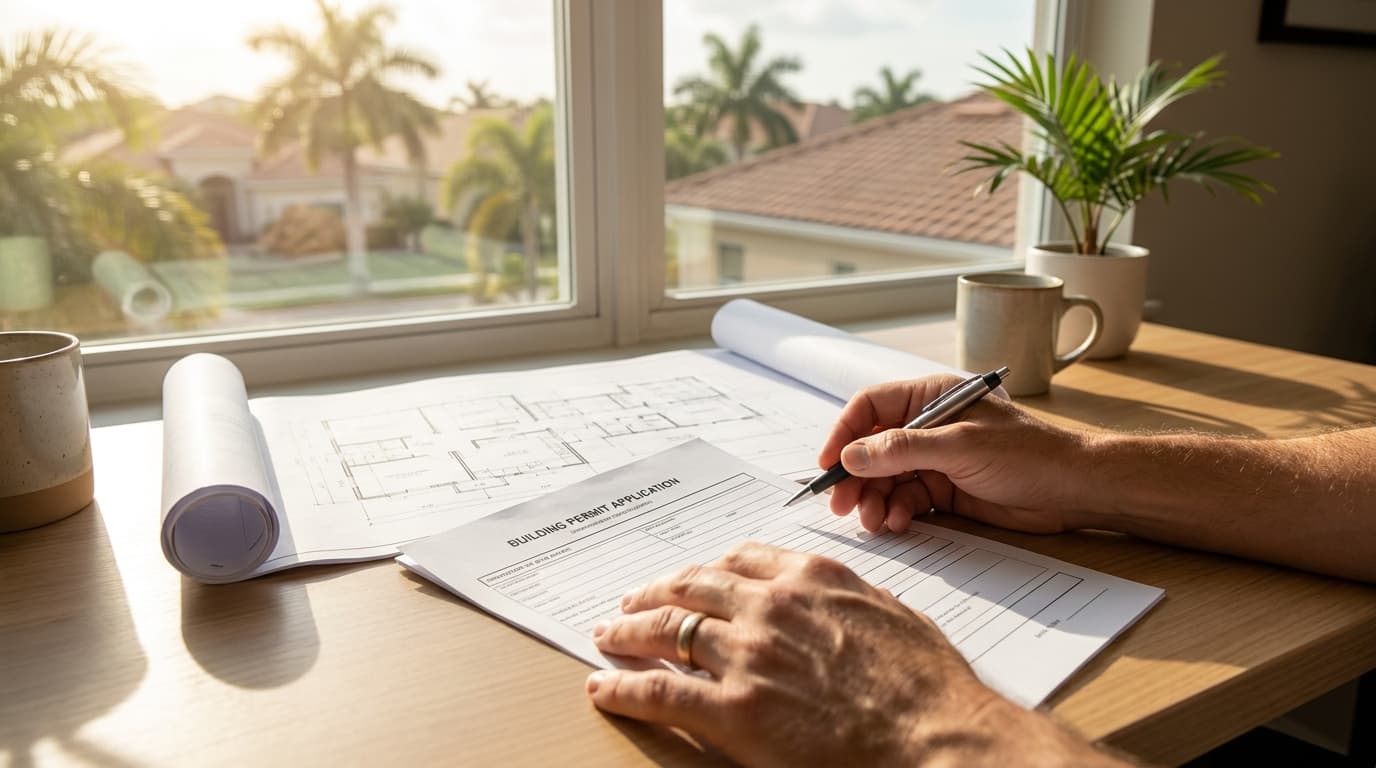

If you've received a code enforcement notice from Indian River County, or you're wondering whether your home renovation needs a permit, you're not alone. Thousands of Florida homeowners face this exact situation every year—and the confusion is understandable. Building code regulations are complex, county processes vary widely, and the stakes are real: unpermitted work can affect your home's sale value, trigger fines, and create liability issues.
This guide is designed to cut through the noise. You'll learn exactly how Indian River County's building permit system works, when you need one, what happens if you don't get one, and most importantly—how to move forward if you're already in violation. Whether you're planning a new project or dealing with an existing problem, this is your roadmap to compliance and peace of mind.
Quick Summary
In a hurry? Here's what you need to know:What Is a Building Permit and Why Does Indian River County Require Them?
A building permit is official authorization from your local government to perform construction work on your property. Think of it as a safety and quality assurance mechanism—not bureaucratic red tape, but a legitimate system designed to protect you, your family, and future homebuyers.
When you pull a permit in Indian River County, here's what actually happens:
Indian River County, like all Florida counties, is bound by state law to enforce building codes. This isn't optional—it's a legal requirement. The county's Department of Planning and Development Services oversees all permits and code enforcement.
Why this matters: Unpermitted work is never truly "off the books." Code enforcement can be triggered by a neighbor complaint, a title search during a sale, or an insurance claim. Once flagged, you're liable for bringing the work into compliance plus paying fines.
The Legal Framework: Florida Statute 553 and Indian River County Code
All building codes in Florida are governed by Florida Statute 553, which requires the state to adopt and enforce a uniform building code. Indian River County implements the Florida Building Code (FBC), which is based on the International Building Code (IBC) but adapted for Florida's climate (hurricanes, flood risk, humidity).
Key points from Florida Statute 553:
Indian River County's local code (Chapter 62 of Indian River County Code) layers additional requirements on top of the state code, including:
Watch Related Videos on YouTube
Indian River County Florida building permits homeowner guide how to fix guide
Which Home Projects Require a Permit in Indian River County?
Not every home improvement requires a permit—but most do. This is where homeowners often get tripped up. Just because you can find a contractor willing to work without a permit doesn't mean you should.
Work That Requires a Permit (Nearly Always)
| Project Type | Why It Requires a Permit | Typical Cost |
|---|---|---|
| Room additions | Structural changes, electrical load | $300–$800 |
| Roof replacement | Safety, weather resistance, insurance | $200–$400 |
| Electrical upgrades/panel changes | Life safety, fire risk | $100–$250 |
| Plumbing additions/alterations | Health, water quality | $100–$300 |
| HVAC installation | Energy code, ductwork | $150–$350 |
| Swimming pools | Safety, chemical handling | $500–$2,000 |
| Decks/screened enclosures | Structural safety, wind resistance | $200–$500 |
| Basement/crawlspace conversion | Habitability, egress, utilities | $400–$1,200 |
| Garage conversion to living space | Life safety, utilities, zoning | $300–$800 |
| HVAC ductwork relocation | Code compliance, performance | $150–$400 |
| Concrete/foundation work | Structural integrity | $200–$600 |
| Solar panel installation | Electrical, structural loading | $300–$800 |
Work That Usually Doesn't Require a Permit
Don't guess. When in doubt, call the Indian River County Department of Planning and Development Services at (772) 226-1462 or visit their website to ask. A 5-minute phone call can save you thousands in fines.
How to Pull a Building Permit in Indian River County
The permit process in Indian River County is reasonably straightforward if you know the steps. Here's the actual workflow:
Step 1: Prepare Your Application
Gather these documents before you go to the county:
Step 2: Submit Your Application
You can submit in person at:
Indian River County Department of Planning and Development Services1801 27th Street, Vero Beach, FL 32960
Phone: (772) 226-1462
Hours: Monday–Friday, 8:30 AM–4:30 PM
Or check if they accept online submissions through their permitting portal. Processing time is typically 5–15 business days, depending on project complexity.
Step 3: Pay the Permit Fee
Permit fees are based on the estimated cost of construction. For example:
Fees vary; the county will calculate the exact amount based on your project scope.
Step 4: Receive Your Permit and Schedule Inspections
Once approved, you'll receive a permit card and documentation showing:
You're responsible for calling to schedule each inspection. Don't skip inspections—they're how the county verifies code compliance, and failure to have inspections done voids your permit.
Step 5: Inspections and Final Approval
Typical inspection points:
The inspector will check against the approved plans and Florida Building Code. If something doesn't pass, you'll get a written punch list—and you'll fix it and re-inspect.
Once all inspections pass, you'll receive a Certificate of Completion, which is your proof that the work is legally compliant.
Save this certificate. You'll need it if you ever sell your home, refinance, or file an insurance claim.
What Happens If You Don't Pull a Permit?
This is the scenario that brings most homeowners to this guide. If you've done unpermitted work—or you're about to—here's the reality:
Code Enforcement: How the County Finds Out
Indian River County code enforcement officers discover violations through:
The Enforcement Process
Once a violation is flagged, here's what typically happens:
Phase 1: Notice of Violation (Days 1–5)You'll receive a notice describing the violation(s), the code section violated, and a deadline (usually 30 days) to respond or cure.
Phase 2: Cure Period (Days 5–30+)You have an opportunity to:
If you ignore the notice or fail to cure:
Real-World Costs of Unpermitted Work
Let's say you finished a room addition without a permit 6 months ago:
| Cost Category | Amount |
|---|---|
| Retroactive permit fee | $600–$1,200 |
| Re-inspection fees | $200–$400 |
| Code violations identified | $2,000–$8,000 (to bring into compliance) |
| Daily fines (at 30 days) | $7,500–$15,000 |
| Attorney fees (if contested) | $1,500–$5,000 |
| Total worst-case scenario | $11,800–$29,600 |
And that's not counting the impact on your home's sale price—unpermitted work can reduce value by 15–25%.
How to Handle a Code Enforcement Notice
If you've already received a code enforcement notice, take a breath. You have options, and the worst thing you can do is ignore it.
Option 1: Pull Retroactive Permits
Yes, you can permit work that's already been completed. This is the most straightforward path for most homeowners.
How it works:Option 2: Hire a Licensed Contractor to Cure the Violations
If the unpermitted work doesn't meet code, you'll need to fix it.
How it works:Tip: When getting contractor quotes, specifically ask them how they'll address the code violations flagged by the county. A good contractor will know exactly what needs to be corrected.
Option 3: Request an Enforcement Hearing
If you dispute the violation—believe the work actually does meet code, or that the violation notice contains errors—you can request a hearing before a code enforcement official or hearing officer.
How it works:Avoiding Permit Problems: Best Practices for Homeowners
The best cure is prevention. Here's how to avoid the whole code enforcement nightmare:
1. Always Get Permits for Anything Major
If you're paying a contractor more than $1,000, the work almost certainly needs a permit. Ask your contractor directly: "Does this project require a permit?" Any contractor who says no or seems evasive is a red flag.
2. Use Licensed, Insured Contractors
A licensed contractor is responsible for pulling permits and ensuring code compliance. You can verify Florida contractor licenses on the DBPR website. If your contractor isn't licensed:
3. Request Permits and Proof of Inspection Before Paying in Full
Make it a condition of your contract that the contractor provides:
Pay in stages tied to inspections, not completion.
4. Document Everything
Keep a file for every project that includes:
If you ever sell your home or file a claim, this documentation is gold.
5. When in Doubt, Ask the County
The Indian River County Department of Planning and Development Services is remarkably accessible. Call them with questions—that's their job. A 5-minute conversation can clarify whether your project needs a permit.
Special Considerations for Indian River County Homeowners
Coastal Properties and Environmental Zones
If your home is in a coastal area or near an environmental protection area, you may face additional permitting requirements:
These are handled in conjunction with your building permit. The county will flag these if applicable during permit review.
Hurricane-Resistant Construction Standards
Indian River County is in a high-wind zone. All permitted work must meet enhanced wind resistance standards:
If you're doing any roof work or replacing windows/doors, the county will require compliance with these standards. This is non-negotiable.
Flood Zone Considerations
Much of Indian River County is in flood zones (A, AE, VE, X). If your property is in a flood zone:
The county will determine this during permit review based on your property address.
Getting Help: When to Call a Professional
You don't have to navigate this alone. Here's when professional guidance makes sense:
Call a contractor if:Next Steps: Take Action Today
If you've received a code enforcement notice or suspect you have unpermitted work, don't delay. The longer you wait, the higher your fines and the more complicated your situation becomes.
If You're Proactive (No Notice Yet)
If You've Received a Notice of Violation
Getting a Permit Violation Action Plan
If you're dealing with a violation and need a clear, county-specific roadmap to resolution, HomeProBadge's Permit Violation Action Plan is designed exactly for this situation. The platform provides:
The platform is built by someone who understands Florida's code system deeply and has helped hundreds of homeowners in your exact situation. Rather than navigating this maze alone, get a clear plan tailored to your county and violation type.
Visit HomeProBadge to generate your Permit Violation Action Plan. It takes 10 minutes, costs far less than a single day's fines, and could save you thousands.Summary: You've Got This
Indian River County's building permit system exists to protect you, your family, and future homebuyers. It's not punishment—it's a legitimate process backed by Florida law.
If you're proactive and pull permits for your work, you'll never have a problem. If you've already got unpermitted work, your options are clear: pull retroactive permits, fix violations, or request a hearing. Any of these paths is better than ignoring a code enforcement notice.
The key is to act now. The fines grow daily, and the longer you wait, the more complicated things become. Call the county if you have questions. Get professional help if you need it. And most importantly—understand that this situation is solvable.
You're not the first homeowner to face this, and you won't be the last. The path forward is clear. Take the first step today.