

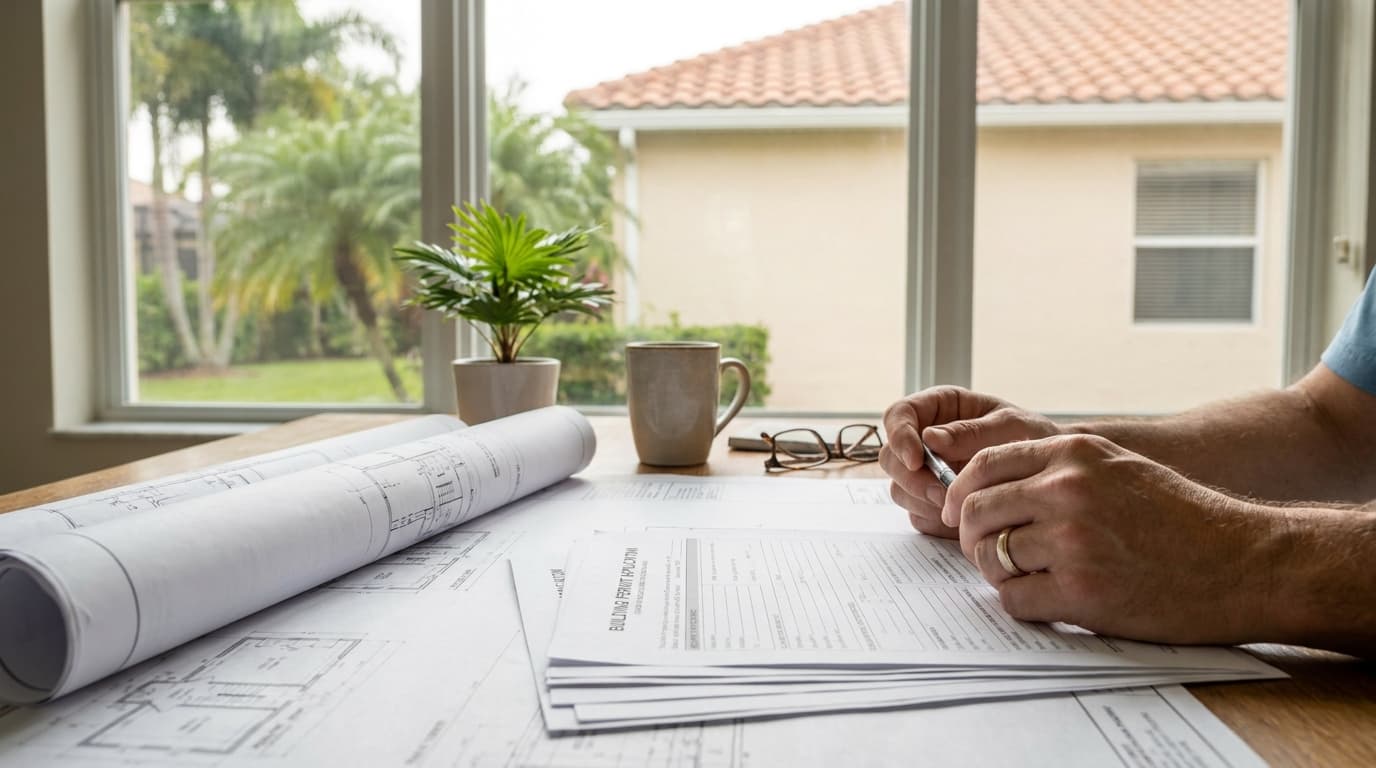

If you've recently received a code enforcement notice in Pasco County, Florida, or discovered that previous work on your home wasn't permitted, you're likely feeling a mix of stress, confusion, and frustration. You're not alone. Every year, thousands of Florida homeowners find themselves navigating the complex world of building permits and code compliance—often without clear guidance on what comes next.
The good news? Understanding Pasco County's building permit system isn't as overwhelming as it seems. With the right information and a clear action plan, you can resolve violations, protect your home's value, and avoid future problems.
This guide walks you through everything you need to know: how permits work, why they matter, what happens when work is unpermitted, and exactly how to move forward if you're facing a code violation.
Quick Summary
You're not required to guess. Pasco County has a transparent permit system, and violations can be resolved through documented steps. Understanding your situation is the first step to resolving it.
What Is a Building Permit and Why Does It Matter?
A building permit is an official authorization from Pasco County that allows you—or a contractor you hire—to legally perform construction, renovation, or installation work on your property. It's essentially a contract between you and the county that says: "This work meets Florida's building codes, and we've reviewed the plans to confirm safety and compliance."
Permits matter for several critical reasons:
Safety. Building codes exist because they save lives. They ensure electrical work won't cause fires, structural work won't collapse, and plumbing won't contaminate drinking water. A licensed inspector verifies this before sign-off. Legal liability. If someone is injured due to unpermitted work, your homeowner's insurance may deny the claim. You could face personal liability for medical bills and damages. Property value. Unpermitted work becomes a title issue when you sell. Buyers' lenders won't finance a property with code violations, and you may be forced to disclose the problem. Resale complications. In Florida, disclosure laws require sellers to inform buyers of unpermitted work. This dramatically reduces your bargaining power and can kill deals entirely. Fines and enforcement. Pasco County Code Enforcement can issue citations, fines up to $10,000 per violation, and may require removal of unpermitted work at your expense.Flourida Statute 553 governs all building codes and contractor licensing in the state. Pasco County enforces these standards through its Building and Development Department.
Watch Related Videos on YouTube
Pasco County Florida building permits homeowner guide how to fix guide
How Pasco County's Permit System Works
Pasco County's permit process is structured to be transparent, though it requires patience and attention to detail. Here's how it flows:
Step 1: Application and Submission
You or your contractor submit a permit application to the Pasco County Building Department. This includes:
For smaller projects (like a deck or shed), plans can be simple. For larger work (like additions or electrical upgrades), detailed architectural or engineering plans are required.
Step 2: Initial Review
Pasco County staff performs a completeness check. If documents are missing or unclear, they'll issue a request for additional information. This can add 2–4 weeks to the timeline.
Step 3: Plan Review
A plan reviewer examines your application against Florida Building Code standards and Pasco County ordinances. They're looking for compliance with:
If issues are found, you'll receive a "Request for Information" (RFI). You'll need to revise plans and resubmit.
Step 4: Permit Issuance
Once approved, the permit is issued and you can begin work. The permit becomes your legal authorization to proceed.
Step 5: Inspections During Work
As work progresses, county inspectors will visit your property to verify compliance at key stages (foundation, framing, rough-in, final). You must request inspections and pass each phase before proceeding.
Step 6: Final Inspection and Certificate of Completion
Once all work is complete and inspections pass, the county issues a Certificate of Completion (or Certificate of Occupancy for larger projects). This is your proof that the work is legal and code-compliant.
Common Types of Pasco County Building Permits
Different projects require different permits. Here's what homeowners most commonly need:
| Project Type | Permit Required? | Typical Inspection Points | Estimated Timeline |
|---|---|---|---|
| Deck (under 200 sq ft) | Yes | Foundation, framing, final | 2–4 weeks |
| Roof replacement | Yes | Decking, flashing, final | 2–3 weeks |
| Electrical work | Yes | Rough-in, final | 1–2 weeks |
| Plumbing work | Yes | Rough-in, pressure test, final | 1–2 weeks |
| Addition or expansion | Yes | Foundation, framing, MEP, final | 6–12 weeks |
| Shed or small structure | Yes (if over 100 sq ft) | Foundation, framing, final | 2–4 weeks |
| HVAC installation | Yes | Equipment placement, connections | 1 week |
| Window/door replacement | Usually no | Varies by size and type | N/A |
| Interior remodeling | Usually yes | Framing, electrical, plumbing, final | 3–8 weeks |
| Pool installation | Yes | Multiple phases over weeks | 8–12 weeks |
What Triggers a Code Enforcement Notice?
A code enforcement notice arrives when the county discovers unpermitted work or work that doesn't meet code. Here's what commonly triggers an investigation:
Neighbor Complaints
Someone sees construction activity and reports it to the county. This is the most common trigger.
Permit-Less Contractor Work
You hire a contractor "off the books" to save money. The contractor doesn't pull permits. Months or years later, an inspector discovers the work during a routine visit or when investigating something else.
Property Disclosure During Sale
Your real estate agent or title company identifies unpermitted work during the sales process.
Utility Company Reports
Electrical or gas companies report suspicious installations to the county.
Insurance Claims
After a fire or damage, your insurance investigates and discovers unpermitted electrical or structural work.
Administrative Records Review
County staff reviewing property history notice missing permits for visible structures.
What Happens When You Receive a Code Enforcement Notice?
A code enforcement notice is a formal document from Pasco County stating that a violation exists. It typically includes:
Don't ignore it. Ignoring a code enforcement notice leads to escalated fines, liens against your property, and potential legal action. The notice is your opportunity to resolve the issue before it becomes worse.
The notice doesn't automatically mean you face massive fines. It means the county wants the violation corrected. You have options:
Option 1: Legalize the Work Through Retroactive Permitting
In many cases, unpermitted work can be legalized by obtaining a retroactive (or "after-the-fact") permit. This involves:
This is the preferred path for most homeowners because it resolves the violation legally and protects your property value.
Option 2: Remove or Modify the Work
If legalization isn't possible (rare), you may be required to remove or modify the work to comply with code.
Option 3: Demonstrate Compliance
If the work actually meets code but was simply never permitted, you can demonstrate this through inspection and documentation.
Florida Building Code and Pasco County Standards
Pasco County enforces the Florida Building Code (FBC), which is based on the International Building Code (IBC) and adopted into Florida Statute 553. Key standards include:
Electrical Code
Plumbing Code
Structural Code
Energy Code
Fire and Life Safety
Understanding these isn't required for homeowners—that's the inspector's job. But knowing they exist helps you understand why certain requirements matter.
The Cost of Building Permits in Pasco County
Permit costs vary based on project scope. Here's a general breakdown:
Residential projects are typically charged per square foot of work or by project type:While permit costs are an investment, they're far cheaper than fines ($10,000+), forced removal of work, title issues during sale, or liability if someone is injured.
How to Apply for a Pasco County Building Permit
Step 1: Determine If a Permit Is Needed
Visit the Pasco County Building and Development Services website or call (352) 521-4498. Describe your project. Staff will confirm whether a permit is required.
Step 2: Prepare Your Application Materials
Gather:
For complex projects, you may need drawings prepared by an architect or engineer.
Step 3: Submit Your Application
Pasco County accepts applications:
Step 4: Respond to Requests for Information
If the reviewer needs clarification, respond promptly. Delays in your response delay the permit.
Step 5: Obtain the Permit
Once approved, collect your permit and pay any fees due. Review the permit carefully—it contains important requirements.
Step 6: Schedule Inspections
Before beginning work, understand when inspections are required. Call (352) 521-4498 to schedule.
Step 7: Complete Work and Obtain Final Approval
Pass final inspection, and your work is legally complete.
Resolving Unpermitted Work: Your Action Plan
If you've discovered unpermitted work on your property (whether you did it or a previous owner did), here's your action plan:
Week 1: Assess and Document
Week 2: Contact Pasco County
Week 3: Hire Licensed Contractor or Engineer
HomeProBadge helps here: You can search our verified contractor directory filtered by county and trade to find licensed, background-checked professionals in Pasco County experienced with code resolution.
Week 4: Prepare and Submit Retroactive Permit Application
Weeks 5–8: Plan Review and Corrections
Weeks 9–12: Inspections and Finalization
This timeline assumes straightforward, code-compliant work. Complex violations or major structural issues may take longer.
Special Situations: Additions, Pools, and Major Work
Adding a Room or Expansion
Additions are one of the most heavily regulated residential projects because they affect:
You'll need architectural plans, structural calculations, and multiple inspections. Timeline: 6–12 weeks.
Installing a Pool
Pools require:
Timeline: 8–12 weeks or longer.
Roof Replacement
Roof replacement seems simple but requires:
Timeline: 2–3 weeks.
Common Permit Mistakes to Avoid
Learning from others' mistakes can save you time, money, and stress:
Hiring unlicensed contractors. Unlicensed contractors can't legally pull permits. They also don't carry liability insurance, leaving you exposed to liability and fines. DIY without permits. "It's just a deck" or "It's just electrical" often leads to code violations. The county can require removal or correction at much higher cost than the original permitted work. Starting work before permit approval. The permit doesn't exist until you receive it. Work completed before that is illegal, even if the permit is later approved. Failing to request inspections. Inspections are required at specific stages. Skipping them voids the permit and leads to code violations. Not disclosing previous work when selling. Florida law requires disclosure. Failing to disclose is fraud and can result in legal action by the buyer. Ignoring code enforcement notices. The notice is your chance to fix the problem. Ignoring it leads to escalating fines and liens.Selling Your Home with Unpermitted Work
If you're planning to sell and have unpermitted work, you have two realistic options:
Option 1: Legalize the Work Before Selling
This is the preferred approach. It:
Time required: 2–3 months with a good contractor.
Cost: $2,000–$10,000+ depending on the work's complexity.
Option 2: Disclose and Negotiate
If you can't legalize before closing, you must disclose in the seller's disclosure form. This will likely:
Understanding Code Enforcement and Fines
Pasco County's Code Enforcement Division handles violations discovered after work is complete. Understanding this process helps:
How Cases Are Opened
Penalties If You Don't Comply
Fines can accumulate to $10,000+ if violations persist for months.
How to Work With Code Enforcement
Code enforcement officers are typically reasonable. They want compliance, not to fine you into poverty. Demonstrating good faith effort usually works in your favor.
Getting Help: When to Hire Professionals
You don't need to navigate this alone. Consider hiring:
A Licensed Contractor
For retroactive permitting, legalization, and corrective work. They understand code requirements and can navigate the permit process efficiently.
Cost: $2,000–$10,000+ depending on scope. When to hire: When unpermitted work was substantial, when you're facing code enforcement, or when you're unsure of code requirements.A Permit Expediter or Code Consultant
Some professionals specialize in navigating permit processes and code violations. They interact with the county on your behalf and ensure compliance.
Cost: $1,000–$5,000 depending on case complexity. When to hire: When dealing with complex violations, multiple violations, or disputed interpretations of code.An Attorney
For serious violations, liens, or if the county is pursuing enforcement action, an attorney familiar with Florida building code and property law helps protect your interests.
Cost: $200–$500+ per hour or $2,000–$10,000+ for case handling. When to hire: When facing significant fines, liens, or legal action.Protecting Your Property Going Forward
Once you've resolved a code violation (or avoided one), take steps to prevent future issues:
Always Pull Permits
Make it a rule: no work without a permit. This includes:
Work Only with Licensed Contractors
Verify contractor licenses through:
Keep Records
Maintain:
Get Certificates of Completion
Never consider a project "done" without a Certificate of Completion from the county. This is your proof of legal compliance.
Pasco County Building Department Resources
Address: 7530 Little Road, New Port Richey, FL 34654 Phone: (352) 521-4498 Website: www.pasco.gov (Building and Development Services section) Hours: Typically Monday–Friday, 8:00 AM–5:00 PM Services available:Next Steps: Get Your Permit Violation Action Plan
If you're facing a code enforcement notice or have discovered unpermitted work on your Pasco County property, you now understand the landscape. But understanding and having a concrete action plan are different things.
That's where HomeProBadge comes in. Our platform provides homeowners with county-specific Permit Violation Action Plans—AI-generated, detailed roadmaps tailored to Pasco County's specific codes, timelines, and processes.
Here's what you get:
Instead of guessing or paying thousands to a consultant, get clarity and direction in minutes.
Step 1: Visit HomeProBadge and describe your situation. Step 2: Receive your custom Pasco County Permit Violation Action Plan. Step 3: Connect with verified, licensed contractors who can execute the plan. Step 4: Resolve your violation and protect your property.The cost? Your action plan is affordable, and finding the right contractor through our verified directory saves you money and stress compared to guessing or hiring through general Google searches.
Your Pasco County property is likely one of your largest assets. A permit violation or unpermitted work is a threat to that asset—and to your ability to sell, refinance, or enjoy the property without worry. Don't let confusion or stress prevent you from resolving it.
Get your Permit Violation Action Plan today at HomeProBadge. Your next step is clarity. Your step after that is resolution.