


For most bathrooms, engineered quartz is the practical default, while the best countertop for your home still depends on the vanity's size, edge profile, and water exposure. Quartz represented 30% of the global countertop market in 2024, but that market figure isn't a bathroom-specific performance rating or a reason to buy it automatically.
The usual advice is to pick the hardest, most expensive slab you can afford. That's kitchen thinking, and it can steer a bathroom remodel toward the wrong choice. Bathroom counters face wet sink cutouts, cosmetics, hard-water residue, and repeated splashes, but little knife work or hot cookware. A less expensive surface can be a smart fit for a small guest vanity; an expensive slab can still disappoint if its edge chips or water keeps collecting around a poorly made cutout.
The useful question isn't just, “Is this material durable?” It's, “How does it handle the messes and weak points in my bathroom, and what upkeep am I willing to do?” The comparison below weighs the main bathroom countertop materials against those real-world stresses, then matches practical options to common bathroom types.
z Granite and Marble](#premium-stone-tier-engineered-quartz-granite-and-marble)
- Engineered quartz for consistent, low-fuss use
- Granite for natural stone and a sturdy profile
- Marble for appearance, with eyes open
- Solid surface when the sink and clean lines matter
- Laminate when replacing the top must stay affordable
- Tile, concrete, and wood need an honest maintenance match
- Rental or investment property
Why Bathroom Countertops Deserve Their Own Rules
The hardest stone doesn't automatically win in a bathroom. A vanity isn't a kitchen island. It doesn't usually face chopping, hot pans, and food spills, but it does get splashed at the faucet, dotted with toothpaste and makeup, and exposed to products that can stain or damage some finishes.Water deserves special attention because it gathers where the counter is most vulnerable: around faucet holes, seams, and sink cutouts. If the cutout edge is poorly finished, the sink isn't fitted well, or water sits there after use, an otherwise attractive top can become a nuisance. Hard-water deposits add another chore, especially if the chosen finish shows every dried splash.
Cosmetics and hair products bring a different risk. Hair dye, nail products, peroxide, and cleansers don't behave like ordinary water. Their effect depends on the material and its finish, so a broad showroom promise like “stain resistant” isn't enough. Ask the fabricator what to do if a particular product spills, and what not to use when cleaning it.
A countertop earns its place in a bathroom by surviving the sink area and the products you actually use, not by winning a hardness contest.
Humidity and repeated wet-dry cycles matter, too, particularly for surfaces with seams, grout, or exposed edges. But heat and cutting are usually less important bathroom tests than they are in kitchens. That changes the value equation: a modestly priced material may be perfectly sensible on a compact vanity, while a delicate profile can make even a premium slab a poor fit.
Engineered quartz is a relatively recent milestone in countertop history. Marcello Toncelli founded Breton in Italy in 1963, developed the Bretonstone process in the early 1970s, and Breton patented the technology in 1975. The process uses crushed stone and resin to produce consistent slabs. That manufacturing control helps explain why quartz is available in repeatable colors and patterns, a useful quality when a homeowner wants a coordinated vanity without relying on the variation of a natural slab (background on engineered quartz and the Bretonstone process).
The Bathroom-Specific Stress Test Every Material Must Pass
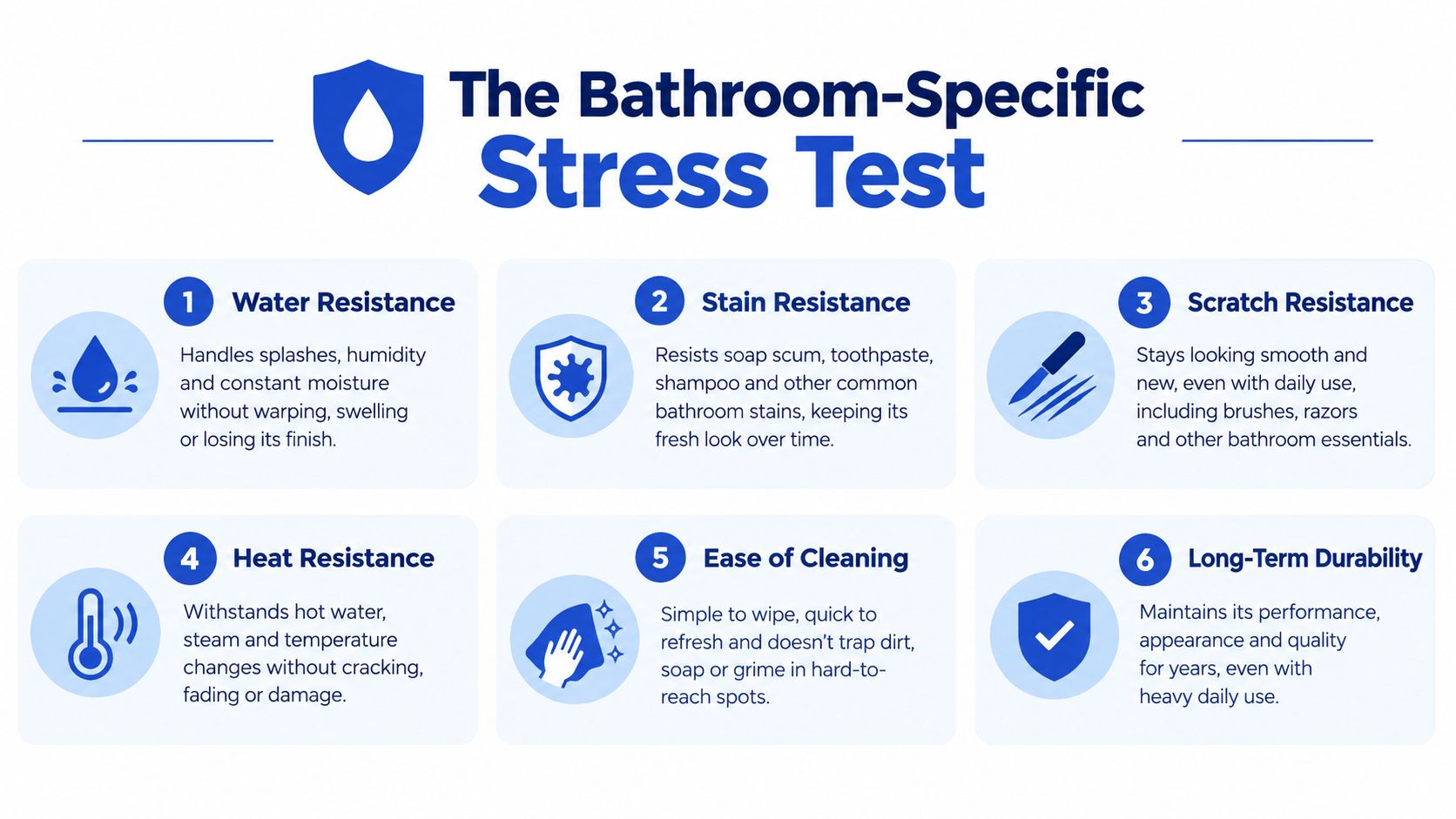
Before you choose a color, run the countertop through six practical checks. Don't settle for a salesperson's general rating. Ask how the material will behave in the locations and conditions your vanity presents.
All Bathroom Countertop Materials at a Glance
Use this table to narrow the shortlist, not to choose a product sight unseen. Installed cost is shown as a relative band, not a dollar quote: the supplied market figures cover countertop materials broadly, not bathroom installations, and they don't provide comparable installed prices for every material.
| Material | Cost (per sq ft, installed) | Durability | Maintenance | Best For |
|---|---|---|---|---|
| Engineered quartz | Premium | Strong everyday choice; protect vulnerable edges | Routine cleaning; no routine stone sealing | Busy bathrooms that need consistent appearance |
| Granite | Premium | Durable, but slab and edge matter | Ask about sealing and stone-safe cleaners | Homeowners who want natural stone |
| Marble | Premium | More vulnerable to stains and surface marks | Careful cleaning and ongoing upkeep | A low-traffic vanity where appearance leads |
| Solid surface | Mid-range | Practical and repairable, but can scratch | Straightforward cleaning; follow product guidance | Seamless tops and integrated sink designs |
| Laminate | Budget | Edge and seam condition are key weak points | Wipe spills and protect exposed joints | A cost-conscious vanity with careful installation |
| Tile | Budget to mid-range | Surface and grout behave differently | Regular grout cleaning and repair as needed | Custom patterns and small, straightforward tops |
| Concrete | Mid-range to premium | Depends on fabrication, finish, and care | Follow the sealer and cleaning instructions | A custom look with an owner willing to maintain it |
| Wood | Variable | Moisture protection is the make-or-break issue | Frequent attention to finish and water exposure | A dry powder room or design-led vanity |
As a broad market backdrop, one global countertop estimate put the industry at approximately $110 billion in 2024, with projected growth to $160 billion by 2034. It estimated that granite represented 35%, engineered quartz 30%, and laminate 25% of that market. Those are estimates for countertops overall, not bathroom-specific shares, so use them as commercial context, not proof that one material will work better in your home (global countertop market estimate and material segmentation).
For ideas that apply across rooms, this overview of kitchen countertop picks from Interiors by DeX can help you compare finishes. Keep the bathroom stress test in mind: kitchen performance alone doesn't settle questions about wet cutouts, bathroom products, or vanity edges.
Premium Stone Tier Engineered Quartz Granite and Marble
Engineered quartz for consistent, low-fuss use
Quartz is the choice I'd quote first for a homeowner who wants a stone-like look without the variation and recurring care that can come with natural stone. It's manufactured from crushed quartz or other stone aggregates combined with polymer resin, then pressed into slabs. That manufacturing process gives producers more control over color, pattern, thickness, and consistency.
The trade-off is that quartz contains resin. Don't treat it as impervious to heat, and ask the supplier whether prolonged sunlight near a bright window could affect the finish you've selected. For a typical vanity, those cautions are easier to manage than the risk of staining a more sensitive surface, but the product's care instructions still matter.
Granite for natural stone and a sturdy profile
Granite suits homeowners who want each slab to have its own pattern and are comfortable following the care plan the supplier recommends. It's generally a more practical natural-stone candidate for everyday use than marble, but “granite” isn't a maintenance instruction. Ask about the specific slab, the finished edge, and whether sealing is recommended. This granite sealing guide can help you prepare the right questions for your fabricator.
For a working vanity, choose an edge that doesn't leave a narrow, fragile lip around the sink. A clean, conventional profile is usually a safer bet than a delicate edge that looks sharp in a showroom but is exposed to daily knocks.
My call: Choose quartz for low-maintenance consistency. Choose granite when the natural slab itself is the reason you're renovating.
Marble for appearance, with eyes open
Marble brings natural veining and depth that a manufactured surface may imitate but can't duplicate exactly. It also asks more of its owner. Products used at a bathroom sink can leave marks or dull spots, so choose marble only if you're willing to use appropriate cleaners and accept that the surface may show signs of use.
A honed finish can be worth discussing if you prefer a softer look, but don't buy it on the promise that it will make the stone maintenance-free. Homeowners weighing marble's visual appeal can also consult this 2026 marble tile advice for Melbourne as a separate design reference. The advice is about bathroom marble choices, not a substitute for your countertop supplier's specific care guidance.
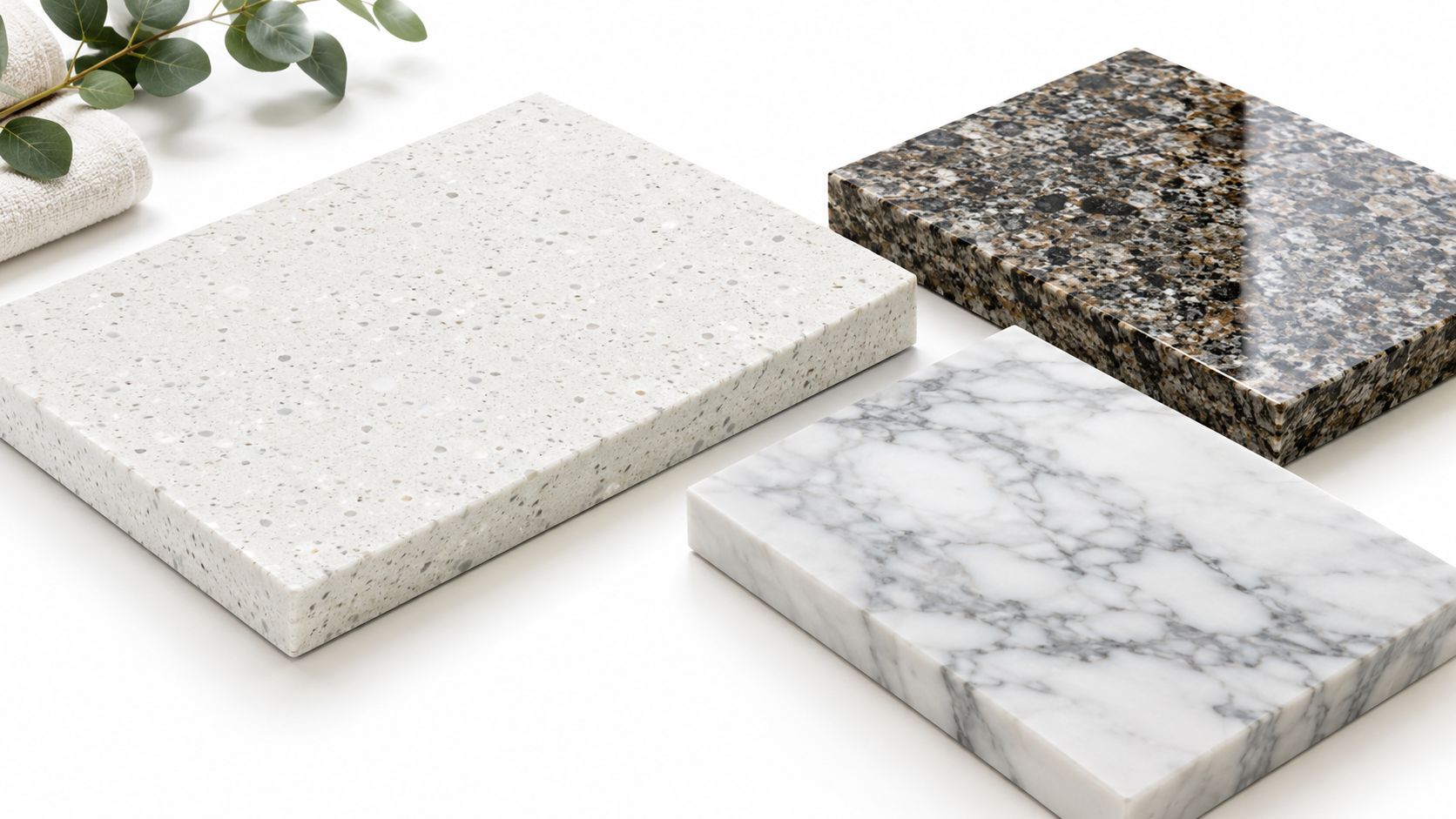
Here's a visual overview of stone looks before you compare samples in person.
Mid-Range and Budget Tier Solid Surface Laminate Tile Concrete and Wood
Solid surface when the sink and clean lines matter
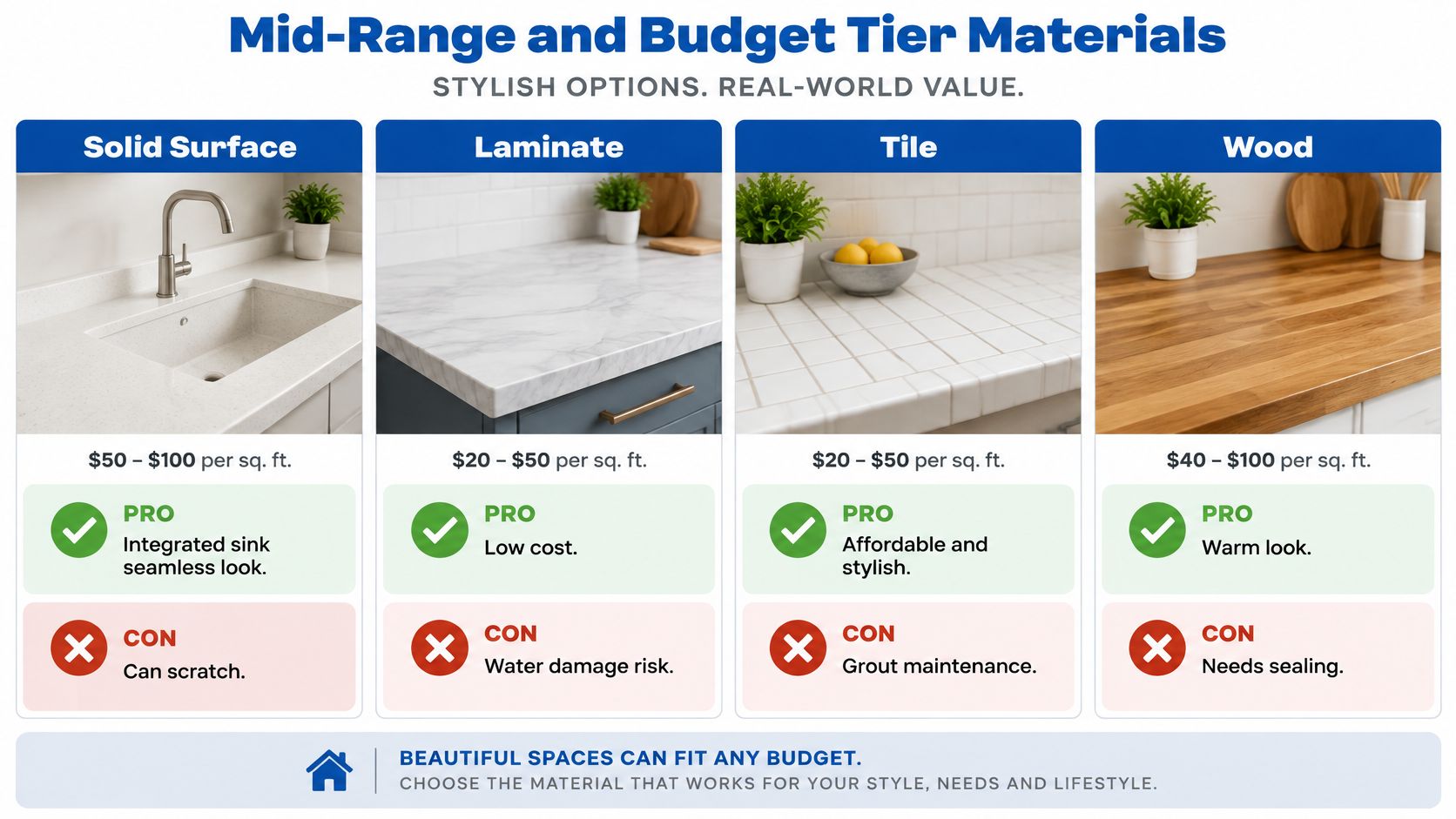
Solid surface is a smart middle ground when you want a continuous look, particularly if the manufacturer offers a sink integrated with the top. Fewer visible joints can make wipe-down easier around a basin, and minor surface damage may be repairable depending on the product and the damage. The compromise is that the surface can scratch, so ask how it responds to the cleaners and everyday knocks your household produces.
I like it for family bathrooms where a simple, easy-to-clean surface matters more than the feel of natural stone. Ask for the exact care and repair instructions before you sign.
Laminate when replacing the top must stay affordable
Modern laminate offers a wide choice of appearances without paying for a stone slab. It can be a perfectly sensible fit for a rental, secondary bath, or vanity that's easy to replace. Its weak point is water getting into an edge or seam, so installation details matter more than a glossy sample. Don't let water sit at the sink cutout, and make sure the finished edge is suited to the room.
Tile, concrete, and wood need an honest maintenance match
Tile can give a small vanity a distinctive look, but grout adds joints that collect residue and require attention. It works best when the homeowner is happy to clean grout and arrange repairs if a tile loosens or cracks. Ask how the installer will finish the sink edge and where grout lines will land.
Concrete brings a custom, solid appearance, but it's not a carefree shortcut. The finish and protective treatment need to suit bathroom use, and the installer should explain what to expect if a hairline crack or surface mark appears. Don't choose it based on a showroom sample alone; inspect completed work and ask how the fabricator handles repairs.
Wood warms up a bathroom design, but water exposure is the deal-breaker. It can make sense in a powder room or a carefully managed space where spills get wiped promptly. For a busy family vanity, I'd pick a more forgiving material rather than turn routine splashes into a test of the finish.
Spending less isn't settling when the material fits the bathroom and the installation protects its weak points. The trouble starts when the price looks good but the homeowner hasn't asked how the edge, sink opening, or grout will be maintained.Which Material Wins for Your Specific Bathroom
Guest bath
For a small guest vanity, quote quartz or solid surface first. Both can give you a clean, coordinated look without making routine wipe-downs a project. If you choose solid surface, confirm how the finish can be repaired; if you choose quartz, follow the product's care guidance around heat and strong cleaners.
The mistake to avoid is paying extra for a demanding slab that barely gets used. Let the vanity size and the look you want set the budget.
Primary bath
For a primary bath used every day, quartz is the practical first choice if you want an easy-care surface. Granite is a strong alternative if natural stone is part of the design and you're prepared to follow the supplier's sealing advice. Pick marble only if you're comfortable with surface marks and more careful cleaning.
This countertop guide for South Jersey bathrooms offers another perspective on matching countertop looks to bathroom projects. Whatever style you choose, don't overlook the sink opening: a sound layout and a well-finished edge matter as much as the slab name.
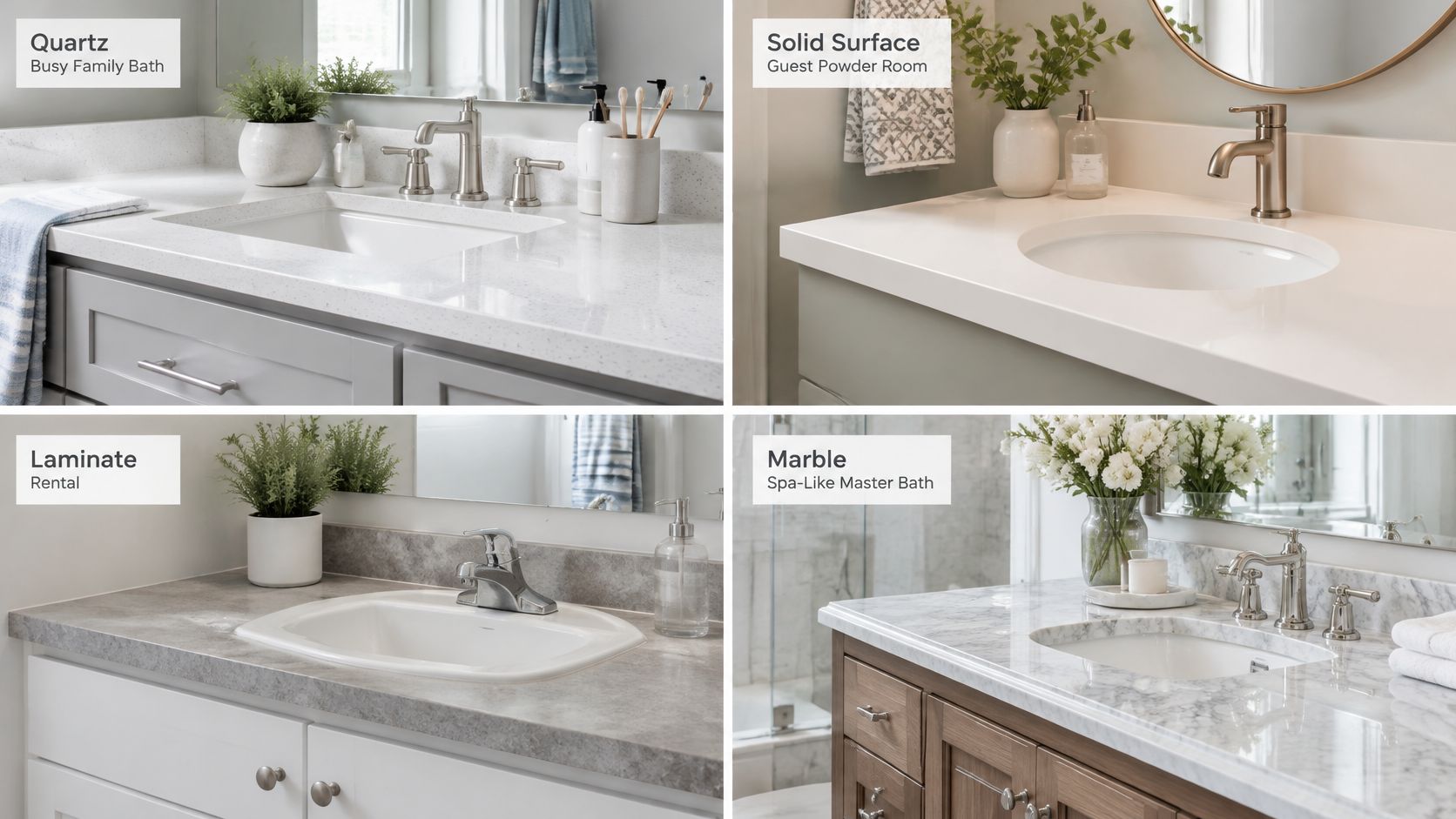
Kids' bath
Choose quartz or solid surface for a bathroom where toothpaste, makeup, and everyday spills are likely. Ask the supplier how the specific product handles stains and which cleaners are allowed. Solid surface has the added appeal of a repairable finish for some damage, while quartz suits homeowners who prefer a consistent stone-like surface.
I wouldn't choose marble here unless you're ready to treat visible marks as part of its character. A kids' bath should be chosen for the way the family uses it, not just how the sample looks.
Rental or investment property
For a rental, laminate or solid surface can make more sense than a premium slab. Laminate keeps the initial material choice modest, while solid surface may suit a landlord who values a uniform look and the possibility of repair. Either way, ask the installer to pay particular attention to seams and exposed edges, where careless work can invite water damage.
The common mistake is choosing the cheapest quote without checking what it includes. Confirm the sink cutout, edge finish, installation, and care instructions in writing before committing.
Maintenance Costs Sustainability and the Final Pre-Install Checklist
Maintenance starts with the finish and the care instructions, not a generic label. Natural stone may need sealing, while engineered products have their own limits on cleaners, heat, and repair. Ask the supplier what removes hard-water deposits safely from your chosen surface, and get the answer in writing. Abrasive pads and strong cleaners can leave damage that a quick showroom conversation won't prepare you for.
Sustainability claims need the same scrutiny. Ask about the slab's origin, recycled content, repair options, and what happens to the material when the vanity is replaced. Those are separate questions from fabrication safety. Industry coverage has raised crystalline-silica concerns during quartz fabrication and pointed to alternatives such as sintered surfaces and recycled materials; that concern is about fabrication practices, not proof that every finished quartz surface is unsafe in a home (coverage of changing countertop materials and fabrication considerations). Ask your contractor how cutting is controlled, how dust is managed, and what safety practices the fabricator follows.
Before signing, go through this checklist with your contractor:
A good countertop decision isn't just about choosing a slab. It's about matching the material to the room, protecting its vulnerable spots, and knowing how to care for it before the installer leaves.
HomeProBadge helps homeowners find verified home-service professionals and review real project photos, video testimonials, and structured reviews linked to completed work. Before you approve a countertop installation, visit HomeProBadge to compare pros and see proof of the work they've done.