



You're standing in a showroom with a white cabinet door in one hand and a stack of tile samples in the other. The bright white subway tile looked timeless online, but beside your cabinets it nearly disappears. The gray sample feels cold, the marble-look tile competes with the countertop, and the textured mosaic already looks like something you'll be scrubbing with a toothbrush.
The best backsplash for white cabinets isn't chosen by color alone. Make the decision through three filters: contrast level, grout burden, and how often you cook. A frequent cook needs a different backsplash from a short-term renter, even if both love the same farmhouse kitchen photo.
Why White Cabinets Make the Backsplash Decision Tougher Than It Looks
White cabinets appear neutral, but they amplify whatever sits beside them. A creamy cabinet can make a cool gray tile look blue. A crisp white cabinet can make a warm beige tile look dingy. Because the cabinetry occupies so much visual space, the backsplash often becomes the main source of color, texture, and movement.
That makes a white kitchen less forgiving than a wood or painted-color kitchen. A tile that looks balanced beside oak may wash out against white. A heavily patterned backsplash that adds energy to dark cabinetry may dominate a room with white uppers and a pale countertop.
Practical rule: Treat the cabinet door, countertop sample, flooring, and backsplash tile as one composition. Never approve a tile from a showroom display alone.
Start with the three decisions that matter
First, decide how much contrast you want. A pale backsplash creates a soft, continuous wall, while charcoal, navy, or deep green gives the white cabinetry a sharper outline. Neither approach is automatically better, but indecision usually produces a backsplash that's too close to the cabinets to read clearly and too plain to feel intentional.
Second, decide how much grout you're willing to maintain. Small mosaics and irregular handmade-look tiles create character, but they also create more joints and more places for grease to settle. Large-format porcelain and slab backsplashes reduce that burden.
Third, be honest about cooking habits. Someone who mostly reheats meals can choose a delicate textured tile with fewer concerns. Someone who sautés, fries, bakes, and cooks daily should prioritize a smooth, low-porosity surface near the range.
Houzz's 2025 kitchen trends report found that 67% of renovating homeowners choose full backsplash coverage to the cabinets or range hood, while 12% extend the backsplash to the ceiling. The taller the backsplash, the more its finish and upkeep shape the entire room.
The Four Pairing Rules That Decide Every White Cabinet Backsplash
Successful white-cabinet kitchens usually follow four rules, even when the finished design looks effortless.
Contrast keeps the wall from vanishing
A white tile against white cabinetry can look elegant, but only when texture, sheen, grout, or the countertop creates enough separation. If the tile, grout, cabinets, and counter are all nearly identical, the backsplash may read as an unfinished continuation of the wall.
Choose one source of definition. It might be a soft gray grout, subtle veining, a handmade edge, or a darker tile. You don't need dramatic contrast, but you do need the backsplash to look deliberately selected.
Undertone controls whether white looks clean
Cool cabinet whites work naturally with gray, blue, and cooler stone patterns. Warm whites look better beside cream, beige, tan, warm green, and brass accents. Hold samples against the cabinet door under your own kitchen lighting, because store lighting can hide undertones.
Grout determines the maintenance bill
Matching grout creates a quiet, uniform effect. Darker grout outlines the pattern and gives a white backsplash a graphic look, but it also makes every pale residue and splash more visible. For a busy kitchen, use fewer joints, a practical grout color, or a slab.
Texture adds interest without adding another color
Glossy and handmade-look surfaces catch light and prevent a white kitchen from feeling sterile. Matte surfaces recede and create a calmer backdrop. The right choice depends on whether you want the cabinets to lead or the backsplash to become the feature wall.
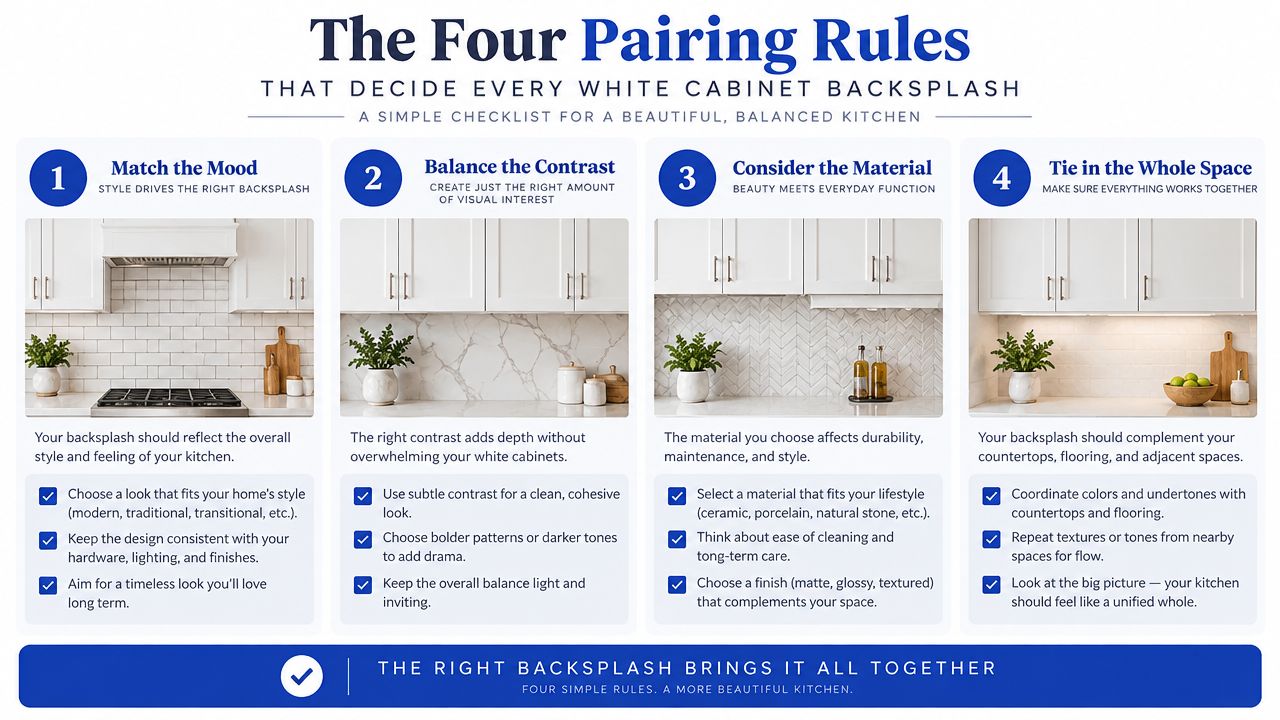
Run every candidate through those four filters before you compare colors. Most of the showroom wall will eliminate itself.
Backsplash Materials Compared for White Cabinets
Material determines how the backsplash ages, how it handles moisture, and whether the white cabinetry looks warmer, brighter, softer, or more architectural. For most homeowners, porcelain is the strongest all-around choice, with ceramic close behind when the application and budget are straightforward.
Porcelain is dense and non-porous, with typical water absorption at or below 0.5%, according to MSI's technical guide to backsplash tile for busy kitchens. That makes it particularly dependable behind sinks and cooktops, where steam, grease, acidic splashes, and frequent wiping can expose weak materials quickly.
Ceramic offers broad design flexibility and remains a sensible choice for a standard wall application. Natural stone delivers genuine variation and a premium appearance, but marble, travertine, and similar materials bring porosity, sealing, and etching concerns. If you want the stone look without accepting the full care routine, marble-look porcelain is the better specification.
Glass brightens a dark kitchen by reflecting light back into the room. It also shows fingerprints, streaks, and dirty grout more readily. Stainless and brushed metal panels clean quickly and suit a commercial or minimalist design, though they can feel cool beside warm white cabinets.
Finish matters as much as the material. The guidance on matte versus gloss paint from Painters North Shore offers a useful parallel: sheen changes how strongly a surface reflects light and reveals marks. The same principle applies to backsplash tile.
| Material | Durability | Porosity / Sealing | Cost (per sq ft installed) | Effect with White Cabinets |
|---|---|---|---|---|
| Porcelain | Excellent for high-use areas | Very low porosity, usually no sealing | Varies by product and installation | Clean, architectural, and easy to coordinate |
| Ceramic | Good for ordinary backsplash use | Low to moderate, depending on glaze | Varies by product and installation | Versatile, approachable, and available in many colors |
| Natural stone | Good, but surface-specific | Often porous, periodic sealing may be needed | Varies by stone and installation | Luxurious, organic, and visually rich |
| Glass | Good, though edges and grout need care | Non-porous | Varies by product and installation | Bright, reflective, and polished |
| Metal | Good when properly selected | Non-porous | Varies by product and installation | Sleek, commercial, and higher contrast |
| Peel-and-stick panels | Best for light-duty updates | Surface-dependent, check product limits | Usually lower than a custom tile installation | Fast, temporary, and design-forward on a budget |
My specification order is simple: choose porcelain for a demanding kitchen, ceramic for a flexible mainstream remodel, glass when light is scarce, and natural stone only when the owner genuinely wants the maintenance that comes with it.
Backsplash Formats and Patterns That Work Best With White Cabinets
The format can change the perceived scale of the entire kitchen. A horizontal tile stretches the wall visually. A vertical stack draws the eye upward. Herringbone adds movement, while a slab removes most of the visual interruption.
Rectangular tile remains a dependable choice. Houzz reported that 68% of homeowners choose rectangular backsplash tiles in its 2025 kitchen trends coverage, which helps explain why subway formats continue to pair so naturally with white cabinetry.
The classic default
A soft-white subway tile is the low-risk option. Use a warmer white with creamy cabinets and a cooler white or pale gray with crisp cabinets. A slightly contrasting grout keeps the installation from becoming one blank plane.
The low-grout upgrade
A full-height porcelain slab or quartz backsplash gives white cabinets a more customized, high-end appearance. It creates long visual continuity and avoids the cleaning burden of many grout joints, although seams and fabrication details still need careful planning. For a cooking household, this is my favorite premium solution.
The decorative choice
Mosaic sheets, penny rounds, herringbone, and handmade-look formats add personality. They also multiply grout lines. Keep them away from the range if you cook heavily, or choose a smooth, sealed surface and a grout color that won't turn every splash into a focal point.
The temporary refresh
Peel-and-stick panels suit rentals, cosmetic updates, and homeowners who aren't ready for demolition. The market for peel-and-stick tile backsplashes was valued at $3.8 billion in 2025 and is projected to reach $7.1 billion by 2034, with vinyl representing 42.5% of the 2025 market, according to Dataintelo's peel-and-stick tile backsplash market report. Those figures reflect demand for quick upgrades, not proof that every product belongs behind a working range.
| Format | Typical Look with White Cabinets | Grout Burden | Best For |
|---|---|---|---|
| Subway tile | Classic, balanced, and adaptable | Moderate | Most permanent remodels |
| Slab or large-format porcelain | Continuous and custom | Low | Frequent cooks and premium renovations |
| Mosaic sheet | Detailed and expressive | High | Decorative areas and lighter-use kitchens |
| Peel-and-stick panel | Fast, temporary, and budget-conscious | Low to moderate | Rentals and cosmetic refreshes |
For a range wall, review practical guidance on backsplash placement behind a stove before selecting a decorative format. The heat, grease, and cleaning demands there are higher than on a protected wall.
Matching Backsplash to Your Home Style and Kitchen Use
Style narrows the field, but cooking frequency makes the final call. A backsplash should suit the cabinet door profile and the room's visual language, then survive the way the kitchen operates.
Modern and contemporary kitchens
Flat slab white cabinets need a decisive counterpoint. My pick is large-format charcoal porcelain, installed full height with a close-toned grout. It supplies contrast without the busy joint pattern of small tile, and its matte or low-sheen surface keeps the room from looking overly reflective.
A veined porcelain or quartz slab also works when the countertop is quiet. Keep the pattern consistent across the wall rather than combining several competing materials.
Farmhouse and transitional kitchens
Shaker cabinets benefit from a softer, more tactile pairing. Choose handmade-look ceramic subway tile in a warm rectangular format with soft grout. The uneven edges add character, while the restrained color keeps the kitchen from becoming theme-driven.
If you're weighing stone against tile, this stone versus tile backsplash selection guide from SouthRay Kitchen & Bath can help clarify the visual and care differences before you order samples.
Rental and short-term kitchens
For a rental, choose removable peel-and-stick panels in a restrained faux-subway or marble print. Avoid treating them as a permanent commercial-grade solution, especially near a gas range. Clean the wall thoroughly, follow the manufacturer's installation limits, and keep the design quiet enough to appeal to the next occupant.
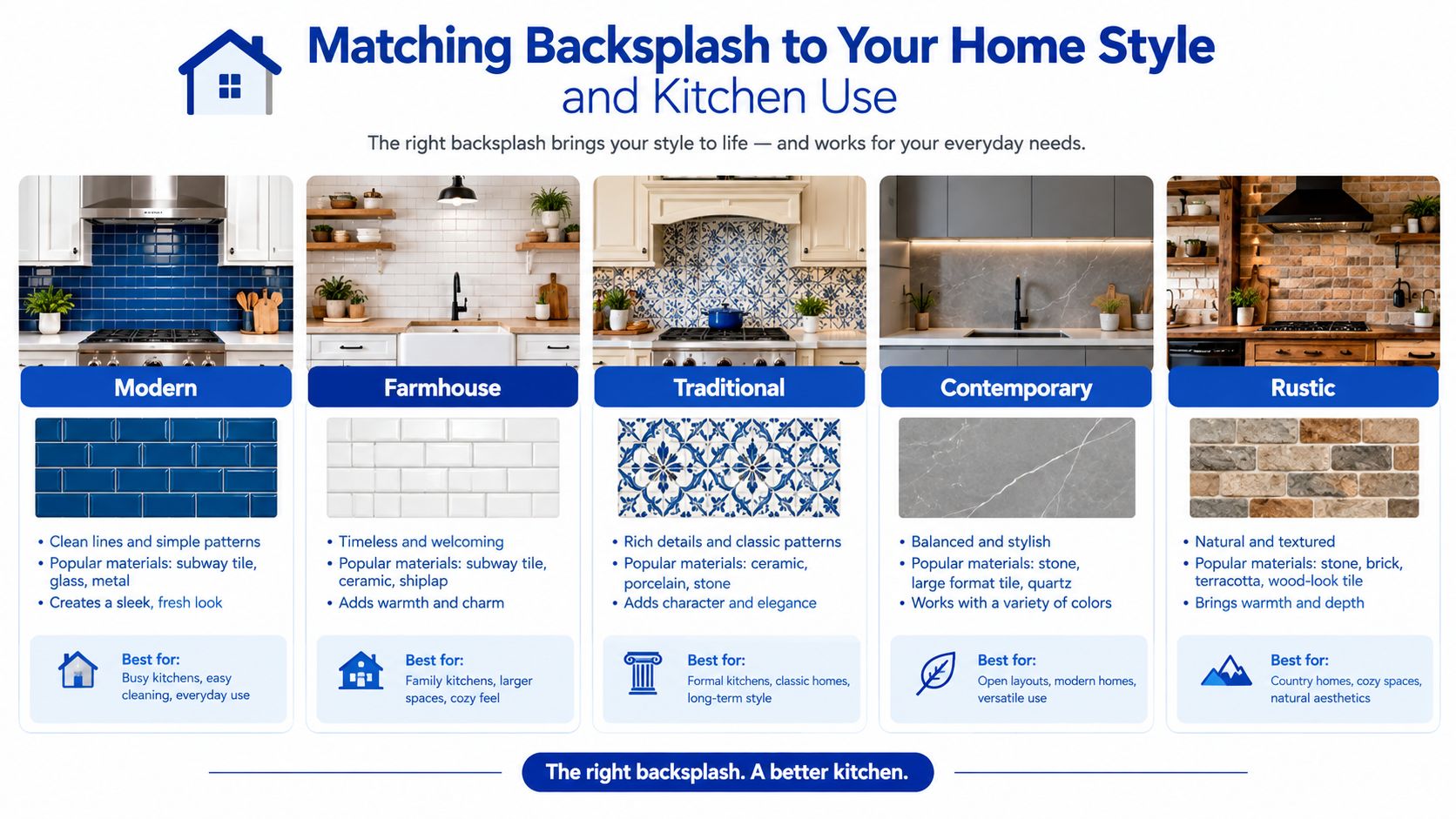
The more often you cook, the farther you should move away from textured, grout-heavy formats, regardless of the style label.
That rule prevents a common design mistake. A beautiful farmhouse mosaic still becomes a poor choice if daily cooking turns every recessed joint into a grease reservoir.
Maintenance, Cleaning, and Grout Reality for White Cabinet Kitchens
Showrooms sell the surface you see. You live with the surface after oil splatters, coffee drips, tomato sauce, steam, and fingerprints have had their turn.
Glossy ceramic and glass are easy to wipe, but their reflectivity exposes water spots and smudges. In a white-cabinet kitchen, those marks stand out because the surrounding room is already bright. Matte and honed finishes hide fingerprints better, but their micro-texture can hold grease and require more deliberate cleaning around the cooktop.
How finishes behave after installation
Natural stone needs the most disciplined care. Marble and travertine can stain, absorb moisture, and etch when acidic ingredients contact the surface. Sealing helps protect the material, but it doesn't make stone maintenance-free. If your household cooks frequently, porcelain or glazed ceramic gives you a calmer ownership experience.
Textured mosaics create the highest cleaning burden because residue collects around uneven faces and closely spaced joints. Large-format porcelain and slab surfaces are easier to maintain because they reduce the number of grout lines, a point also emphasized in current backsplash trend coverage from USA Cabinet Store.
| Finish | Smudge Visibility | Sealing Required | Cleaning Effort |
|---|---|---|---|
| High-gloss glass | High | No | Easy wiping, frequent spot cleaning |
| Glossy glazed ceramic | High | No | Easy wiping, visible streaks |
| Matte porcelain | Low to moderate | No | Regular degreasing near the range |
| Honed natural stone | Moderate | Usually | Higher care and gentle cleaning |
| Textured mosaic | Low for fingerprints, high for residue | Material-dependent | Most demanding |
| Slab surface | Low joint burden | Material-dependent | Simplest overall |
Grout color is the quiet decision that changes the daily experience. White grout creates a continuous field but can show cooking residue. Dark grout provides crisp definition but highlights pale splashes and may look permanently marked if the surrounding tile is white.
If your project includes granite elsewhere, check the practical maintenance question in this guide to whether granite needs to be sealed. The same broader principle applies here: the material's appearance is only half the specification.
Resale Safe Choices Versus Personality Driven Picks
A backsplash is part design statement and part future negotiation. If resale matters, choose a surface that looks finished, clean, and easy to live with rather than one that requires the next buyer to share your taste.
The safest tier includes white or pale gray subway tile, neutral porcelain slabs, and soft marble-look porcelain. These choices work with many countertop colors and cabinet undertones, and they don't force a buyer into a specific decorative direction.
The personality tier includes bold zellige, saturated glass, patterned encaustic tile, and strong black or navy installations. These can make a kitchen memorable, but they're a personal bet. A buyer may love the handcrafted variation, or they may calculate the cost and disruption of replacing it.
The useful middle ground
Handmade-look ceramic, soft sage, and warm terracotta offer character without making the room difficult to reinterpret. They add color or texture while remaining connected to natural materials and familiar kitchen palettes.
Recent design coverage describes a movement away from the old all-white look toward darker neutrals, full-height stone, and mixed materials. Homes & Gardens' 2026 backsplash trend coverage reflects that broader direction, but trend awareness shouldn't override the practical needs of your home.
| Backsplash Choice | Resale Safety | Personality Score | Best For |
|---|---|---|---|
| Pale gray subway tile | High | Low | Broad buyer appeal |
| Neutral porcelain slab | High | Moderate | Premium, low-fuss kitchens |
| Marble-look porcelain | High | Moderate | Classic style with easier care |
| Handmade-look ceramic | Moderate to high | Moderate | Transitional and farmhouse homes |
| Soft sage tile | Moderate | High | Owners wanting restrained color |
| Bold zellige or patterned tile | Lower | High | Long-term owners with a strong point of view |
| Black or navy tile | Moderate | High | High-contrast contemporary designs |
The rule is straightforward: safe choices should protect resale flexibility; personality picks should be loved enough to live with for years. If you're hiring the work, use this guide to finding local contractors to compare qualified installers before committing to a complex material or layout.
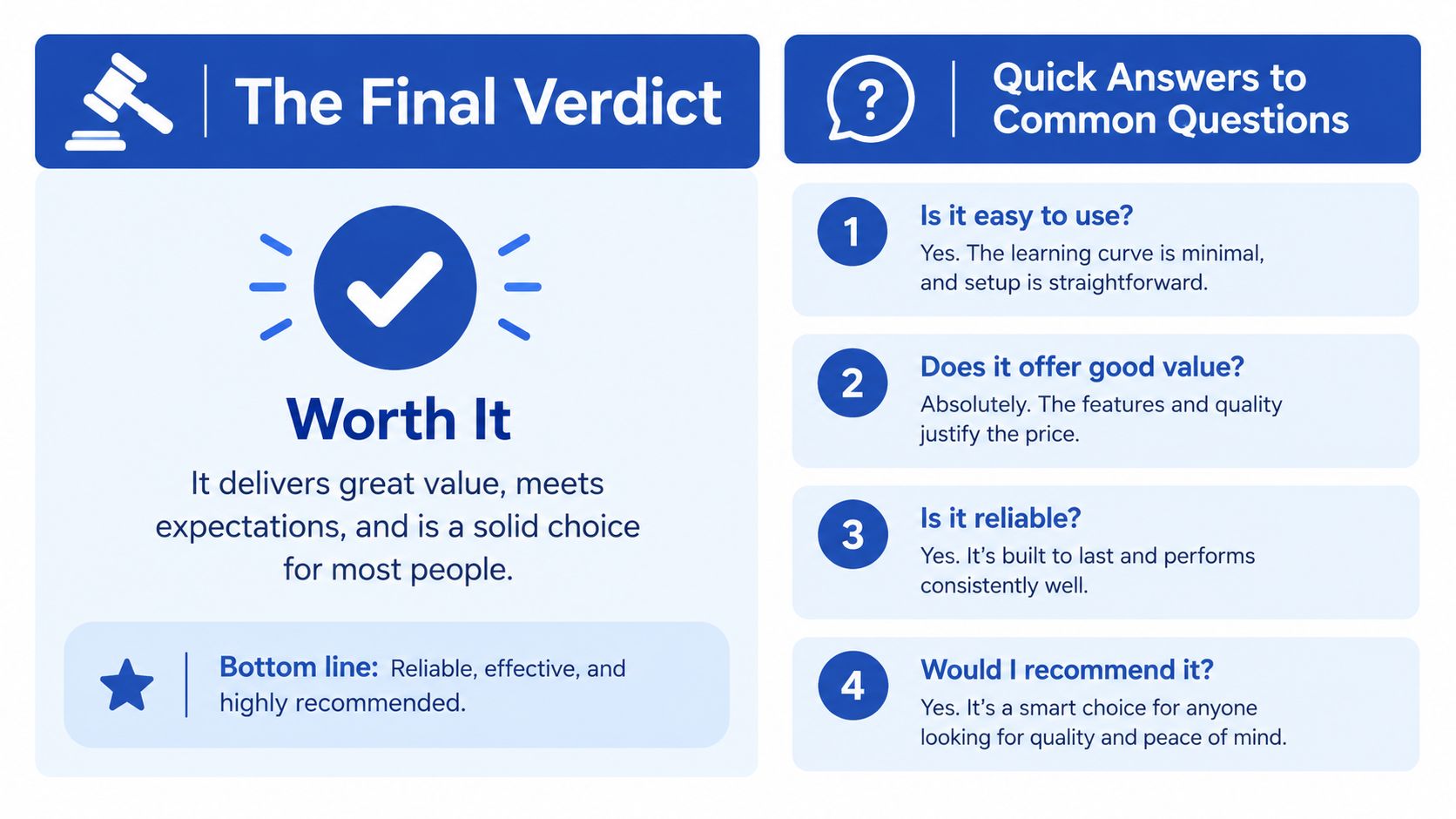
The Final Verdict and Quick Answers to Common Questions
Here's the direct recommendation by situation:
Can peel-and-stick backsplash tile handle a real range wall
Sometimes, but don't assume it can. Products differ in heat resistance, moisture tolerance, adhesive performance, and cleaning limits. A peel-and-stick panel can work for a light-duty rental update, but a range wall with frequent frying and high heat deserves a permanent tile or slab installation unless the product manufacturer specifically approves that use.
What does natural stone really cost in maintenance
The cost isn't only the sealer. You also pay in time, product restrictions, faster attention to spills, and the risk of etching or staining if acidic food sits on the surface. Natural stone is worthwhile when its variation is central to the design, not when you're choosing it because it seems like the default luxury option.
What should a porcelain subway backsplash budget include
A real installation budget includes tile, setting materials, grout, edge treatment, surface preparation, outlets, cuts, labor, and any demolition or disposal. The total varies by location, tile selection, wall condition, and layout, so ask installers for an itemized quote rather than relying on a generic per-square-foot promise.
The most common mistake is choosing a backsplash from a photo without testing it beside the actual cabinet door, countertop, and floor under the kitchen's lighting. White cabinets magnify undertone mistakes, so take samples home, view them at different times of day, and judge the grout with the same seriousness as the tile.
HomeProBadge helps homeowners find verified home service professionals with identity, background, licensing, insurance, and proof-of-work information tied to real projects. Visit HomeProBadge to compare qualified contractors before your backsplash installation starts, and choose an installer whose past work you can verify.