



You're staring at shrubs that have swallowed a window, crowded a walkway, or pushed against siding, and two bids have come back hundreds of dollars apart. Lawn Masters reports shrub removal typically runs $50 to $350 per shrub, with a national average near $175, though published estimates vary widely depending on whether they price per plant or per job.
That spread lives in what happens after the cutting. A cheap bid often covers loppers, a truck bed, and an hour of labor. A higher bid is pricing the stump work, the hauling, the disposal run, and the regrowth battle that follows when roots stay in the ground.
Judge every quote as a site-restoration job. The visible plant is only part of the work. What happens to the roots, the brush pile, and the bare bed decides whether you're done or paying again next season.
Shrub Removal Costs at a Glance
Start with the clearest published benchmark. In 2026, Lawn Masters reported shrub, bush, or hedge removal costs of $50 to $350 per shrub, with a national average of about $175. That range is useful for a few individual plants, but it doesn't mean every shrub in your yard should price at the average.
Other published figures look different because they measure different jobs. A small ornamental shrub that one worker can cut and carry out isn't priced like a whole hedge, and a per-plant rate isn't directly comparable to a flat total for clearing a bed.
Published Shrub Removal Cost Ranges
| Source | Typical range | Pricing basis | National average |
|---|---|---|---|
| Lawn Masters | $50 to $350 | Per shrub, bush or hedge | About $175 |
| Eden Studio | $75 to $200 | Per plant, shrubs under 4 feet | About $138 midpoint |
| HomeGuide | $25 to $150 | Per plant | About $88 midpoint |
| Thumbtack | About $310 to $945 | Per typical shrub-and-bush job | About $628 midpoint |
The table explains most quote confusion. Per-plant pricing suits two or three shrubs where you can count the work easily. Flat job pricing suits a hedge row, a foundation bed, or tangled growth where counting individual plants is guesswork and the crew is really selling labor, equipment, and truck space.
A Simple Way to Estimate Your Job
Count the plants first, then sort them by height and bulk. Multiply the count by a low per-plant rate and then by a high rate, so you get a bracket instead of a single hopeful number. Compare that bracket with any flat job total you're quoted.
Say you have four medium shrubs. At the average in the first row, you'd budget around the middle of the published ranges, not at the bottom. If a bid lands well below your low estimate, don't celebrate yet. Ask what's missing.
A quote below the low end usually leaves out disposal, stump work, or cleanup. Those aren't extras if you expect a finished bed.
I would never compare totals until each bidder confirms, in writing, whether stumps, hauling, and final raking are included. A cheap number that leaves you with stumps and a brush pile isn't cheaper. It's unfinished.
What a Shrub Removal Service Includes
A complete shrub removal service quote should show five separate jobs. If your estimate says only "remove shrubs," you don't yet know what you're buying.
What Basic Bids Often Exclude
Replanting, soil repair, follow-up visits, and invasive seed handling are common exclusions. So is backfilling a hole after excavation. A bid for three shrubs might cover cutting them down but leave three stumps ready to sprout.Removal also isn't trimming. Trimming keeps the plant alive and shapes it. Removal takes the whole plant out, so the scope must state what happens to roots and what the bed should look like when the truck leaves.
Ask the provider to confirm each item as its own line. That one habit prevents most disputes, because you can point to the exact work you paid for instead of arguing over what "removal" meant.
Pricing Factors That Change Your Quote
Six drivers explain why two yards with the same plant count get very different prices. Height and stem diameter come first. Thick, multi-stemmed shrubs need a chainsaw or brush saw, more cuts, and more time spent controlling where limbs fall.
Plant count matters most under per-plant pricing. Ten small shrubs can cost more than one large one because the crew repeats the same cutting, dragging, and stump work ten times. Dense hedges add another problem, since intertwined stems don't separate cleanly.Access, Stumps, and Disposal
Access changes labor fast. A wide gate lets the crew bring a chipper or stump grinder close to the bed. A narrow side yard, steep slope, or locked fence line can force workers to hand-carry every armload of brush to the street.
Compare two jobs. Three open front-yard shrubs with truck access are straightforward. Three tall, overgrown privets jammed against a fence, with brush carried through a gate, are slower and riskier. The plant count matches, but the labor doesn't.
If you're also clearing structures or stored junk to reach the bed, it's worth reading about shed clearance budgeting for homeowners from Clear It Services before you bundle everything into one vague cleanup price. Separate scopes keep you from paying extra rates for hauling work, or the reverse.
I would ask for removal, stumps, disposal, and follow-up as separate lines. Then you can compare bids like for like and spot the contractor who's cheap only because half the job is missing.
Stump and Root Removal Options Compared
Cutting a shrub down doesn't kill many species. The stump and root collar can hold dormant buds and stored energy, so new shoots push up weeks later. Choose the stump method based on what the plant is likely to do next, not only on price.
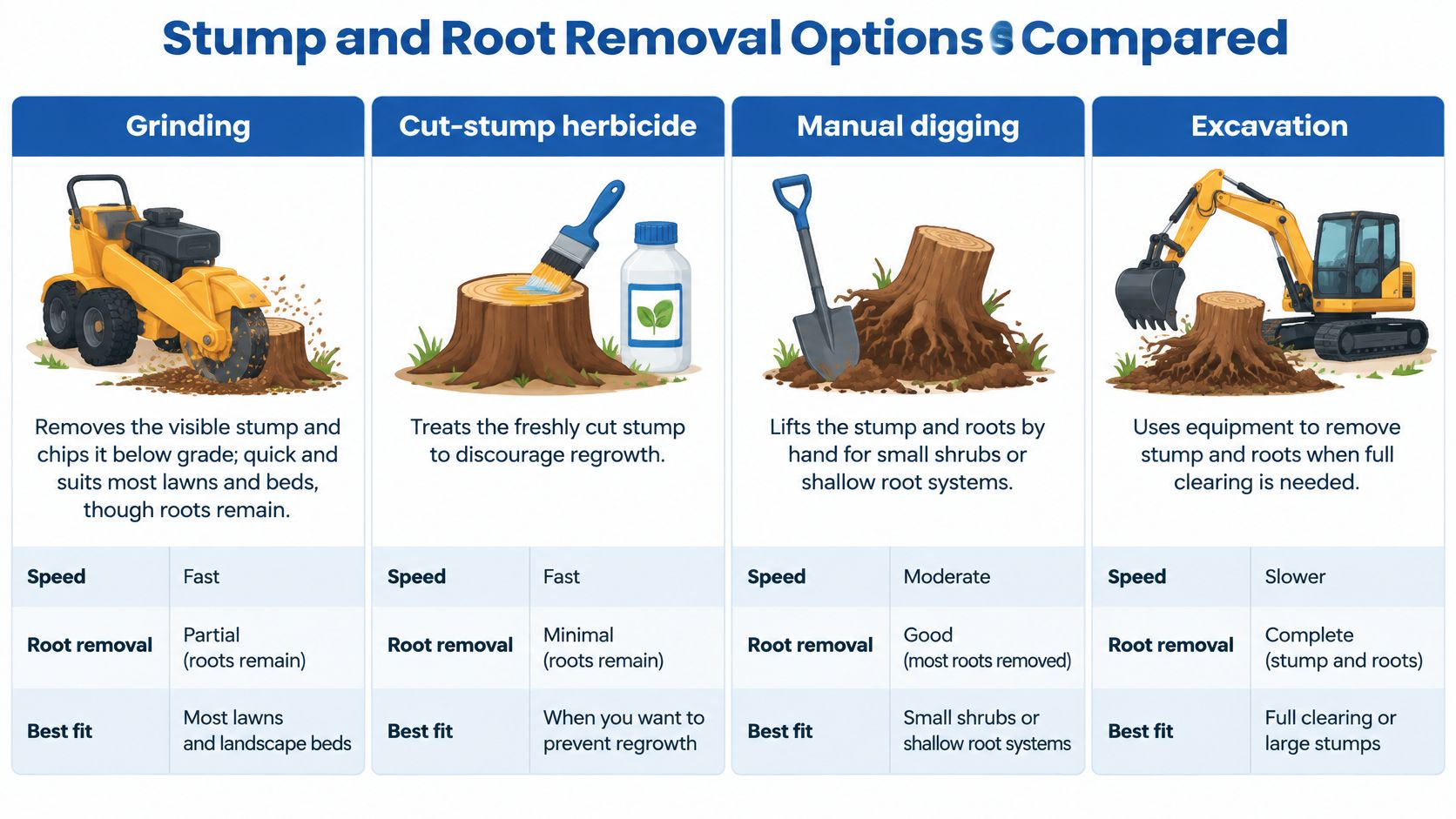
Stump and Root Removal Options
| Method | What it does | Best for | Regrowth risk |
|---|---|---|---|
| Grinding | Chips the stump below grade | Lawns and beds where roots can stay | Moderate, roots remain |
| Cut-stump herbicide | Treats fresh cuts so roots do not resprout | Sprouting or invasive species | Low when applied right after cutting |
| Full excavation | Removes stump and major roots | Ground you plan to plant or build on | Lowest, with the most soil disturbance |
| Leave to rot | Nothing done | Stumps that are harmless | High, decay is slow |
Grinding is quick and leaves a usable surface, but roots stay underground. Excavation gives you the cleanest planting hole, though it tears up the most soil and can disturb nearby plants. Leaving a stump only makes sense where it won't sprout, block planting, or become a tripping hazard.
The Timing Step Crews Skip
For resprouting and invasive shrubs, Penn State Extension cut-stump guidance recommends cutting stems close to the soil line and treating the exposed cambium or bark ring with a properly labeled systemic herbicide. Water-based glyphosate or triclopyr should be applied immediately to freshly cut surfaces, because vascular uptake declines as the cut surface dries. Oil-based triclopyr ester can generally be applied after cutting and should cover both the cut surface and stump sides.
For stems under approximately 4 inches in diameter, every exposed cut face should be treated rather than relying on a broad broadcast spray. Your work report should name the plant, stem diameter, cut height, product active ingredient, application timing, weather, and follow-up inspection date.
Follow the product label exactly and keep treated stumps away from edible plants and water. If a bidder can't tell you which active ingredient they'll use or when they'll apply it, I wouldn't trust that bid on a sprouting species.
How a Shrub Removal Crew Works Step by Step
A professional crew follows a sequence that controls risk before the first cut. You should be able to watch the job and recognize each stage.
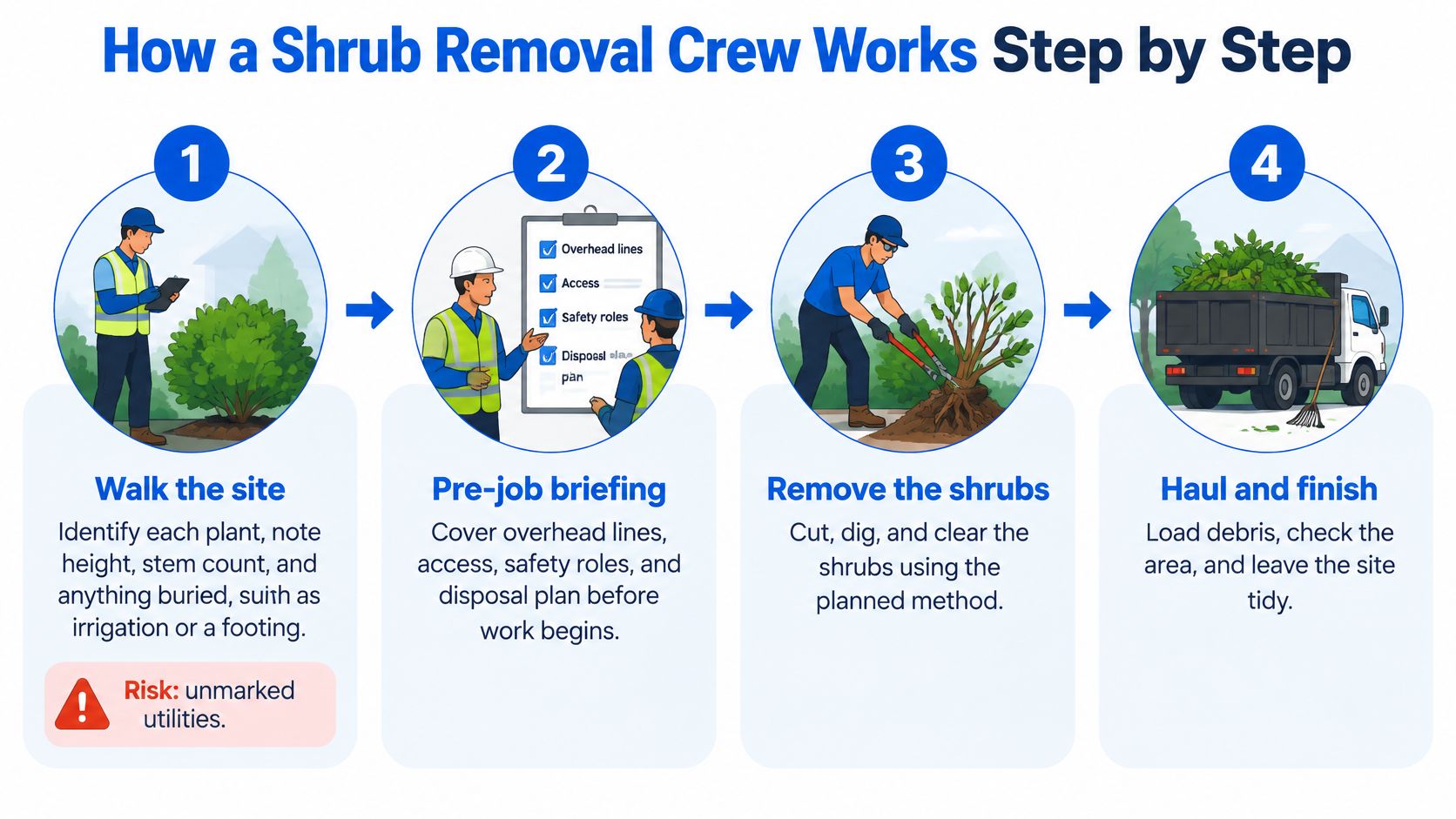
Safety Benchmarks You Can Verify
OSHA chainsaw operation guidance requires operators to fuel at least 10 feet from ignition sources and start the saw on the ground or firm support with the chain brake engaged. It also requires engaging the brake or shutting the saw off when carrying it more than 50 feet or across hazardous terrain. Recommended protection includes head, eye and face, hearing, hand, leg, and foot protection, with chainsaw chaps emphasized for landscaping work.Practical rule: If the crew can't name its drop zone, retreat path, and debris boundary before starting, the briefing didn't happen.
Once the bed is clear, the next decision is what replaces the shrubs, and the Task Masters guide to planting trees from Task Masters Inc. is a useful reference for spacing and planting basics. On our platform, each AI job report gives the homeowner a shareable link that the pro can text or email, so photos and job details don't get lost in a message thread.
Permits, Disposal and Invasive Shrub Rules
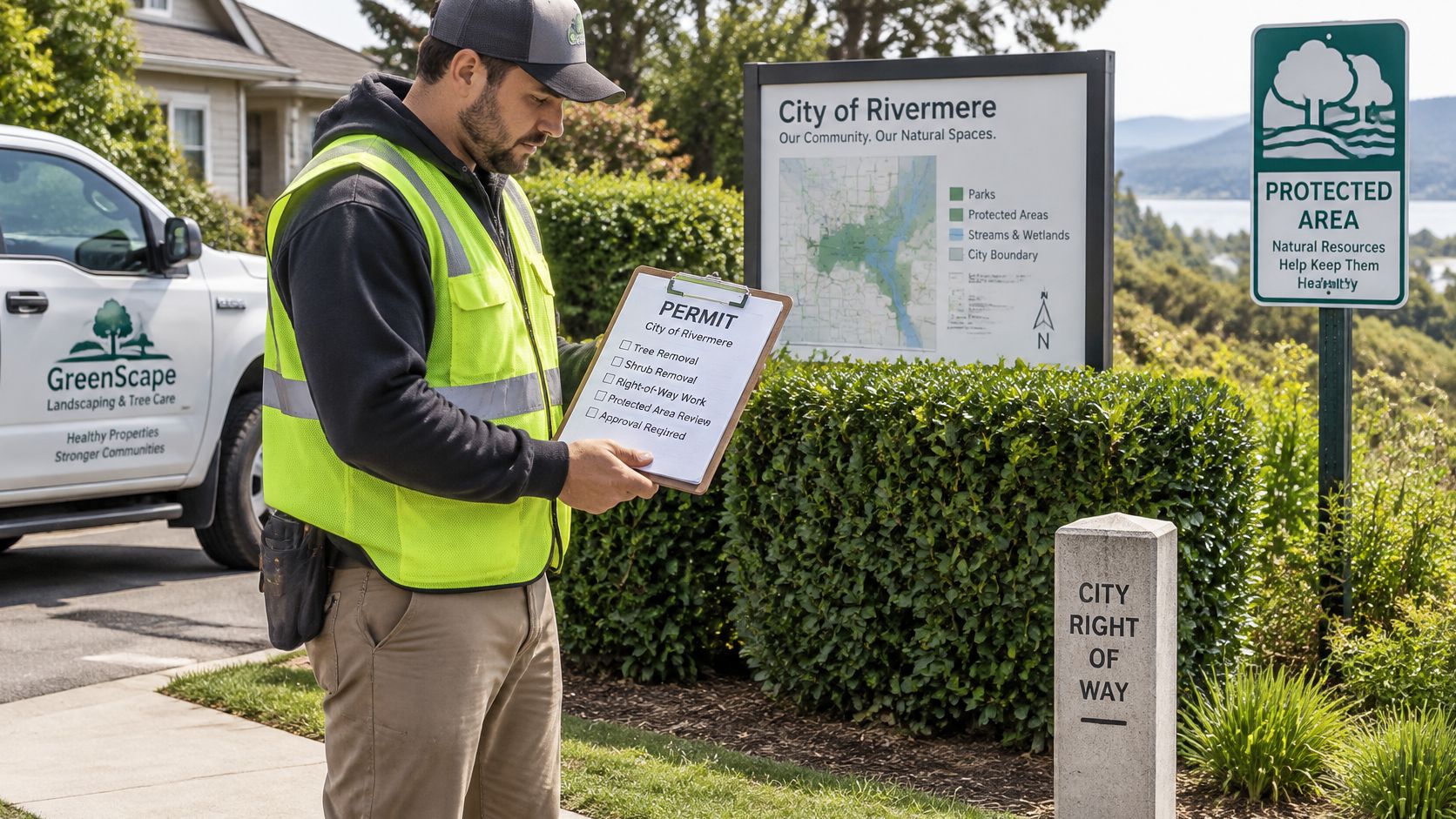
Rules vary by city and county, so check before work starts, not after a neighbor complains. Some places regulate removal in the right-of-way, near protected areas, or for larger vegetation work. Ask who checks the rule, who files any permit, and whether that cost is in the quote.
The photo below shows the kind of document check that should happen before a crew starts cutting near a boundary.
If you've received a permit violation notice, you enter your county and our AI builds a county-specific action plan with steps, deadlines, and fees, delivered in minutes. Homeowner permit violation action plans are completely free and do not require an account, so you can check your position before you hire anyone.
Where the Brush Goes
Disposal is a real part of the job, not an afterthought. The U.S. Environmental Protection Agency National Emissions Inventory documentation identifies leaf and brush waste as a distinct waste source category, and its underlying analysis reports residential waste represented an estimated 55% to 65% of combined residential and commercial waste. Open burning can create emissions and is restricted in many places, so ask whether brush will be chipped, composted, recycled, or delivered to an authorized facility.
For a large clearing, compare hauling against keeping a container on site using our guide to an 8-yard dumpster for yard projects. Either way, the quote should name the disposal method. That matters even more for invasive shrubs, because seed-bearing branches shouldn't be piled in the yard or chipped and spread as mulch.
The short video below walks through how crews handle brush once cutting is finished.
Confirm how seed-bearing material will be bagged or removed, and whether that handling is included. Your local extension office can confirm the right method for buckthorn, honeysuckle, and similar plants in your area.
Why Shrubs Return and How to Stop Them
Cutting alone often produces a temporary result. In coastal Florida wet prairies, mechanical clearing dropped woody cover to 19%, but it later rebounded to 79% when clearing wasn't combined with additional restoration treatment, according to Restoration Ecology research on post-removal treatment.
A residential bed works the same way. Roots resprout from the crown, seeds already sitting in the soil germinate, and bare ground lets the fastest plant nearby take over. If that plant is the invasive shrub you just paid to remove, you are buying the same job twice.
What Follow-Through Looks Like
Longer projects show why the plan matters. A five-year northeastern Ohio study found that combining cutting, stump treatment, and follow-up work reduced non-native shrub cover by 85%, while required management time fell by 87% as the project progressed, as described in the Applied Ecologists Blog study summary. The early work stayed labor-intensive, and that is exactly why follow-up belongs in the first quote rather than a callback priced after the sprouts show up.
Ask for a written plan you can check:
The lowest bid that excludes replanting, monitoring, or retreatment often becomes the highest total cost. You're not saving money, you're deferring it.
I would rather pay for one planned follow-up than a second full removal. Get the inspection dates in writing before the crew starts, while you still have room to negotiate.
Vet a Shrub Removal Pro Before You Sign
Ask every bidder the same questions, in the same order. Their answers tell you more than the total price does.
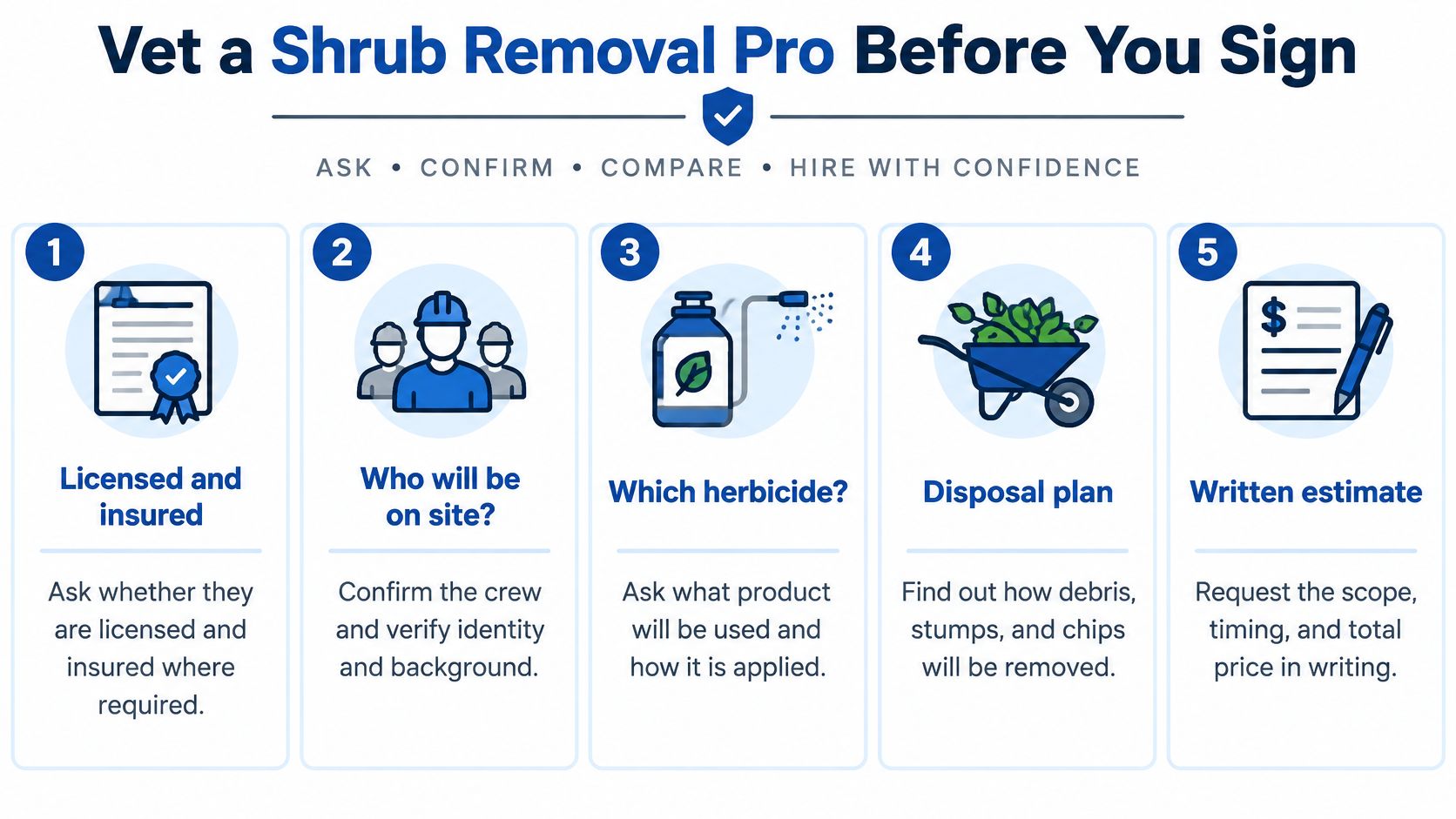
Compare Evidence, Not Just Price
Our professional profiles can showcase arborist certifications, equipment capabilities, completed projects, and customer reviews, so you can judge a shrub removal service on documented work. A TrustBadge verified badge is also displayed on every invoice a pro sends, which ties the person you vetted to the bill you pay.
If you're still deciding how to weigh bids, our guide on how to choose a contractor lays out a practical comparison process. Use it alongside three written quotes that list cutting, stump method, disposal, cleanup, and follow-up separately.
Sign only a scope that names the plants, the stump method, the disposal route, and the inspection date. If a bidder resists putting those four items in writing, choose a different bidder. That's the cheapest decision you'll make on the whole project.
Ready to hire with proof instead of promises? Visit HomeProBadge to find verified shrub removal pros whose identity, credentials, job photos, and customer reviews you can check before anyone starts cutting. Compare their documented removal, stump, and disposal work, then request written quotes that include follow-up, so your cleared bed stays cleared.