


A contractor is at your door with a clipboard, a confident estimate, and a license number written at the bottom of the proposal. The number looks legitimate, so you hand over a deposit. Later, you discover that the person who sold the job isn't the person listed on the license, the classification doesn't cover the work, or the license record doesn't show the problem you're already dealing with.
That's why contractor license verification California homeowners can rely on has to go beyond checking whether a number appears in a government database. You need to match the license to the business, the trade, the person at the jobsite, and the protection behind the work.
Why Contractor License Verification Matters
A kitchen remodel can go wrong before the first cabinet is removed. The contractor may present an active license, yet the license could belong to a different business entity, cover another trade, or identify an individual who never visits your property. If you discover the mismatch after paying a deposit, your options become harder and the project may already be delayed.
California's primary licensing authority is the Contractors State License Board, or CSLB. The board says it was established in 1929 and now licenses about 285,000 contractors across 45 classifications. Its official Check A License service lets consumers search by license number, business name, or contractor name, and the lookup includes complaint disclosure information.

The license number is only the starting point
A license check can tell you whether the record matches the contractor's claim. It doesn't, by itself, prove that the person standing in your driveway is the license holder, that the proposed work fits the classification, or that the contractor's bond and insurance remain suitable for your project.
This matters especially in urgent rebuilding situations. Los Angeles County recently reported six unlicensed contractors charged with illegally operating in a fire disaster zone, while CSLB documented 52 fraud-sweep operations in 2025 in the Palisades and Eaton fire areas. Those enforcement examples show why rushed hiring creates an opening for people who rely on urgency instead of verifiable credentials.
Practical rule: Don't treat verification as a box to tick after choosing a contractor. Use it before you sign, pay, or allow work to begin.
The strongest process has several parts. Confirm the official record, compare the classification with the scope of work, inspect the person's identification, request bond and insurance evidence, and preserve copies of what you reviewed. A contractor who responds clearly makes that process easier. Someone who becomes evasive at the first request has already given you useful information.
How to Use the CSLB Check A License Tool
Start with the official CSLB Check A License page, rather than a directory or paid lead marketplace. Search the license number printed on the estimate, contract, or advertisement whenever possible. CSLB also permits searches by business name and contractor name, which helps when the number is missing, unclear, or linked to several public-facing names.
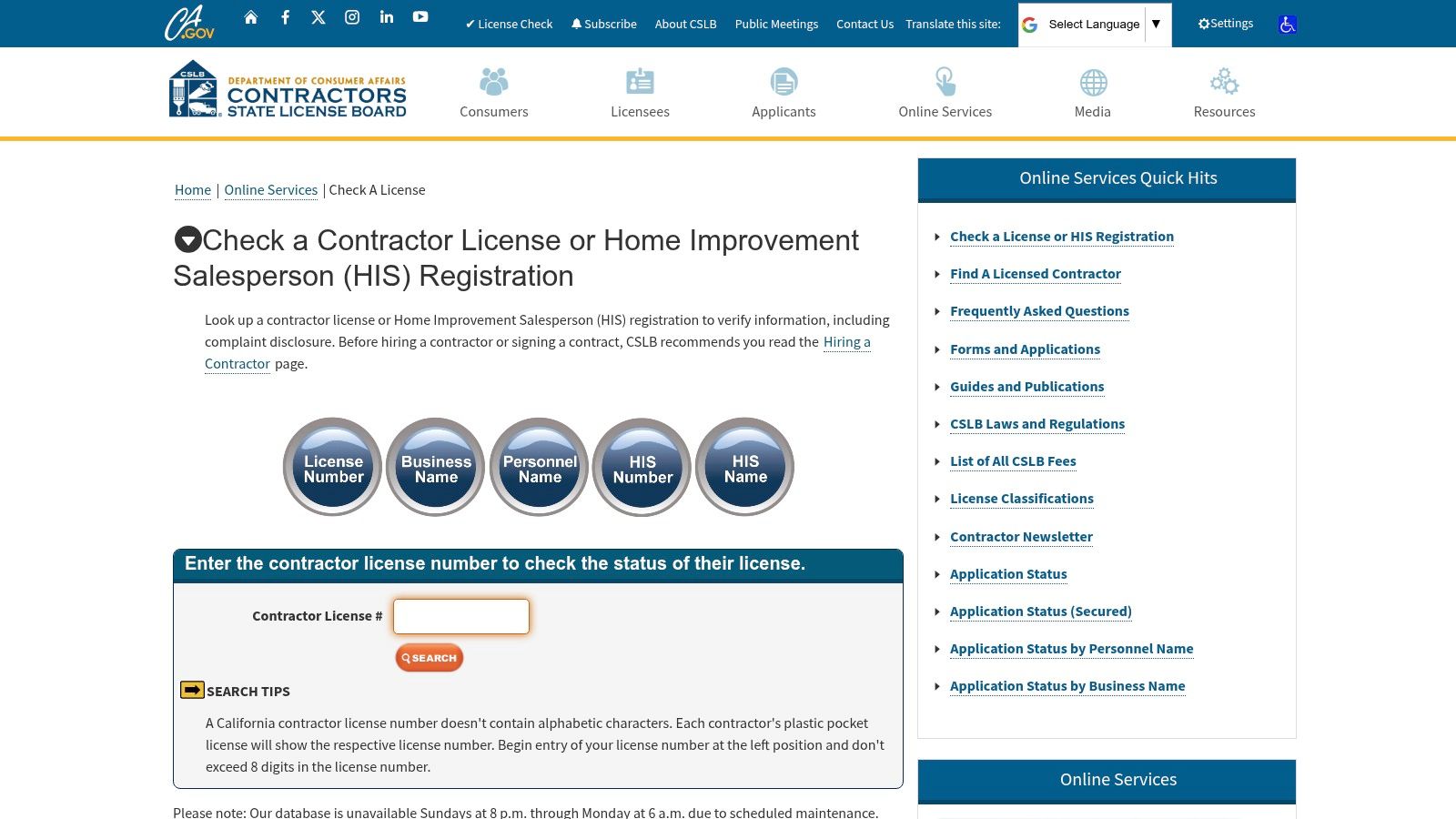
Read the result as a record, not a seal of approval
Compare the license number, business name, contractor name, classification, and current status with the information you received. Check whether the address and listed license personnel fit the company hiring for your project. Then confirm that the person at your door is the license holder or an authorized representative. A matching number does not identify every worker who uses that company's name.
If the classification does not fit the proposed work, pause before signing. Ask who will perform each part of the job and request the relevant license information. Also request current bond and insurance documents. An active public record does not, by itself, prove that the bond or coverage suits your project.
A search with no result deserves a pause, not a guess. Recheck the number and spelling, ask the contractor to provide the details in writing, and compare them with the physical license documents. A partial match may involve a DBA, salesperson, or different business entity, so resolve the identity before paying a deposit.
CSLB's lookup may show complaint disclosure information, but the public record has legal limits and does not reveal every document or risk. Use the result as the first item in your file, then verify the people, bond, insurance, and contract connected to the work.
For a visual walkthrough, review the result fields before using this demonstration:
Save a dated copy of the result, including the exact name and classification. Recheck it before later phases if the project continues over time or new crews arrive.
Understanding License Status and Classifications
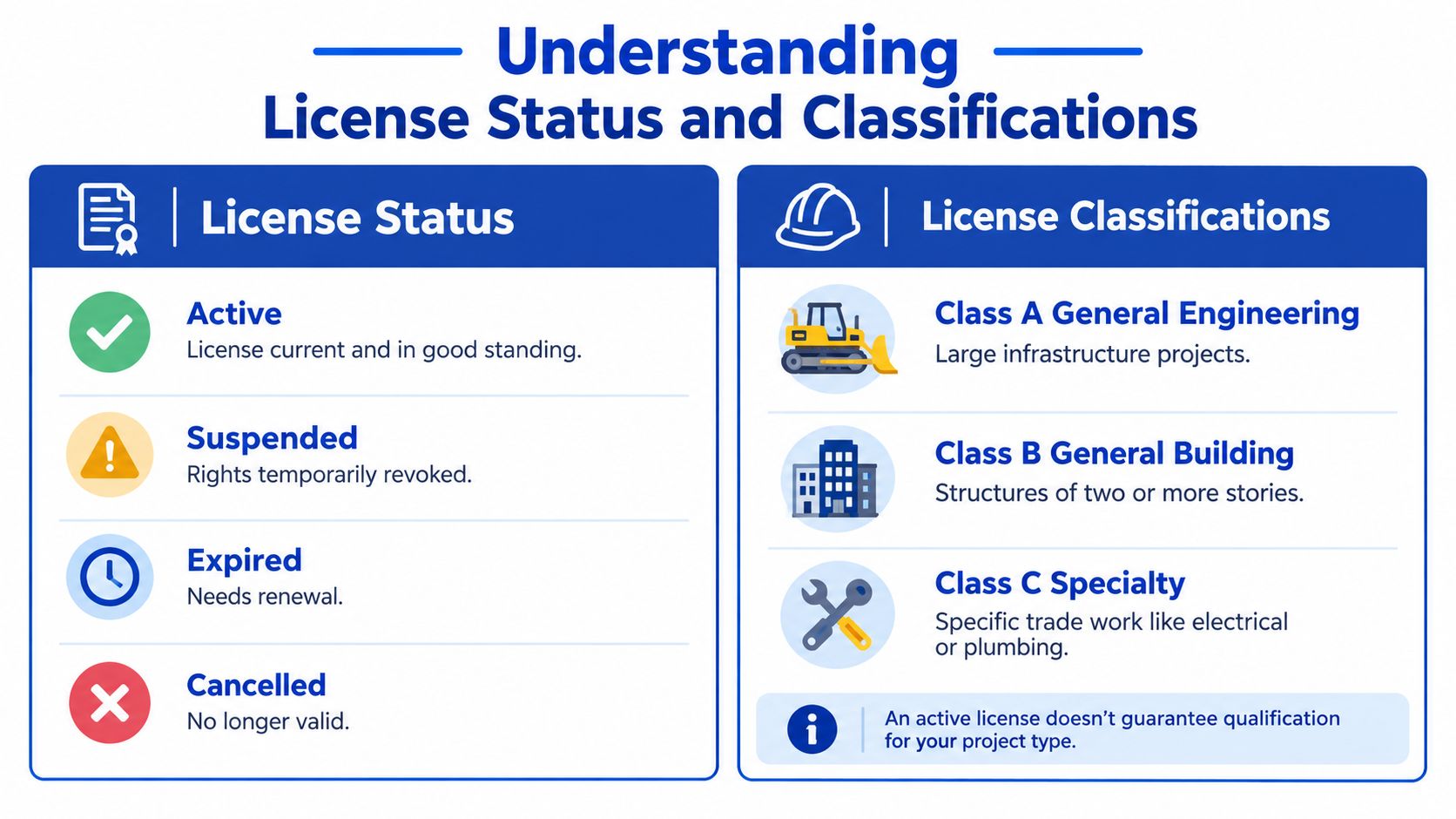
A contractor can show an active California license and still lack the classification needed for the work you are buying. Check the trade, scope, and business identity together before treating the record as approval for the project.
Active status isn't the same as project-specific qualification. An active record means the license is recognized in the system at the time of the search. Suspended, revoked, expired, or cancelled status creates a separate authorization problem. If the record conflicts with the proposal, ask the contractor to explain the difference and confirm any claimed update through CSLB rather than relying on a verbal answer.Classification defines what kind of work the license is connected to. Compare the listed trade with the contract language and the actual work plan. A contractor may hold an active specialty license while the project also includes electrical, plumbing, structural, roofing, or other work requiring another classification or a properly licensed partner.
The name on the record matters too. Match the licensed business and license personnel to the company name on the proposal, invoice, and contract. A person using the company's name may not be the license holder, and the record may identify a different legal entity or business name. Resolve that mismatch before signing.
For a plain-language explanation of California specialty categories, the LA Law Group APLC CA license guide offers useful context. A broader comparison appears in this contractor licensing requirements by state guide, but the California record and project documents should control your decision.
Use a Verified Certificate for higher-risk decisions
A regular lookup works for initial screening. CSLB says a Verified Certificate provides a certified license history covering the last three years. It may include the business name, address, trade classifications, issuance date, license personnel, bond information, enforcement actions, and status during that period.
The certificate is intended mainly for court actions and is admissible as prima facie evidence. CSLB lists a fee and processing period for the request. It is not a practical replacement for a quick pre-hire check, but a certified history may suit a major project, an active dispute, or a decision involving significant legal exposure. An active status alone does not confirm suitable bond or insurance protection.
Verifying Bonds, Insurance, and Identity
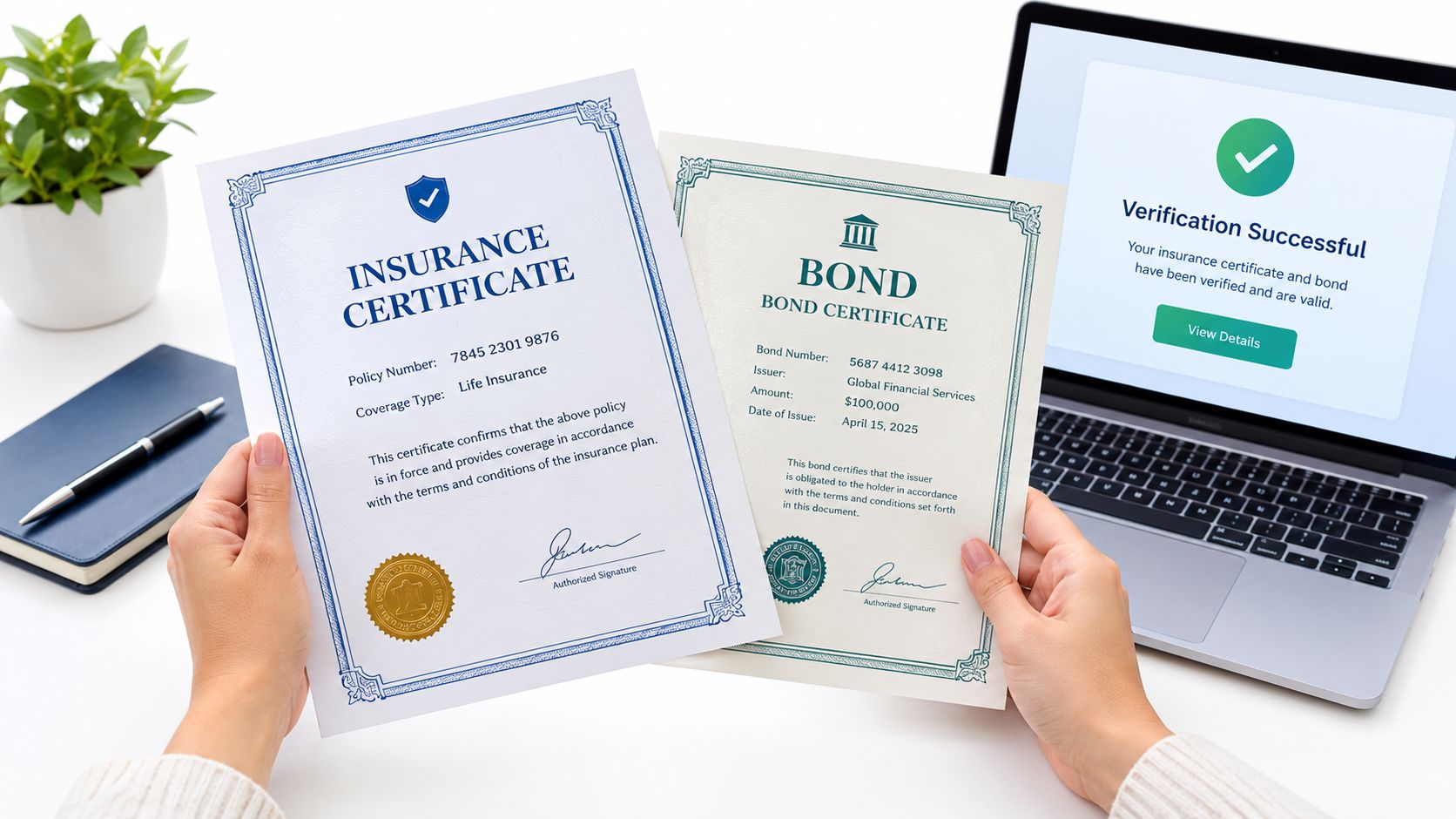
A license record tells you about authorization. It doesn't replace checking the financial protections attached to the job. Ask the contractor for current bond and insurance documentation, then compare the names, business details, and dates with the CSLB record and your contract.
Don't accept a vague statement such as “we're fully covered.” Request the actual certificate or confirmation, review whether the named business matches the contracting entity, and ask what happens if a subcontractor performs the work. The purpose isn't to collect paperwork for its own sake. It's to identify gaps before a loss, injury, property-damage claim, or payment dispute occurs.
Match the person, not only the company
CSLB advises consumers to ask for a pocket license and picture ID and confirm that the person at the property is the same person listed on the license. The board also says contractor advertisements must display the state license number. Its lookup supports searches by business name, contractor name, and Home Improvement Salesperson registration, which helps when several names appear in the hiring process.
The difficult situation is a mismatch. A salesperson may sign the agreement, a company may hold the license, and a crew member or subcontractor may perform the work. Those relationships can be legitimate, but you should know who is responsible and which entity your contract names.
Use a simple jobsite check:
Insurance communications also need to be clear and audience-appropriate. For businesses thinking about how coverage information is presented publicly, insurance marketing tailored for TV offers a separate marketing perspective. For the verification task itself, this insurance verification process provides another practical reference point.
The Hidden Risks of Relying Only on CSLB Data
An active CSLB result is a starting point, not a hiring guarantee. A homeowner can still face trouble if the person at the door is not the license holder, the bond or insurance document is outdated, or the classification does not cover the proposed work. Recent problems may also exist before they appear in the public record.
What can still make an active contractor risky? The answer is often hidden in the gap between what CSLB displays and what California law permits it to disclose. The lookup record is useful, but it is not a complete history of the contractor or every person involved in the project.What the public record can and cannot prove
| CSLB record can help confirm | CSLB record cannot fully establish |
|---|---|
| License number and public business details | That the person at your door is the license holder |
| Listed classification and status | That every task in your contract fits the classification |
| Disclosed information within legal limits | The full history of complaints or arbitrations |
| Certain reported enforcement or judgment information | That recent events have already reached the database |
CSLB's license lookup disclosure information explains why a number search cannot stand alone. The board may show construction-related civil judgments reported to CSLB, while arbitrations are generally not disclosed unless the contractor fails to comply. Database lag can also leave recent events absent.
Use the record to confirm the state's information, then verify the documents and people connected to your contract. An active status does not prove that the salesperson, business entity, crew, or subcontractor standing in front of you is properly connected to the license.
Use several checks without confusing their roles
Each check answers a different question:
A background or reputation review can add context, but it should not be treated as proof that a license is active. This contractor background check guide explains how those checks fit with license verification. A third-party platform such as HomeProBadge can organize identity, background, licensing, insurance, and project documents, but it should supplement the official CSLB source.
An active license answers one question. It does not answer every question that determines whether you should hand over money.
Red Flags and Next Steps After Verification
Verification should make the hiring decision clearer. If the contractor refuses to show identification, changes the business name between the estimate and contract, or says the license belongs to “the office” without explaining who is responsible, pause the project. A vague response about insurance, a bond document that doesn't match the business, or pressure to pay before paperwork is complete deserves the same treatment.
Stop when the details don't line up
The most useful red flags are often small inconsistencies:
Document the issue with dates, copies, photographs, and written messages. If the concern involves possible unlicensed activity, misleading credentials, or conduct that merits regulatory attention, use CSLB's official consumer and enforcement channels. For a contract dispute, significant financial exposure, or suspected fraud, consider speaking with a qualified California attorney or local consumer protection office.
Keep checking during the project
Verification isn't always a one-time event. Recheck when the business name changes, a new person takes over, a subcontractor arrives, the scope expands, or a long project moves into a new phase. Ask who pulled permits and who is responsible for inspections, and put those answers in the contract rather than relying on a hallway conversation.
Before signing, confirm that you have:
HomeProBadge helps homeowners find professionals with verified identity, background, licensing, and insurance information, along with proof-of-work records tied to real projects. Visit HomeProBadge to review verified home service professionals before you hire.