

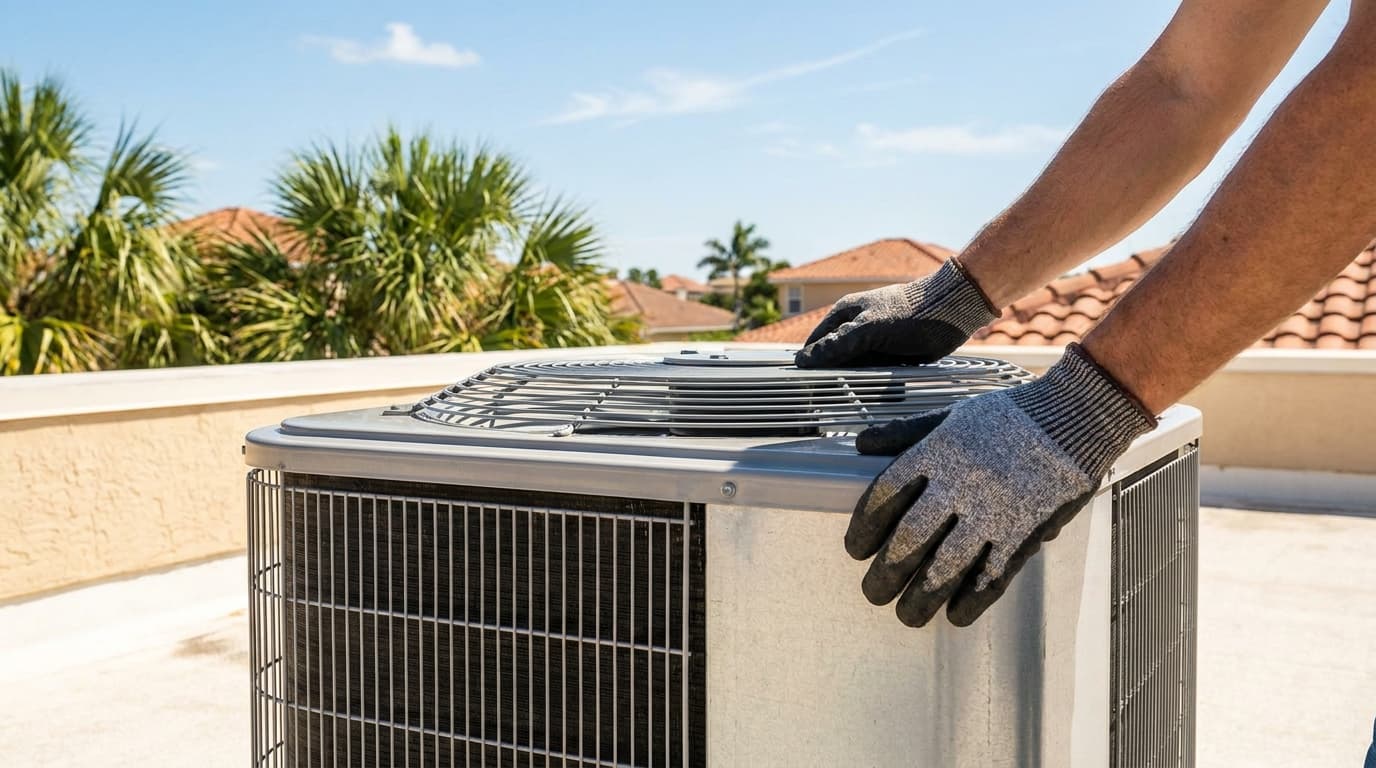

A complete, professionally installed furnace and central air conditioner replacement typically costs $12,600 to $19,000 nationally, with an average near $15,500. The final price depends heavily on hidden infrastructure work, including duct modifications, electrical upgrades, refrigerant lines, permits, and commissioning.
That's why the most popular advice about the cost of a new furnace and air conditioner is often misleading. Homeowners are told to compare brands, efficiency ratings, or equipment prices as if they're buying two appliances. They're not. They're buying a matched heating and cooling system that must fit the home, connect to existing infrastructure, pass inspection, and operate correctly after installation.
A low bid may reflect a lower price, or it may reflect a shorter scope of work. Those aren't the same thing.
ze the assumptions](#normalize-the-assumptions)
- Use a broader repair decision
- Don't buy a replacement on refrigerant fear alone
- Choose financing by total cost
- Treat rebates as a verification task
- Demand a permanent project record
The Reality of HVAC Replacement Pricing
The brand on the outdoor condenser rarely explains the full difference between two replacement quotes. Installation scope explains far more. A contractor replacing a furnace and central air conditioner may need to remove old equipment, adapt the plenum, modify ductwork, replace or extend refrigerant lines, complete electrical work, obtain permits, test airflow, charge the system, and document startup readings.
A proposal that leaves those tasks vague isn't a complete proposal. It may still produce a functioning system, but you won't know what you're paying for until the crew finds a problem in the attic or discovers that the existing indoor coil doesn't match the new condenser.
National cost estimates place a complete HVAC replacement at approximately $12,600 to $19,000, with an average near $15,500, according to national HVAC replacement cost estimates. That range is a useful starting point, not a promise. Home size, climate, fuel type, equipment efficiency, local labor, access, and the condition of the home's distribution system can move the final figure substantially.
Why low bids deserve scrutiny
A low quote isn't automatically dishonest. It may come from a lean contractor with lower overhead. But the quote should survive an item-by-item comparison.
Look for these omissions:
Practical rule: Compare the completed scope, not the equipment sticker. A cheap box installed incompletely is not a cheap HVAC system.
Contractors who prepare detailed proposals can use an HVAC estimating software guide to structure labor, materials, permits, and project assumptions more clearly. Homeowners benefit when those details appear in writing, because a credible estimate makes it easier to distinguish an efficient operation from a bid that leaves work out.
How Capacity and Efficiency Drive the Baseline Cost
Equipment capacity sets the first major layer of the price. Furnace capacity is commonly expressed in BTUs, while central air conditioners are sized by cooling capacity and matched performance. The correct size depends on the home's load, insulation, windows, duct design, climate, and internal heat gain. Bigger isn't automatically better.
Installation data cited by Bob Vila's furnace and HVAC replacement cost guide estimates about $3,250 for a 40,000 to 60,000-BTU furnace, about $4,200 for a 75,000 to 100,000-BTU model, and about $6,000 for a 120,000 to 140,000-BTU model. Those figures illustrate how capacity affects the equipment portion of the project, but they don't replace a load calculation.
Equipment capacity and type
The same source places installed furnace costs at approximately $1,700 to $10,000 overall, with electric furnaces around $1,700 to $7,100 and gas or oil furnaces around $3,800 to $10,000. Central air-conditioning equipment is estimated at roughly $3,900 to $7,900, before the home-specific installation conditions determine the final total.
| System type and capacity | Estimated installed cost |
|---|---|
| Electric furnace | $1,700–$7,100 |
| Gas or oil furnace | $3,800–$10,000 |
| 40,000–60,000-BTU furnace | About $3,250 |
| 75,000–100,000-BTU furnace | About $4,200 |
| 120,000–140,000-BTU furnace | About $6,000 |
| Central air-conditioning equipment | $3,900–$7,900 |
The table reflects the cited installation data, not a guaranteed combined project price. For cooling capacity questions, a homeowner should understand what a 1.5-ton AC unit represents before comparing equipment recommendations. The contractor should still verify the actual load rather than selecting capacity from square footage alone.
Efficiency changes the purchase and operating equation
Gas furnaces use AFUE, or annual fuel utilization efficiency. An 80% furnace converts roughly 80% of consumed gas into useful heat, while a 95% model converts roughly 95%, with the balance lost through combustion and venting. Central air conditioners use SEER2, a seasonal cooling efficiency rating.
Higher efficiency can increase the upfront equipment price, but it can also reduce operating costs. The value depends on climate, fuel rates, runtime, airflow, and installation quality. Current federal minimum central-air requirements are approximately 13.4 SEER2 in the North and 14.0 to 14.3 SEER2 in Southern jurisdictions, depending on the applicable standard, according to efficiency and HVAC cost guidance.
Don't pay for a rating your home can't use. An oversized furnace, restricted duct system, incorrect indoor coil, or improper refrigerant charge can undermine the performance the label promises.
The Hidden Infrastructure Variables That Inflate Quotes
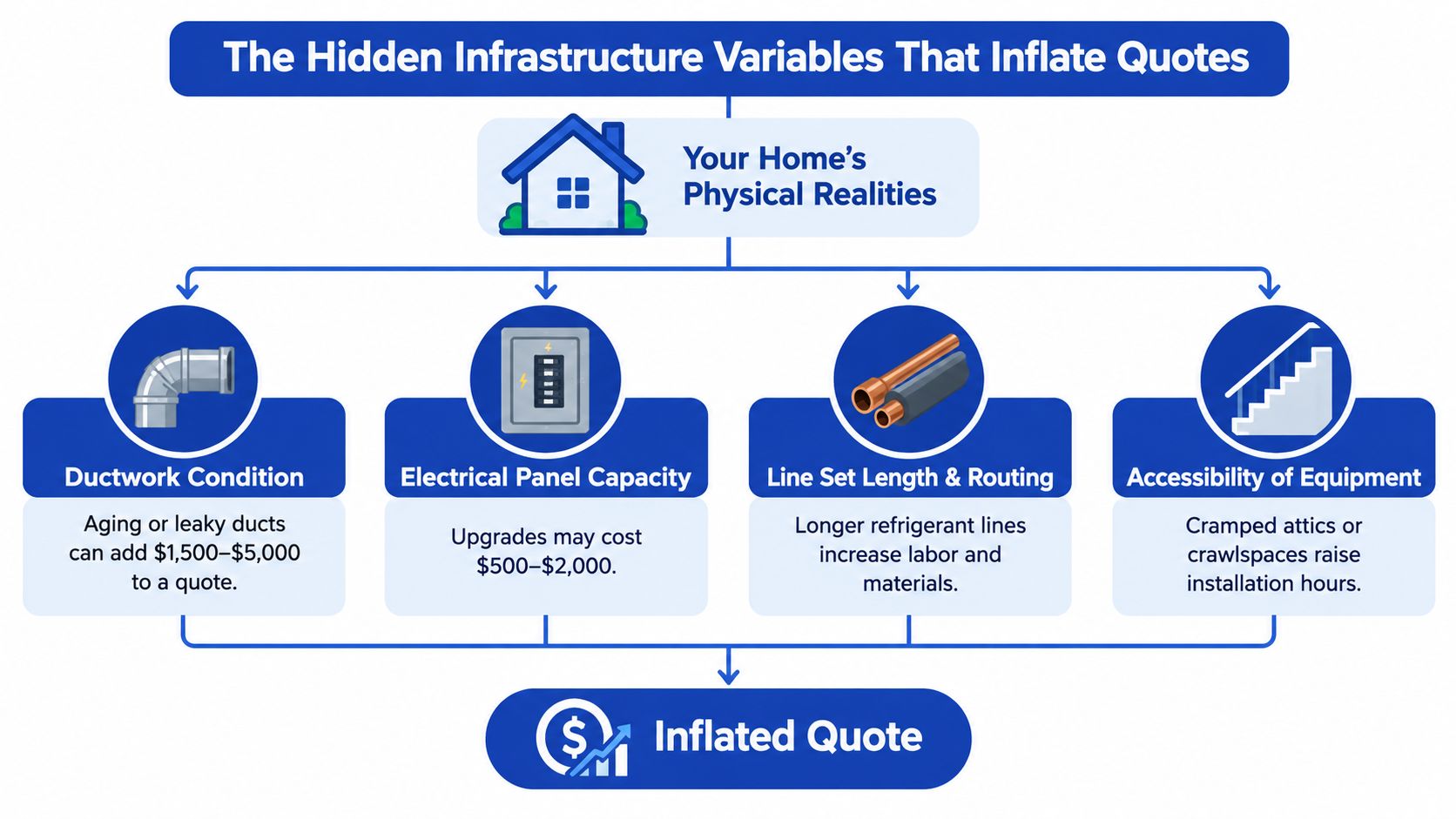
Two contractors can recommend the same furnace and condenser yet produce very different quotes. The difference usually appears in the work around the equipment.
A straightforward basement installation with accessible ducts, adequate electrical capacity, and a usable refrigerant line is simpler than a rooftop or attic replacement. In a cramped crawl space, the crew may need more time to remove equipment, protect the home, adapt connections, and safely complete startup. The equipment model may be identical, but the labor and materials are not.
What changes the installed price
Ductwork condition is one of the most commonly ignored variables. Leaks, crushed runs, undersized returns, damaged plenums, and poor transitions can limit comfort even when the new equipment is correctly selected. A quote that assumes “reuse existing ductwork” should explain what the contractor inspected and what modifications are excluded. Electrical capacity matters when the new equipment requires different circuit protection, wiring, disconnects, or controls. The proposal should state whether electrical work is included or treated as an allowance. Line-set routing affects both materials and labor. Long, inaccessible, damaged, or incompatible refrigerant lines can require replacement or rerouting. The contractor should identify whether the existing line set will be reused and whether that decision is compatible with the selected equipment. Access is a practical cost driver. Attics, crawl spaces, rooftops, and narrow mechanical rooms can increase handling difficulty and installation hours. A responsible contractor should inspect access before finalizing the price, not discover the problem after the equipment arrives.Current cost guides place a matched furnace-and-central-AC replacement anywhere from about $7,000 to $13,000 to $9,000 to $18,000 installed, while complete projects requiring ductwork can exceed $25,000, as described in this matched HVAC replacement cost overview.
Normalize the assumptions
Ask every contractor to state whether the quote includes:
You can also review HVAC permit requirements for the issues that may affect your location. The lowest quote becomes much less attractive when it excludes the work needed to make the system legal, safe, and durable.
Navigating the Refrigerant Transition and Repair Decisions
The refrigerant transition has changed the repair-versus-replace decision. New residential air conditioners must use refrigerants below the EPA's 700 global-warming-potential threshold. R-454B and R-32 are replacing R-410A, and replacement equipment premiums have been reported at roughly 5% to 12% for equipment, with some consumer-facing estimates reaching 30%, according to this R-454B refrigerant transition analysis.
That doesn't mean every R-410A system should be replaced immediately. It means you shouldn't evaluate an aging system using only the cost of today's repair.
Use a broader repair decision
A refrigerant top-up may restore operation temporarily, but it doesn't solve the leak that caused the charge loss. A routine refrigerant top-up is estimated at approximately $150 to $700, and newer refrigerants can cost more per pound, according to the cited transition guidance. The repair may make sense when the system is otherwise sound and the fault is isolated. It becomes harder to justify when the equipment has a leak history, repeated compressor or control failures, poor efficiency, or a mismatched replacement part.
Ask the contractor to document:
Don't buy a replacement on refrigerant fear alone
The transition creates legitimate technical requirements, including equipment designed for the specified refrigerant and appropriate A2L safety procedures. It doesn't justify a vague replacement quote.
A replacement proposal should identify the furnace, evaporator coil, condenser, controls, refrigerant, labor, permits, and startup process. If it doesn't, you can't tell whether the higher price reflects compliant equipment and complete work or just a sales premium.
A repair buys time. A replacement buys a new matched system. Choose between them by comparing the system's condition, leak history, operating needs, and documented installation scope.
How to Normalize and Compare Contractor Bids
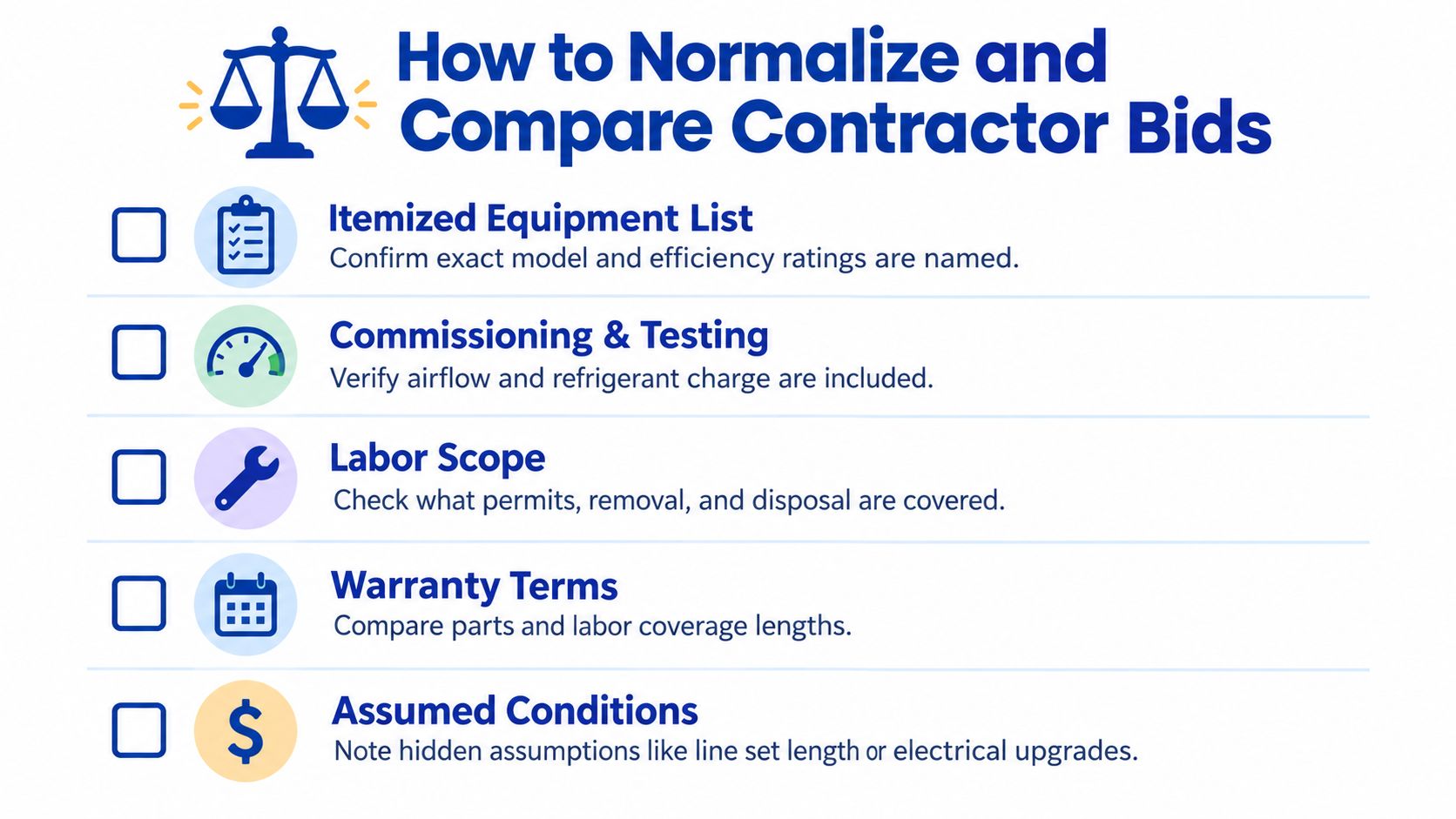
Don't compare the total at the bottom of page one. First, convert every proposal into the same scope.
A credible bid should identify the exact furnace, outdoor condenser, indoor evaporator coil, controls, efficiency ratings, capacity, labor, permits, removal, disposal, refrigerant work, duct modifications, electrical work, and warranty terms. If one contractor names every component and another writes “new HVAC system,” the quotes aren't comparable yet.
The bid comparison test
Use this sequence before discussing price:
A 2025 national platform benchmark reported approximately $17,040 for residential HVAC installation, including equipment, labor, permits, and related work. Regional averages ranged from below $9,000 to nearly $26,000, according to state-by-state HVAC replacement cost data. That spread reinforces the need to compare scope and local conditions, not to treat one national figure as a guaranteed price.
Homeowners can ask contractors to structure estimates using tools such as Exayard HVAC estimating software, particularly when a project includes multiple labor categories, materials, permits, and change-order risks. Clear estimating helps both sides identify what the original price covers.
A low bid that omits coil compatibility, duct corrections, permits, or commissioning isn't cheaper until you prove those items aren't needed. Require the contractor to put that conclusion in writing.
Financing Options Rebates and Project Timelines
A full replacement starts with an inspection and load evaluation, not a sales presentation. The contractor should examine the existing equipment, duct system, electrical service, refrigerant lines, access, fuel connections, and permit requirements before finalizing the proposal.
From there, the project normally moves through equipment selection, written estimate, financing or payment approval, equipment ordering, installation, inspection where required, and commissioning. The exact schedule depends on equipment availability, local permitting, crew capacity, and the home's physical constraints. Don't accept a firm completion promise until the contractor has inspected the site and confirmed the equipment.
Choose financing by total cost
Homeowners commonly consider contractor or manufacturer financing, a home equity line, a personal loan, or available savings. Promotional financing can look attractive, but read the deferred-interest terms, payment schedule, fees, and consequences of missing a condition. A lower monthly payment can still produce a higher total cost.
Before signing, request:
For contractors or homeowners evaluating equipment funding structures, this resource on whether no-money-down equipment financing is possible provides useful context. Financing should support a properly scoped installation, not encourage you to accept a rushed or underspecified proposal.
Treat rebates as a verification task
Efficiency incentives can change the net cost, but eligibility depends on the exact equipment, location, income rules where applicable, installation date, and program requirements. Confirm the current rules with the utility, state program, manufacturer, or tax professional before treating an incentive as guaranteed savings.
The safest approach is to calculate the project in two columns: the full installed price and the potential verified incentive. Never let an assumed rebate justify a larger system, a higher efficiency tier, or an incomplete scope.
Protecting Your Investment with Verified Proof of Work
The equipment rating describes what the system can do under defined conditions. The installation determines whether your home receives that performance.
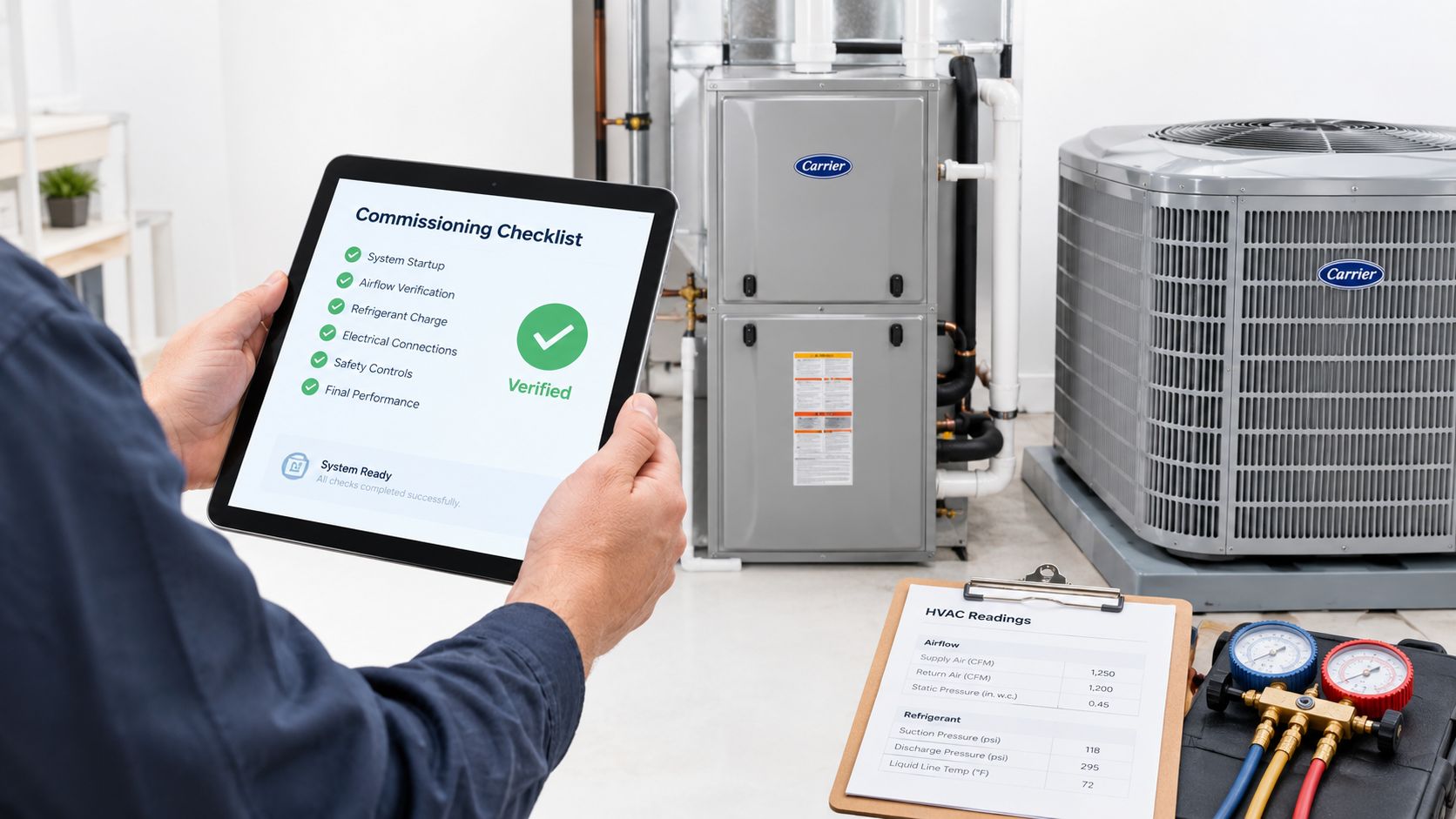
A contractor should commission the system after installation, not turn it on and leave. That process should include airflow checks, refrigerant verification, temperature measurements, controls testing, and confirmation that the equipment operates as designed. Poor airflow or an incorrect refrigerant charge can reduce comfort and operating efficiency even when the model numbers look right.
Demand a permanent project record
Keep more than the invoice. Request:
DOE analysis indicates an ENERGY STAR-qualified furnace can justify an added price premium of up to $549 in 2023 dollars through energy savings, but the result depends on climate, fuel rates, runtime, airflow, and installation quality, as explained in this ENERGY STAR furnace cost and efficiency discussion. The rating matters, but the commissioning record shows whether the contractor installed the system competently.
The installation record is part of the HVAC system. Without it, you have less evidence for warranty questions, future repairs, resale disclosures, and disputes over incomplete work.
A verified contractor should be willing to identify the business, licensing, insurance, technicians, equipment, and completed scope. Homeowners can review the job verification process to understand what documented proof should look like before accepting a five-figure replacement.
The right purchase isn't the cheapest furnace and condenser combination. It's a correctly sized, matched system with a complete scope, transparent assumptions, compliant installation, and proof that the work was commissioned properly.
If you're planning a furnace and central air conditioner replacement, use HomeProBadge to find verified home service professionals and review documented proof of completed work. Compare contractor credentials, real project evidence, and installation records before you approve the quote.