

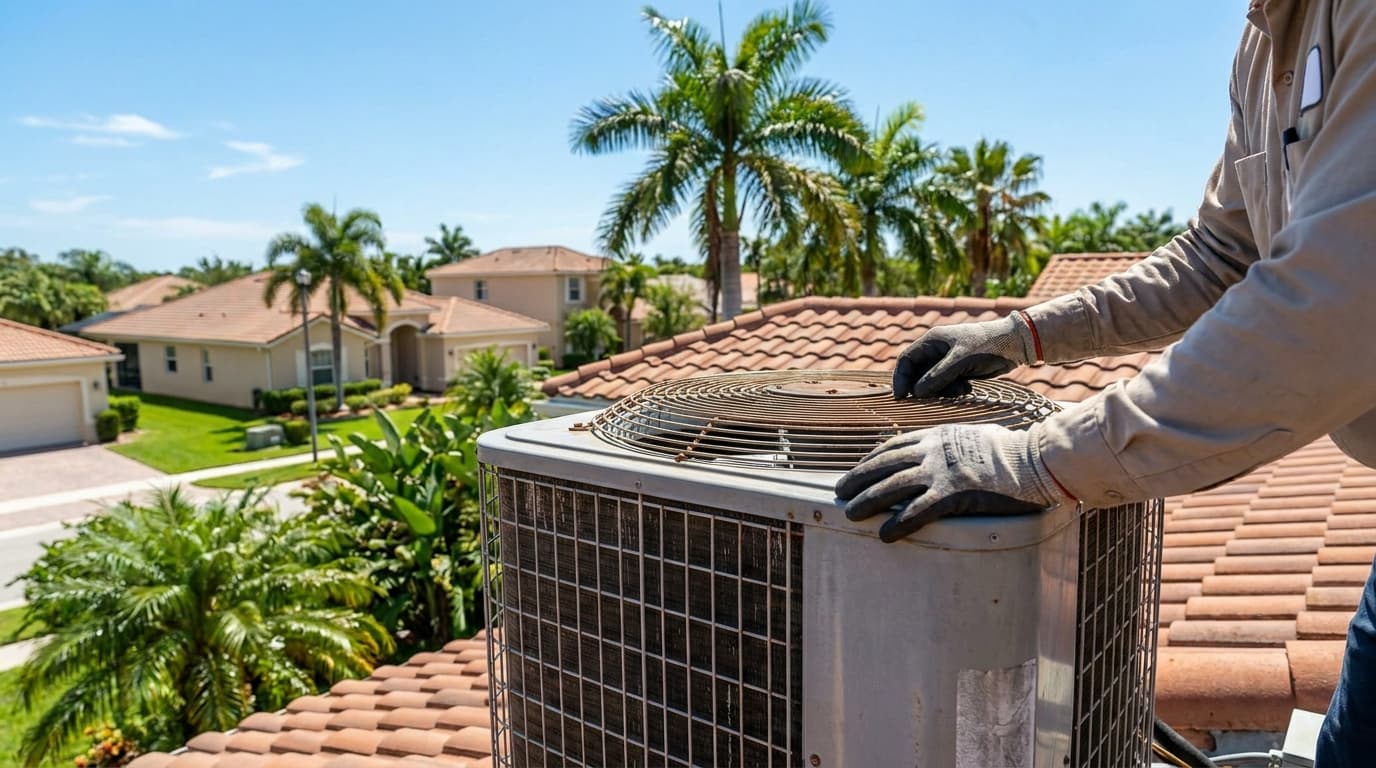

The phone rings. On the other end is a homeowner who's been ordered by the county to bring their HVAC system into compliance—and they're willing to pay premium rates to get it fixed fast and correctly. This isn't a typical service call. It's a permit compliance job, and it's where HVAC contractors in Flagler County can build substantial margins and long-term customer relationships.
Permit compliance work isn't just about fixing broken equipment. It's about understanding county building codes, navigating the inspection process, communicating clearly with homeowners under stress, and positioning yourself as the expert who takes the legal and safety headache off their shoulders. In Flagler County, where new residential construction and renovation activity has been steady, the demand for compliant HVAC systems is growing—but most contractors aren't set up to capture these opportunities systematically.
This guide walks you through exactly how to win more HVAC permit compliance jobs in Flagler County, from understanding the regulatory landscape to marketing your expertise, to building trust with homeowners who are already anxious about violations.
Step 1: Master Flagler County HVAC Compliance Requirements
Before you market a single service, you need to be the local expert on what Flagler County actually requires for HVAC systems. This isn't optional—it's the foundation of your credibility.
Understand Florida Statute 553 and the Florida Building Code
Florida's building code compliance falls under Florida Statute 553, which establishes the Florida Building Code (FBC). For HVAC systems specifically, the FBC references the International Mechanical Code (IMC) with Florida-specific amendments. Key HVAC compliance areas include:
Flagler County uses the 2020 Florida Building Code (as of 2024, with updates possible). Violations commonly stem from:
Critical: Download and review the Flagler County Building Department's HVAC permit checklist directly from the county website. This is your single source of truth for what inspectors will actually verify.
Know Flagler County's Specific Inspection Checkpoints
The Flagler County Building Department conducts HVAC inspections at specific stages:
Inspectors will verify:
Understanding this checklist means you can address compliance issues the first time, avoiding failed inspections that delay the homeowner's remediation and cost you credibility.
Step 2: Identify and Target Homeowners with Permit Violations
Permit compliance work starts with finding the homeowners who need it. There are multiple channels to tap into this market in Flagler County.
1. Build Relationships with the Flagler County Building Department
The county building department issues violations. While they won't hand you a list of violators (privacy), you can:
Pro Tip: A standing relationship with the building department inspector is invaluable. When a homeowner calls the county asking "who should I hire?" an inspector might mention your name if you've impressed them with professionalism and code knowledge.
2. Target Real Estate Agents and Title Companies
When homes are being sold, inspections often reveal HVAC violations. Real estate agents and title companies need contractor referrals:
3. Leverage Online Permit Records and Property Data
Flagler County maintains online permit records. You can:
4. Create a Homeowner Awareness Campaign
Many permit violations happen because homeowners don't know compliance is required. Run a localized campaign:
Step 3: Develop a Compliance-Focused Service Offering
Simply being an HVAC contractor isn't enough. You need a packaged, credible offering around compliance.
Create a "Compliance Assessment" Service
Offer a low-cost ($150–$300) diagnostic service specifically for compliance:
- Visual inspection of equipment, ductwork, and electrical connections
- Verification of refrigerant charge (with documentation)
- Written report (1–2 pages) listing any code violations found
- Prioritized remediation plan with cost estimates
- Timeline for completion
Build a "Compliance Remediation" Package
Don't just list services—package them:
The "Full Compliance Package" ($4,500–$7,000 typical)This clarity helps homeowners understand what they're paying for and justifies your premium pricing.
Key Insight: Homeowners under violation orders are not shopping on price—they're shopping on reliability and speed. Your packaging should emphasize guaranteed code compliance and inspection-ready work.
Document Everything for Credibility
Compliance work requires more documentation than routine service:
Provide homeowners with a "Compliance Package" folder containing all documentation. This builds trust and makes the county inspection smoother.
Step 4: Build Trust and Credibility in the Flagler County Market
Compliance work is high-stakes for homeowners (violation fines, potential liens). You need to be trusted.
Get Verified and Badged
Homeowners checking you out will verify:
A HomeProBadge verified contractor profile signals all of this at a glance. For a one-time $5 fee, you get an identity-verified and background-checked badge that appears on your profile. Homeowners in Flagler County searching for HVAC contractors can find you in the HomeProBadge directory, sorted by county and trade, and see your verification status immediately. This is especially valuable when you're asking homeowners to trust you with code compliance work.
Build a Portfolio of Compliance Work
Compliance jobs are the perfect candidates for before/after documentation:
On your website and social media, feature compliance work prominently. Create case studies:
Example Case Study Structure:Gather Reviews Specifically from Compliance Work
After a successful compliance job, ask for a Google review or testimonial. Encourage homeowners to mention:
Example: "Matt's team diagnosed the permit violation immediately, gave us a clear plan, and got us passed inspection in under two weeks. Highly recommend for HVAC compliance work."
Develop Local Authority and Content
Write and share content that positions you as the Flagler County HVAC compliance expert:
Searching for "HVAC permit compliance jobs Flagler County" should eventually surface your content and your business.
Step 5: Market Your Compliance Services Strategically
Now that you have expertise and a package, get the word out.
Create a Landing Page for Compliance Work
On your website, create a dedicated page:
URL: yourbusiness.com/hvac-compliance-flagler-county Page Content:Optimize for the keyword phrase: "hvac permit compliance jobs Flagler County" (and variations).
Use Google Local Services Ads (LSA)
If you qualify (background check, insurance, licensing), Google Local Services Ads are highly effective for high-intent customers in your area:
Bid on compliance-related keywords: "HVAC violation Flagler County," "permit compliance HVAC," "HVAC inspection failure."
Partner with Local Home Services Networks
Join platforms like:
These platforms attract homeowners actively seeking help—a solid lead source for compliance work.
Network with Related Professionals
Compliance work connects you to other trades. Build relationships with:
Run a "Permit Violation Solution" Mailer
In high-violation areas of Flagler County (older neighborhoods, recent construction), run a targeted postcard or letter campaign:
Headline: "Is Your HVAC System Compliant with Flagler County Code?" Body:Step 6: Master the Compliance Job Timeline and Workflow
Speed and professionalism win compliance jobs. Develop a repeatable process.
Create a Compliance Job Workflow
| Phase | Task | Timeline | Owner | Deliverable |
|---|---|---|---|---|
| 1. Assessment | Diagnostic inspection, code review, violation documentation | 1–2 days | Technician | Written compliance report with remediation plan |
| 2. Proposal | Scope of work, cost estimate, timeline, inspection coordination | 1 day | You | Signed proposal |
| 3. Scheduling | Order equipment, schedule installation, coordinate with county | 3–7 days | Admin | Confirmed install date & pre-inspection checklist |
| 4. Remediation | Equipment replacement, ductwork work, electrical, labeling | 2–5 days | Technician + crew | Completed work, photos, documentation |
| 5. Pre-Inspection | Verify all code requirements, prepare documentation | 1 day | Technician | Inspection-ready work, copies of all docs |
| 6. County Inspection | County inspector validates compliance | 1–3 days (county) | County | Inspection approval |
| 7. Follow-up | Homeowner satisfaction, final invoicing, referral request | 1 day | You | Paid invoice, review request |
Document and Communicate at Every Step
Homeowners are stressed during compliance work. Over-communicate:
This communication builds confidence and ensures homeowners feel supported, leading to positive reviews and referrals.
Build Relationships with County Inspectors
You want inspectors to know and trust your work:
Inspectors who respect your work will recommend you to homeowners and won't look for reasons to fail your jobs.
Warning: Never attempt to influence an inspector's decision through improper means. Your credibility and license are on the line. Build trust through professionalism and correct work only.
Step 7: Price Compliance Work for Profitability
Compliance jobs command higher margins than routine service—but only if you price correctly.
Understand the Compliance Price Premium
Compliance work includes:
This justifies 25–35% higher margins than routine HVAC repair.
Pricing Structure:Factors that increase price:
Don't underprice compliance work. Homeowners under violation orders have less flexibility on budget and more urgency. They'll pay for certainty.
Develop a Financing Option
Many homeowners aren't prepared for $5,000–$8,000 in compliance costs. Offer:
Providng financing removes price as a barrier and increases your close rate significantly.
Step 8: Measure, Track, and Refine Your Compliance Business
To scale compliance work, you need to know what's working.
Track Key Metrics
Spreadsheet or CRM: Track each compliance job and these metrics.
Ask for Referrals Systematically
After a successful inspection approval:
Compliance work creates grateful customers—they'll refer if you ask.
Refine Your Marketing Based on Results
If direct mail isn't converting, shift budget to Google Local Services Ads. If certain neighborhoods have higher violation rates, focus marketing there. Data-driven decisions scale your compliance business.
FAQ: HVAC Permit Compliance Jobs in Flagler County
Q: Do I need a special license to do HVAC compliance work in Flagler County?A: Not a separate license, but you must have a current EPA 608 certification (refrigerant handling). If your scope includes electrical work, you may need electrical contractor licensing depending on the work. Check with Flagler County Building Department for specifics.
Q: What's the difference between a violation and a permit denial?A: A violation is issued when a property is found to have non-compliant HVAC work (usually during an inspection). A permit denial occurs when you apply for a permit and the county rejects it because plans don't meet code. Both create opportunities for compliance remediation.
Q: Can I guarantee a homeowner their inspection will pass?A: You can guarantee your work meets code, but inspectors have discretion. Frame it as: "We'll install your system to code and ensure all documentation is complete. If an issue arises, we'll address it at no additional charge within 48 hours."
Q: How much should I charge for a compliance assessment?A: $150–$350 depending on complexity. If the homeowner is under a violation order (high urgency), price at the higher end. If they're proactive (before a violation), lower price helps close.
Q: Should I offer a warranty on compliance work?A: Absolutely. Offer a 5-year parts and labor warranty on equipment and a 2-year warranty on ductwork sealing. This reduces homeowner risk and builds trust.
Q: How do I handle a job if the inspection fails?A: Investigate why immediately. Contact the inspector (if appropriate) to understand the issue. Correct it at no additional cost to the homeowner if it was your error. If it's a code interpretation issue, help the homeowner appeal or work with the inspector for clarification. This should be rare if you do assessment and planning correctly.
Q: Is compliance work seasonal in Flagler County?A: Somewhat. Spring and fall see higher activity (weather events trigger inspections, code enforcement ramps up). However, violations and compliance needs exist year-round. Market consistently and expect variable volume.
Q: How do I find local HVAC compliance contractors to network with?A: Attend Flagler County contractor meetings, join the local Better Business Bureau, connect on Facebook groups like "Flagler County Contractors," and reach out directly to other HVAC businesses. Compliance work is large enough that collaboration (subcontracting on big jobs) is common.
Conclusion: Position Yourself Now
HVAC permit compliance jobs in Flagler County represent a growing, high-margin opportunity. Homeowners facing violations are stressed, willing to pay premium rates, and grateful for professionals who solve the problem cleanly.
Your competitive advantage is specialization: master the code, develop a repeatable process, build trust, and market directly to homeowners and professionals who need compliance expertise. Start with one successful compliance job, document it thoroughly, and use that win to attract more.
If you haven't already, create a free HomeProBadge verified contractor profile at homeprobadge.com/florida/flagler-county. Your profile will appear in the Flagler County contractor directory, searchable by HVAC trade, and the identity-verified badge signals to homeowners that you're serious about professionalism and code compliance. Homeowners in Flagler County can find you, review your portfolio, see your verification status, and contact you directly—all designed to help you win more compliance jobs.
Start this week: review Flagler County Building Department requirements, create your first compliance assessment package, and reach out to one local real estate office or title company. Compliance work is there—you just need to position yourself to capture it.