



It's raining sideways, water is sheeting over the eave, and the mulch below your front window is washing onto the sidewalk. You have three tabs open, two voicemails unreturned, and one estimate that is just a total scribbled under a business name. That's the normal starting point for hiring a gutter installation contractor, and it's exactly where homeowners overpay. Not because gutters are complicated, but because vague quotes hide skipped fascia repair, undersized downspouts, and discharge dumped at the foundation. Treat the written estimate and paper trail as the product you're buying first. If a contractor can't price, permit, and document the job on paper, the install won't get more careful on a ladder.
Gutter Installation Costs and What Moves the Price
Linear feet is the length of the eaves where gutters run, not the roof's square footage. Measure each run, then count corners and outlets. A typical single-story home needs about 150 to 200 feet of gutter. Each downspout location adds fittings, pipe, and labor, so compare bids using the same measured runs and outlet count. Installed gutter cost by material, 2026 U.S. ranges| Material | Installed cost per linear foot | Typical lifespan | Best fit |
|---|---|---|---|
| Vinyl | $4 to $8 | 10 to 15 years | Budget projects in mild climates |
| Aluminum seamless (5-inch) | $6 to $12 | 20 to 30 years | Most single-family homes |
| Steel (galvanized) | $8 to $15 | 20 years or more | Heavy snow or hail areas |
| Copper | $25 to $40 | 50 years or more | Historic or premium homes |
| Gutter guards (add-on) | $3 to $8 per linear foot | Set by manufacturer warranty | Homes with heavy leaf and pine needle load |
What pushes a quote up or down
Material is only one line item. Second-story work can require taller ladders or lifts, fall protection, and slower handling. Removal and disposal, fascia replacement priced by the board, extra downspouts, guards, bay roofs, tight corners, and regional labor rates also affect the total. Ask each contractor to list these items separately so you can compare the written estimates on equal terms.
For a working comparison, use 160 feet of 5-inch aluminum at $8 per foot: the gutter itself comes to about $1,280, before removal, fascia repairs, extensions, or guards. Check whether each estimate includes those items, along with the material and footage, before treating the bottom-line totals as comparable. A much lower quote may leave out tear-off, specify a thinner gauge, or omit discharge hardware.
If water intrusion has affected a basement, use a basement finishing price guide when budgeting that interior work. I'd fix the roof edge first every time.
Questions to Ask Before You Sign
Ask these on the first call or site visit, and write down the answers. You're listening for specifics, not confidence.
The discharge answer matters most. If a contractor can't tell you where every downspout sends water, he hasn't designed a system, he's just selling metal.
Vague answers, or answers that change between the phone call and the site visit, are the signal. A good gutter installation contractor repeats the same scope because it's written down.
Permits, Licenses and Insurance You Must Verify
A low bid can include the right materials and still leave you exposed if nobody checks permit scope or confirms insurance. Get those answers in writing before the first ladder goes up. Ordinary like-for-like replacement is commonly treated as maintenance, while work tied to new construction, reroofing, structural or fascia work, an addition, a historic district, or underground or municipal drainage may trigger review, as described in Gloucester County gutter guidance on permit scope. Some cities and HOAs also regulate discharge because runoff can erode soil or affect a neighbor.
Ask the contractor to record whether the job is replacement or a new system, standalone or part of reroofing, and above-ground or buried discharge. The paperwork should also name who checked the rule with the permit office and who will obtain any required permit. If a permit is required, get its number before work begins.

License and insurance checks
Workers' compensation matters on ladder work. OSHA fall protection guidance identifies falls to a lower level as a leading cause of construction worker deaths and warns that work six feet or more above a lower level carries a serious risk of injury or death. If a worker is hurt at your eaves and the contractor lacks appropriate coverage, you could face a claim. Keep the certificates with the signed estimate, and use this checklist for verifying contractor license and insurance to organize the records.
Keep the permit decision, license details, insurance certificates, and written scope together. That paper trail gives you a clear record of what was checked and who agreed to handle each requirement.
Comparing Three Written Estimates Line by Line
Collect at least three written estimates from contractors who visited the property. Don't compare totals until you've normalized the scope, meaning the same linear footage, gutter size and profile, material and gauge, downspout count and size, removal, guards, and discharge method on every bid.
Build a simple spreadsheet with one column per contractor and one row per line item. Blank cells are the point. They show you what one price includes and another leaves out.
Say Quote A is $3,900 and Quote B is $4,600. Quote A lists no tear-off, no fascia allowance, and no downspout extensions. Quote B itemizes all three. Price Quote A on Quote B's scope and the gap often shrinks or reverses. The cheaper number wasn't cheaper, it was shorter.
Estimate line items and the red flag for each| Estimate line | What a complete quote states | Red flag |
|---|---|---|
| Scope | Linear feet, gutter size, material, seamless or sectional | Lump sum with no footage |
| Downspouts | Count, size and locations | Count missing or 'as needed' |
| Fascia and repairs | Rot repair terms, fastener type, unit price per board | Blank line or no unit price |
| Removal and disposal | Tear-off of old gutters and haul-away | Not mentioned |
| Discharge | Extension length, splash blocks or buried line | No discharge plan |
| Permits | Who pulls the permit and the fee | Says no permit is needed without checking |
| Warranty | Labor coverage in years and manufacturer material warranty | Verbal only |
| Payment | Deposit amount and payment milestones | Large deposit, such as half up front |
Negotiate deposits down and tie payments to milestones, such as materials delivered, tear-off complete, and water test passed. The same line-by-line discipline helps on adjacent exterior work, whether you're using a rubber roof price breakdown or comparing gutter bids. Pay for completed, inspectable stages, not promises.
Warning Signs That Should End the Conversation
Some problems show up before anyone touches a ladder. Group them by when they appear and trust the pattern.

First contact and the quote
Paperwork and the job
A contractor who won't put scope, discharge, warranty, and payment terms in writing is telling you exactly how the job will go once something leaks.
You don't need to argue. Thank him, keep the paperwork he did provide, and call the next gutter installation contractor on your list.
What a Properly Installed System Looks Like
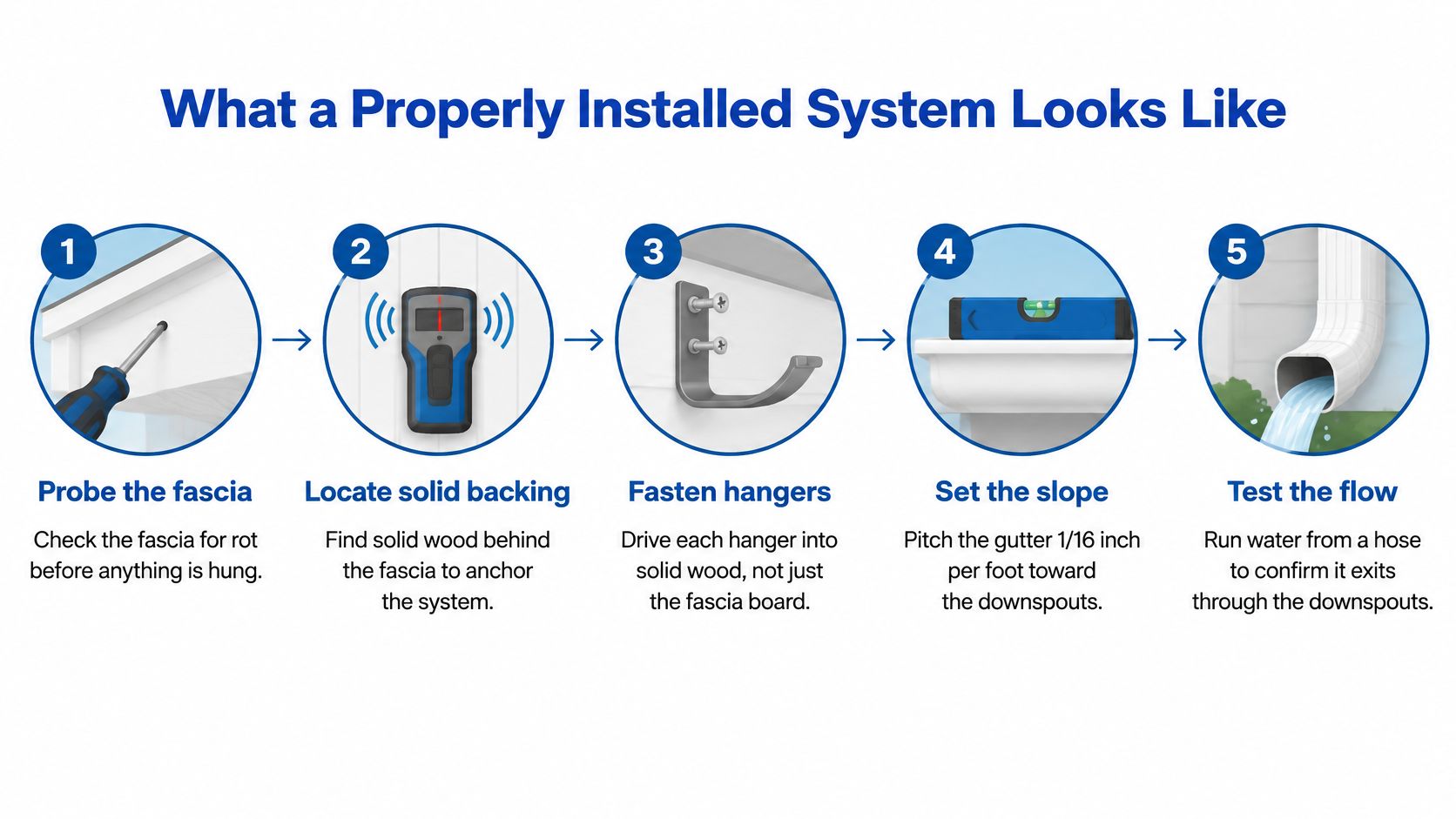
A reliable installation starts with the fascia. The crew should check for rot and weak backing, then repair damaged boards before attaching gutters. Coil color cannot compensate for an unsound mounting surface.
Use this six-step sequence to follow the work on install day.
Maximum hanger spacing by gutter material| Gutter type | Maximum hanger spacing | Reduced spacing condition |
|---|---|---|
| Aluminum | 18 inches | 12 inches for aluminum gutters over 6 inches wide |
| Steel | 24 inches | 18 inches for larger steel gutters |
| Any type in ordinary conditions (manufacturer) | Up to 36 inches | No reduction specified |
| Any type where ice and snow persist (manufacturer) | 18 inches | Applies to all gutter types in the area |
The USDA construction specification for aluminum or steel roof gutters specifies hanger spacing for aluminum and steel gutters and limits intermediate downspout supports to no more than 10-foot intervals. The 36-inch and 18-inch figures in the manufacturer rows are separate guidance, not limits attributed to the USDA specification. Tighter hanger spacing helps support wide gutters and systems exposed to ice and snow.
Watch the hose test before accepting the finished work.
In heavy-rain regions, direct discharge away from foundations and walkways to protect your home from monsoon runoff. Record hanger spacing, fascia repairs, and hose-test results with a quality assurance checklist for completed exterior work before making final payment.
Confirm the Timeline and Book Your Contractor
Plan on two to three weeks from first call to signed contract with a busy, legitimate crew. Where a permit is required, review can add one to four weeks. On-site work for a typical single-story home usually takes one to three days, ending with a walkthrough and hose test. Two-story access, extensive fascia replacement, buried discharge lines, and custom copper work add time, and your contract should say so.
Before you book, confirm only what's still open in writing. Pin down the start date, foreman and crew names, material delivery date, and payment milestones. Confirm who calls for inspection and who photographs fascia repairs before they're covered.
Then cross-check the contractor in a verified directory such as HomeProBadge for identity, license status, insurance, and past job photos. Compare that record with what you were told by phone and what's printed on the estimate. Names, license numbers, coverage dates, warranty years, and scope should all match.
Use a simple decision rule. If the license checks out, the insurer confirms coverage, the normalized estimate is complete, and discharge locations are written down, book the job. If any one of those fails, keep looking. A competent gutter installation contractor won't ask you to overlook a missing document to hold a start date.
Search HomeProBadge to find gutter pros with verified identity, licensing, insurance, and photo proof of completed jobs in your county. Compare those verified profiles against your three written estimates, check the permit and warranty details side by side, and book the contractor whose paperwork matches his pitch.