

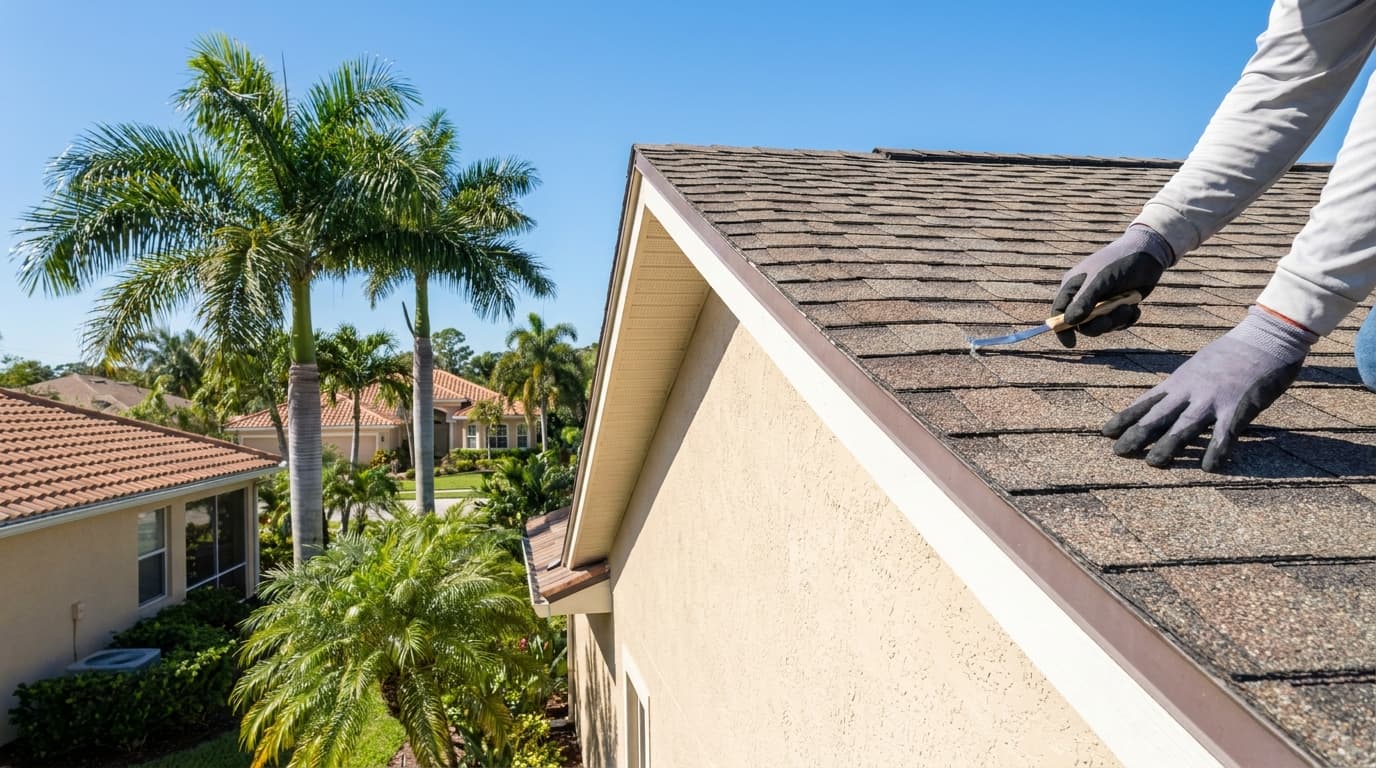

A tarp is flapping in the yard after hail. Or a brown water stain is spreading across the ceiling while a roofer's flyer sits on your front door. Either way, you're suddenly expected to make a major hiring decision while the house is still vulnerable.
Slow down. The first decision isn't which roofer gets your signature. It's how you prevent temporary damage from becoming permanent damage without letting urgency choose the contractor for you. A roof can usually tolerate a short, sensible delay. It may not survive an unqualified crew, a vague proposal, or a company that disappears before the warranty matters.
This checklist treats long-term warranty survival as a core hiring filter. Licensing and insurance matter, but they're only the beginning. You also need evidence that the business is local, stable, properly documented, capable of producing good work, and willing to put every promise in writing.
ze You Need a Roofer](#the-first-24-hours-after-you-realize-you-need-a-roofer)
- Open the claim without surrendering the decision
- Start with the state license
- Confirm coverage with the insurer
- Prove the company can be found later
- Ask references questions that force useful answers
- Ask the same five questions after every estimate
- Protect against liens and unfinished obligations
The First 24 Hours After You Realize You Need a Roofer
The first day is for triage, documentation, and controlled decisions, not for accepting the first knock at the door. If water is entering the home, place containers under active drips, move furniture and electronics, and use plastic sheeting to protect flooring and belongings. Don't climb onto the roof after a storm. A roof may be unstable, slippery, or hiding structural damage.
Take timestamped photos and videos from the ground, attic, and affected rooms. Capture stains, fallen shingles, damaged gutters, exposed underlayment, ceiling damage, and anything visible around vents or chimneys. Keep the original files, and write down when you noticed the problem, what weather preceded it, and what temporary steps you took.
Open the claim without surrendering the decision
Call your insurer to report the loss and ask what documentation and emergency mitigation they require. An adjuster may recommend a contractor, but that recommendation isn't a hiring decision. You're entitled to verify the roofer independently, compare proposals, and choose who works on your home.
A contractor can install a temporary covering or make a limited emergency repair, but ask for an itemized invoice and photographs of the temporary work. Avoid signing a full replacement agreement during the first visit, especially if the salesperson is pressing for immediate authorization.
Practical rule: Protect the house first, preserve evidence second, and choose the contractor only after verification.
Create a folder for every candidate. Save the company's legal name, license details, insurance documents, proposal, references, contract drafts, emails, text messages, and photographs. A practical roofing contractor selection guide can help you build the initial question list, while this local contractor search resource can help you identify businesses worth screening.
The order matters. You'll verify the license and insurance, confirm a real business footprint, inspect the roofer's past work, compare itemized bids, and then lock down the contract, warranty, and payment schedule. Every roofer who approaches you or answers your search should face the same filter before you pay a deposit.
Verify Licensing, Insurance, and a Real Business Footprint
Treat credentials as a single verification sequence. A license without active insurance is inadequate. Insurance paperwork without a stable business identity is weak protection. A polished website doesn't compensate for either one.
Start with the state license
Ask for the roofer's complete legal business name and license or registration number. Search that information directly on the state contractor board's website, rather than using a screenshot or a link supplied by the salesperson. Confirm the status, business name, classification, expiration information, and any listed restrictions.
Run the check shortly before hiring. A license that was active earlier may be lapsed, suspended, or associated with a different legal entity. If the salesperson's name, company name, or license number doesn't match the public record, stop the process until the discrepancy is resolved in writing.
The contractor license verification guide can help organize this check, but the issuing authority remains the controlling source. Save a PDF or screenshot of the search result in your verification folder.
Confirm coverage with the insurer
Request a certificate of insurance showing general liability coverage and workers' compensation coverage. Industry guidance commonly uses at least $1 million per occurrence for general liability, alongside workers' compensation, as a practical benchmark (RoofVista's contractor-selection guidance). The certificate is useful, but it isn't enough by itself.
Call the insurer using the phone number independently found on the insurer's website or official policy documents. Ask whether the contractor is insured, whether the policy is active, and whether the named business matches the company you're hiring. Don't rely solely on a phone number printed on a document the roofer supplied.
Workers' compensation matters because an injured worker may otherwise create a dispute over responsibility. General liability addresses damage caused to your property or other property during the work. Neither policy guarantees quality, but hiring without verified coverage creates an avoidable risk.
Prove the company can be found later
Check for a physical business address, not only a mailbox or PO box. Search the address on mapping services, review the state's business registry, and confirm that the entity's legal name is consistent across the license, insurance certificate, proposal, contract, and tax paperwork.
Ask for a completed W-9 when appropriate, and make sure the business name and tax identification information match the contracting entity. Call the company through its publicly listed phone number, not just the mobile number used by a salesperson. A real office, reachable staff, consistent records, and a documented service area all support the question that most hiring checklists skip: Will this company still be reachable when a leak appears later?
Vet Past Work, References, and Reviews That Actually Matter
A five-star profile can tell you that a roofer knows how to collect praise. It doesn't necessarily tell you how the crew handles rotten decking, a missed cleanup detail, or a warranty complaint. You need a performance record that includes completed projects and direct conversations.
Ask each serious bidder for a list of recent jobs with addresses and customer permission to use them as references. Don't treat a photo gallery as proof by itself. Visit several addresses from the list, where practical, and look for signs of organized work: clean roof lines, properly finished flashing, orderly material storage, intact landscaping, and a site that doesn't look abandoned after completion.
Ask references questions that force useful answers
Avoid asking, “Were you happy?” Homeowners often answer that question politely. Ask questions that reveal how the contractor behaved when the project became inconvenient:
Listen for specifics rather than enthusiasm. A homeowner who can explain how the roofer handled a change order gives you more useful information than a reference who only says the crew was friendly.
For a broader interview prompt list, use these questions before hiring a roofer as a supplement to your own project questions.
Read reviews for patterns
Review volume and star averages can hide recurring weaknesses. Search for repeated comments about missed appointments, poor cleanup, unclear billing, supervisor availability, and warranty follow-through. A single angry review isn't automatically disqualifying, but a repeated pattern deserves direct questions.
Search the roofer's legal business name with terms such as complaint, lien, and BBB. Check public court or recorder information where available, and ask the contractor to explain unresolved disputes without becoming defensive. You're not looking for a spotless history. You're looking for consistent evidence that the company finishes work, communicates clearly, and takes responsibility when something needs correction. A verified home-service review system can add useful project context, but it should supplement, not replace, your own reference calls.
Compare Bids Side by Side Without Getting Lost in the Numbers
The cheapest proposal often wins because it looks simple. That simplicity may mean the roofer left important work out of the scope. Compare bids only after you force every contractor to describe the same job.
Require each proposal to identify the tear-off method, underlayment type, flashing work, ventilation, shingle manufacturer and product line, starter strip, drip edge, ridge treatment, labor, cleanup, disposal, permits, and treatment of damaged plywood. A proposal that says “replace roof with quality shingles” gives you almost nothing to compare.
Build a same-job worksheet
Use one row for each decision point. Score each roofer using the same standard, and don't let a low price erase missing specifications.
| Criteria | Roofer A | Roofer B | Roofer C |
|---|---|---|---|
| Tear-off and disposal clearly listed | |||
| Underlayment specified | |||
| Flashing replacement explained | |||
| Ventilation and drip edge included | |||
| Manufacturer and product line named | |||
| Workmanship warranty stated | |||
| Manufacturer warranty tier explained | |||
| Timeline and weather policy included | |||
| Cleanup and final inspection described | |||
| Communication plan identified |
Industry guidance recommends collecting at least three itemized written estimates and comparing warranty terms, material specifications, and permit responsibility (RoofVista's comparison guidance). The same guidance cites UK consumer complaint data in which roofing represented 22.2% of home-improvement complaints, with 52.8% connected to substandard work and 14.3% connected to scams or rogue traders. Those figures reinforce a practical point: written scope control is not administrative fussiness. It's risk management.
Ask the same five questions after every estimate
Weight warranty terms, material specifications, schedule, cleanup, and communication equally in your decision. A roofer who refuses to itemize is showing you how the job will be managed. Don't reward that behavior with your signature.
Lock Down the Contract, Warranty, and Payment Schedule
Your contract should be detailed enough that a neutral third party could determine what the roofer promised. “Install a new roof” isn't a scope of work. It's a vague invitation to argue later.
Name the manufacturer, product line, color, ventilation components, flashing treatment, underlayment, disposal method, and permit responsibility. Don't accept a description such as “30-year shingle” as the complete material specification. Product lines have different installation requirements and warranty terms.
Separate the two warranties
Demand a written workmanship warranty stated in years, with the process for making a claim, the response contact, and exclusions. Keep it separate from the manufacturer's material warranty. The manufacturer may cover defective products, while the contractor remains responsible for installation defects.
Ask who registers the manufacturer warranty and request the registration confirmation after installation. Manufacturer warranty protection may depend on installation by a credentialed contractor, so the credential, product line, and registration records should all match. A manufacturer badge on a truck isn't a substitute for written confirmation.
Tie money to completed work
Keep the initial payment limited to 10 to 15 percent or the documented cost of materials, whichever is appropriate, and never agree to more than that without a clear, independently reviewed reason. Remaining payments should follow visible milestones, such as tear-off completion, dry-in completion, substantial installation, and final inspection.
Avoid paying the final amount until the punch list is complete, the site is cleaned, required documents are delivered, and the permit is closed where a permit applies. Put weather delays, material substitutions, change-order approval, and cancellation rights in the agreement.
Protect against liens and unfinished obligations
Require the roofer to pull the permit in the contracting company's name when the project requires one. Get a copy of the permit and the closed inspection record at the end. The contract should also require lien waivers from suppliers and subcontractors before final payment.
A lien waiver helps document that parties connected to the project have been paid. Include a final walkthrough with photographs, written corrections, and a deadline for completion. A friendly promise to “take care of anything that comes up” is not a warranty process. It's a conversation you may have trouble proving later.
Spot the Red Flags Storm Chasers and Scams Leave Behind
Some bad hires pass a superficial check. They may carry a license, show insurance paperwork, and speak confidently. The warning signs appear in the sales process, the business footprint, and the contractor's resistance to ordinary documentation.
Be wary of unsolicited storm visits, out-of-state license plates, temporary signs, and salespeople who appear immediately after severe weather. A roofer who offers to “eat your insurance deductible” isn't giving you a harmless discount. That arrangement can create insurance and contract problems, and it signals that the salesperson is focused on closing rather than explaining the work.
Watch the insurance game
A dangerous pattern starts with a roofer encouraging you to file a hail claim, helping shape the claim narrative, inflating the scope, and then disappearing after receiving an insurance payment. You may be left with incomplete work, disputed documentation, or a policy problem. Let your insurer inspect the damage, and choose a contractor based on verified qualifications and a clear contract.
Other warning signs include:
A personable salesperson may be excellent at selling. That doesn't prove the installation crew is competent or that the owner will answer warranty calls. If a roofer discourages a second bid, refuses to itemize, or balks at a written warranty, you already have your answer.
Your Post-Hire Checklist and What to Do If It Goes Wrong
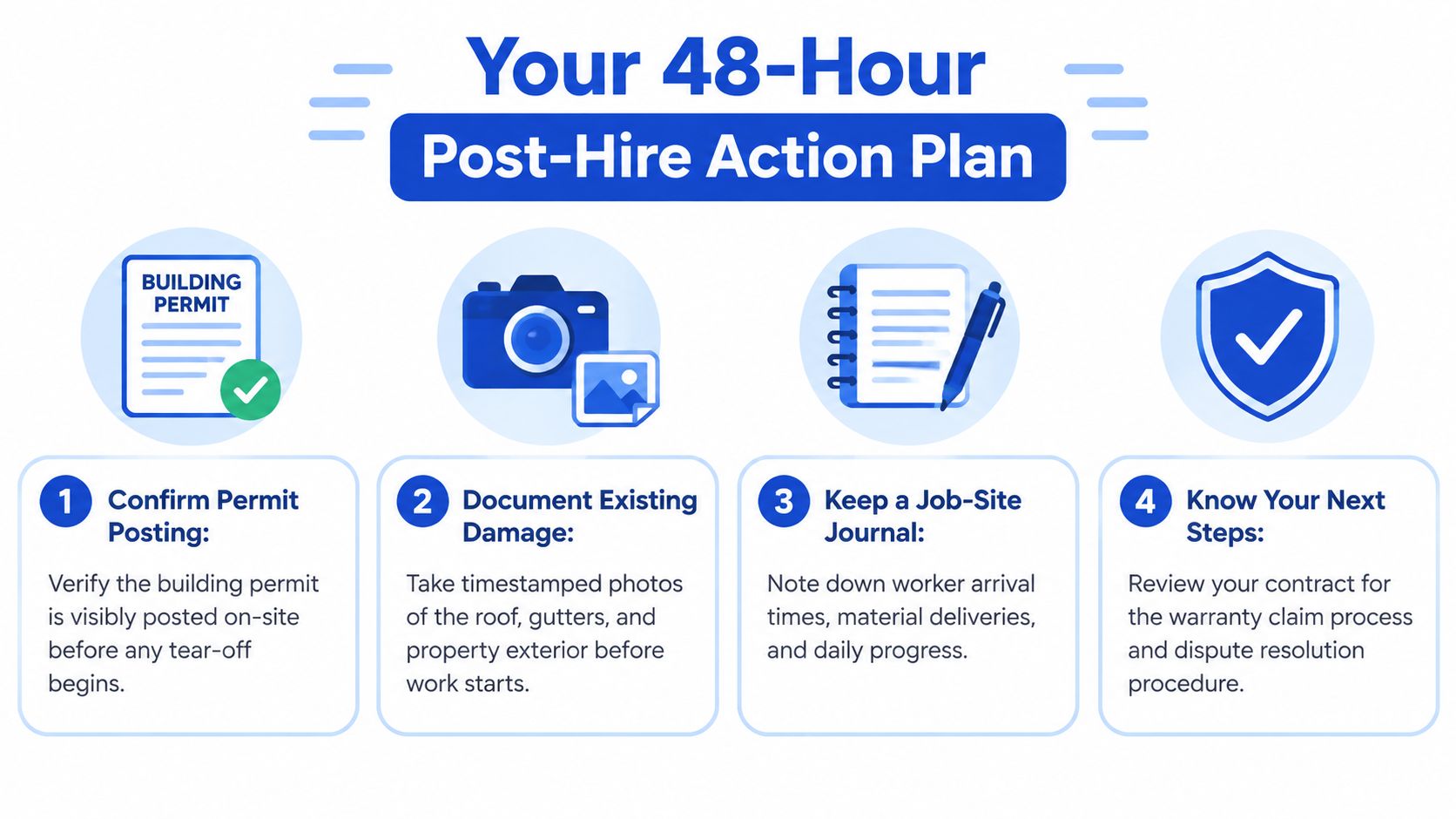
The first 48 hours after signing still matter. Before tear-off begins, confirm that the permit is posted when required, photograph the roof and property, and record the condition of gutters, siding, windows, landscaping, driveways, and exterior fixtures. Existing-condition evidence prevents arguments about whether damage occurred before or during construction.
Keep a simple job-site journal. Record crew arrival times, material deliveries, weather interruptions, change requests, conversations, and photographs of concealed work before it's covered. After cleanup, walk the driveway and yard with a magnet to find stray roofing nails.
Use a written punch list
During the final walkthrough, write down:
Send the list by email and keep the roofer's response. Schedule inspections at 30, 90, and 365 days after completion, and photograph anything that changes.
If the work is deficient, contact the contractor first in writing, cite the contract section, attach photographs, and request a specific correction date. If the roofer refuses or disappears, escalate through the state licensing board and consider a complaint to the BBB or attorney general. Consult a construction attorney when the dispute involves serious damage, an unpaid supplier, a lien, or a large financial loss. Don't sign a final release until the punch list and lien documentation are complete.
HomeProBadge gives homeowners a way to search verified home-service professionals, review real project evidence, and organize the credential and proof-of-work questions that matter before hiring. Visit HomeProBadge to compare contractors with a stronger record of identity, licensing, insurance, reviews, and completed work.