

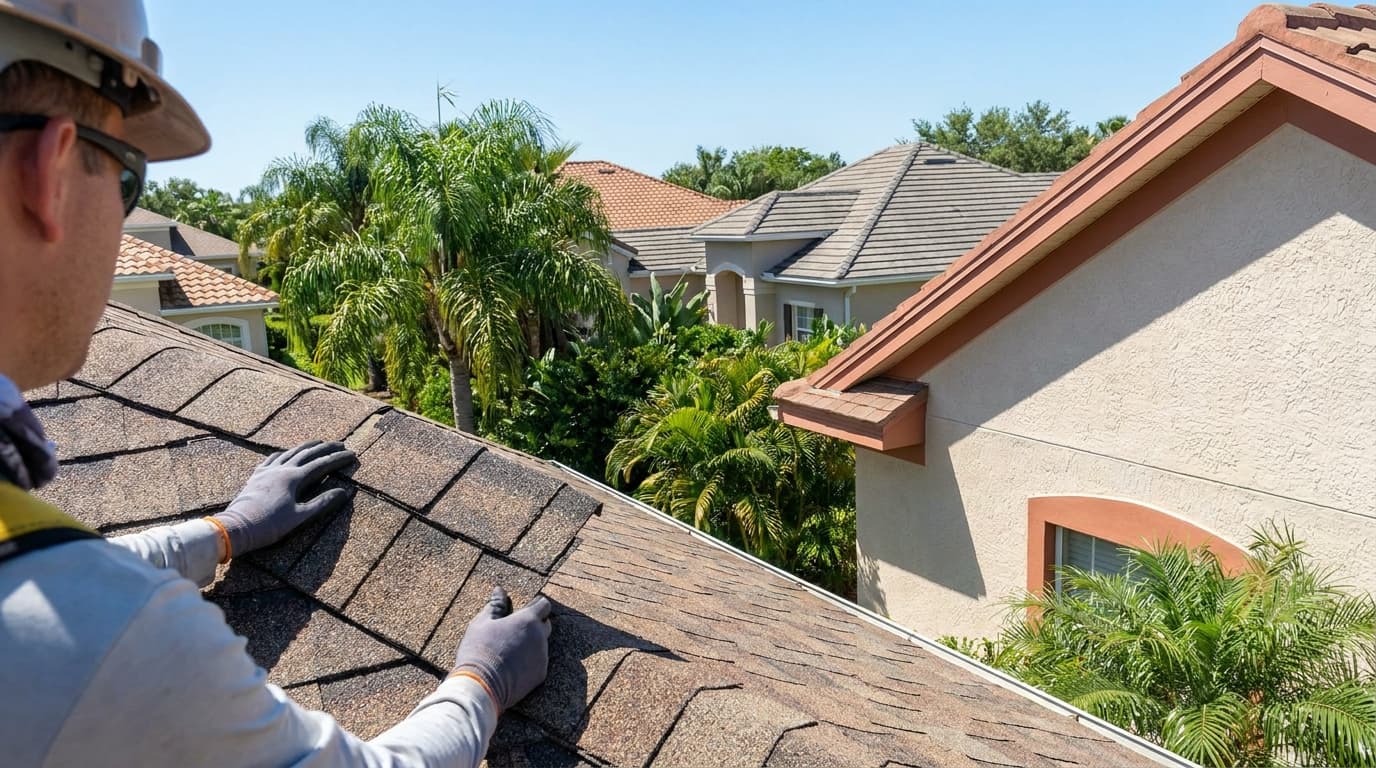

Installed EPDM typically costs $4.25 to $12 per square foot, putting a 2,000-square-foot roof at roughly $8,500 to $24,000 before unusual structural repairs, extensive tear-off, permits, or premium insulation. That spread is why a single “average rubber roof price” is more misleading than helpful.
A rubber roof quote isn't a price tag for one product. It's the combined cost of a membrane, attachment system, insulation, preparation, labor, drainage, flashing, disposal, warranty, and whatever the crew discovers after the existing roof comes off. Two contractors can inspect the same house and produce very different totals without either one making a mistake. The problem is that many estimates hide those differences inside one lump sum.
The right question isn't, “Who has the lowest price per square foot?” It's, “Are these two contractors pricing the same roof assembly?”
zing Competing Bids Line by Line](#normalizing-competing-bids-line-by-line)
What Rubber Roof Price Actually Means in 2026
In the United States, installed EPDM commonly falls between $4.25 and $12 per square foot, including materials and installation, while labor alone often adds about $2 to $6 per square foot, according to HomeAdvisor's rubber membrane cost guide. On a 2,000-square-foot roof, that produces an installed estimate of approximately $8,500 to $24,000, before structural repairs, extensive tear-off, permits, or premium insulation.
A broader market estimate places complete rubber-roof projects around $4 to $13 per square foot, reflecting greater complexity and regional contractor pricing. That wider band matters because a simple garage roof and a multi-level home with skylights, drains, rooftop equipment, and difficult staging are not equivalent jobs.
The four forces behind the number
Your quote usually moves because of four categories:
Labor alone can account for thousands of dollars on a residential project. A contractor who includes removal, disposal, edge metal, and substrate preparation may appear expensive beside a contractor who has excluded them.
Estimator's rule: Never compare totals until you know what each contractor has included, excluded, and left as an allowance.
A useful overview of how roofing projects break down is this Commercial Roofers cost breakdown. Use it as a vocabulary guide, then demand a proposal built around your actual roof.
The price should be presented as a named assembly, not just “rubber roofing.” Before signing, require separate descriptions for membrane thickness, attachment method, insulation, tear-off, disposal, flashing, penetrations, drainage, edge treatment, permits, labor, and warranty. That document is the foundation for an honest comparison.
The Hidden Components Behind Every Rubber Roof Quote
A single total conceals the decisions that determine rubber roof price. If two bids differ by thousands of dollars, the gap usually comes from scope, not magic. One contractor may include a cover board and new edge metal while another has priced only the membrane and basic installation.
Start with the membrane. A thicker EPDM sheet uses more material and may support a different warranty or installation specification. Then examine labor. A roof with clear staging and few penetrations is easier to install than one surrounded by landscaping, walls, mechanical equipment, or restricted access.
Read the estimate as an assembly
| Line Item | What It Covers | Why It Moves the Price |
|---|---|---|
| Membrane | EPDM sheet, seams, adhesives, primers, accessories | Thickness, color, manufacturer, and warranty requirements change material and labor |
| Labor | Installation, detailing, cleanup, supervision | Access, roof geometry, penetrations, and working conditions affect productivity |
| Tear-off | Removal of existing roofing and insulation | Multiple layers, bonded materials, and difficult disposal increase effort |
| Deck repairs | Replacement or treatment of damaged substrate | Hidden deterioration appears after removal and may require change orders |
| Insulation | Rigid board, tapered insulation, or upgraded thermal assembly | More insulation and drainage design add materials and installation time |
| Flashing and edges | Perimeter metal, wall transitions, curbs, drains, and penetrations | Each transition requires measured detailing and compatible materials |
| Disposal and permits | Hauling, dumping, local approvals, and administrative work | Exclusions here can make a low bid look artificially attractive |
| Warranty | Manufacturer and contractor coverage | Higher warranty tiers may require specified materials and approved installation |
Roof edges deserve special attention. A membrane that terminates poorly at the perimeter can undermine an otherwise sound installation, so ask whether the quote includes edge metal, fastening, and compatible flashing. This drip-edge installation guide is useful for understanding why edge details should appear as a defined scope item rather than a vague allowance.
Contractors also differ in how they handle concealed damage. One may include a stated allowance for deck replacement, while another may charge every repair as a change order. Neither approach is automatically wrong, but the proposal should explain the trigger, unit basis, approval process, and documentation required before extra work begins.
For another practical way to examine material and installation components, review this EPDM roofing cost breakdown. Then ask your contractor to convert the same categories into a project-specific estimate.
A credible proposal identifies what happens at every edge, seam, penetration, drain, wall, and roof transition. If it only says “install rubber roof,” you don't yet have a comparable bid.
Membrane Thickness and Attachment Method
The membrane specification and attachment method can change a rubber roof quote substantially. A 45-mil ballasted assembly is a different product from a 90-mil membrane fully adhered over above-deck insulation. Compare the complete assembly, not the membrane label alone.
Common EPDM specifications include 45 mil, 60 mil, and 90 mil. A thicker membrane contains more polymer and usually demands more careful handling, but thickness does not prove that the design fits the building. The proposal must also identify the substrate, insulation, cover board, and method used to secure the membrane.
Compare complete systems, not isolated prices
Installed benchmarks are approximately $4.20 to $11.00 per square foot for 45 to 90-mil ballasted systems, $4.70 to $13.90 for mechanically attached systems, and $4.95 to $14.25 for fully adhered systems that may include above-deck R-30 insulation, according to this EPDM rubber-roof cost guide.
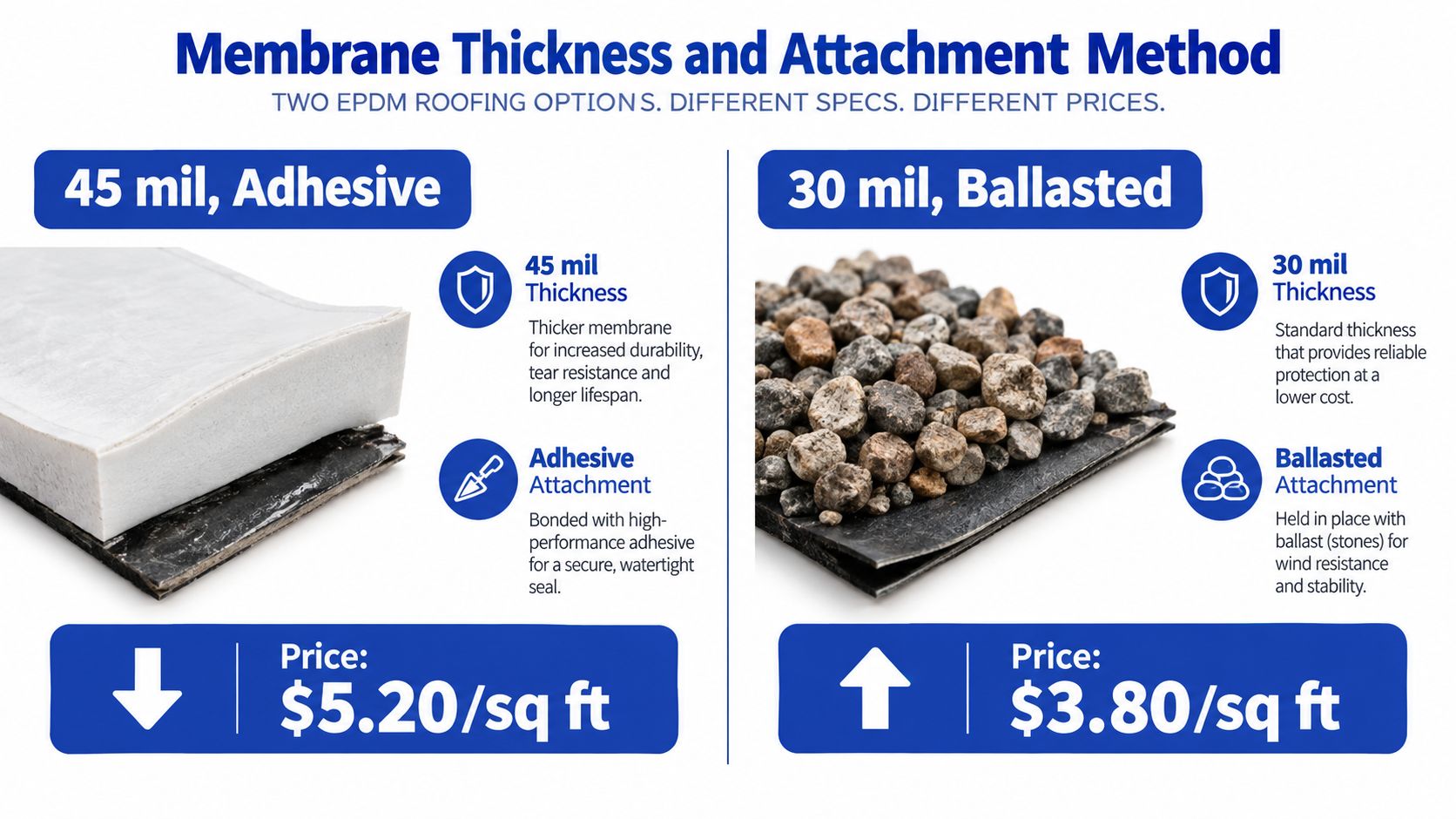
Require the contractor to write the membrane gauge, attachment method, insulation R-value, cover board, seam treatment, flashing approach, and warranty tier into the proposal. “EPDM replacement” does not identify enough work to make two bids comparable.
For example, one contractor might price a 60-mil mechanically attached system with basic preparation. Another might quote a 90-mil fully adhered system with upgraded insulation, additional adhesive, and a stronger warranty requirement. The roof area may be identical, yet the assemblies differ in materials, labor, and obligations. A higher total is not automatically overcharging, but the contractor must show which specifications create the difference.
Choose fully adhered construction for a documented reason. Difficult geometry, significant wind exposure, or a design that benefits from less membrane movement can justify the added cost. A straightforward roof with suitable structure and clear edge and penetration details may receive better value from a simpler system. The trustworthy bid is the one that names every assembly component and lets you compare like with like.
Why the Cheapest Rubber Roof Is Rarely the Lowest Cost
A low installation price only works when the roof's condition, design, and ownership period support it. Cut preparation, detailing, insulation, or documentation, and the cheaper bid can become the costliest choice after leaks, repairs, or warranty disputes appear.
EPDM service-life estimates range from 15 to 25 years on the conservative side to 30 to 40 years on the optimistic side. Design quality, installation, maintenance, sunlight exposure, and climate determine where a roof lands within that range, as summarized in this rubber-roof cost analysis. Require the contractor to state the assumptions behind any lifespan claim.
Color changes the ownership equation
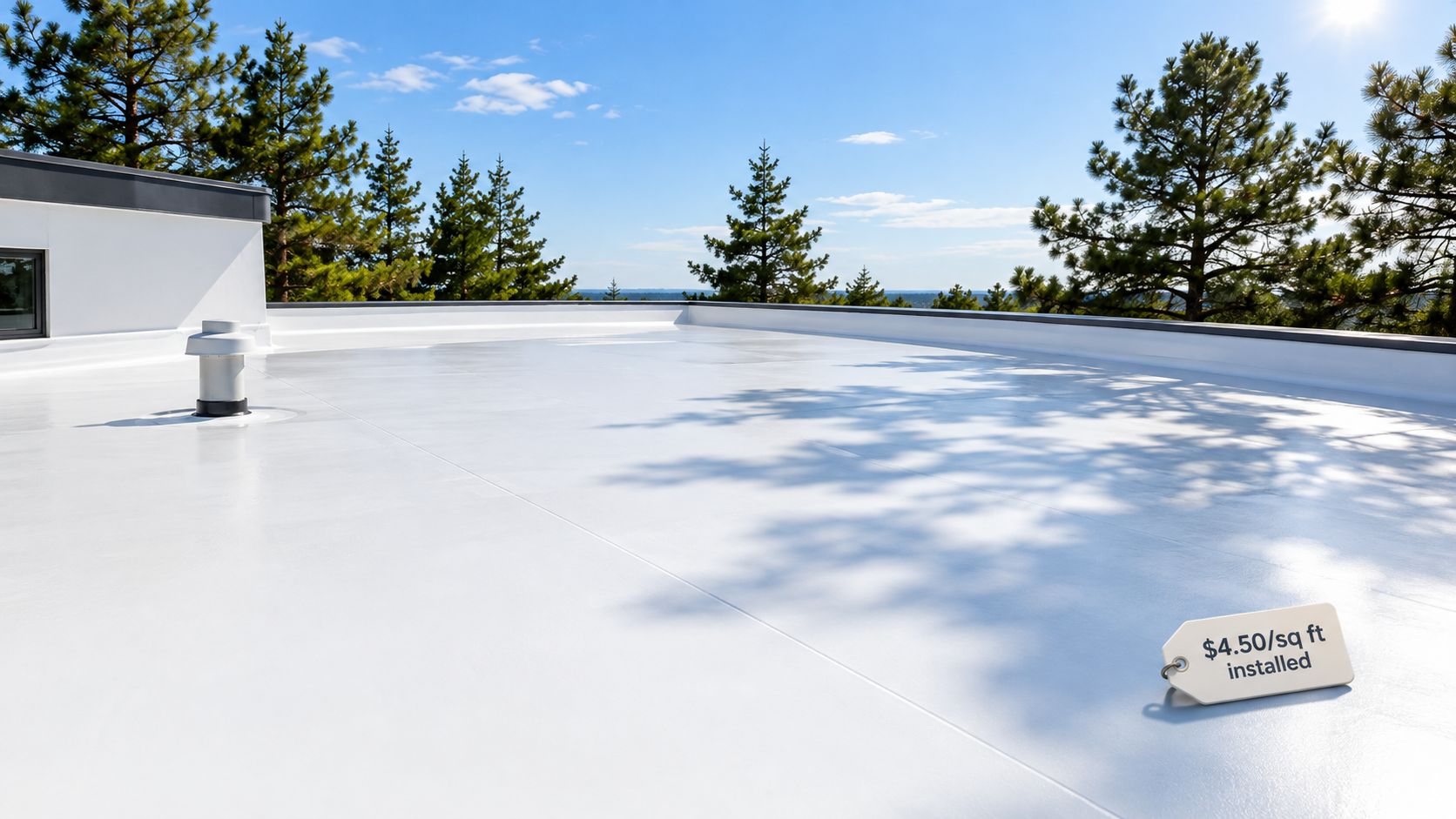
Black EPDM can carry an estimated annual energy penalty of about $0.40 per square foot versus white roofing, while white EPDM can add approximately $0.75 to $1.25 per square foot initially, according to the same EPDM cost and performance comparison. Use those figures as a starting point, not as a universal verdict. Climate, insulation, roof orientation, and cooling demand determine whether the premium makes sense.
Choose a white membrane where cooling demand dominates. Black EPDM can remain the better fit where heating demand, shade, insulation design, or building operations shift the balance. A reflective membrane will not correct inadequate insulation or poor air sealing elsewhere in the building envelope.
Maintenance and warranty belong in the price
A low bid may exclude inspections, seam maintenance, drain cleaning, or the documentation required for warranty coverage. It may also specify a thinner membrane or attachment method that fails to suit the roof's exposure.
Before signing, get clear answers to these questions:
Compare the bids by documented scope, not by the headline total. The right low bid meets the required performance, includes the needed maintenance obligations, and states exactly what the contractor will install, protect, and warrant.
Normalizing Competing Bids Line by Line
A rubber roof quote becomes useful only when every contractor prices the same scope. A measured area and one total cannot show whether a bid is cheaper because of better efficiency or because work has been omitted. Compare matching line items before comparing totals.
Make the bids comparable
Send each contractor the same written checklist and request clear quantities, specifications, allowances, and exclusions:
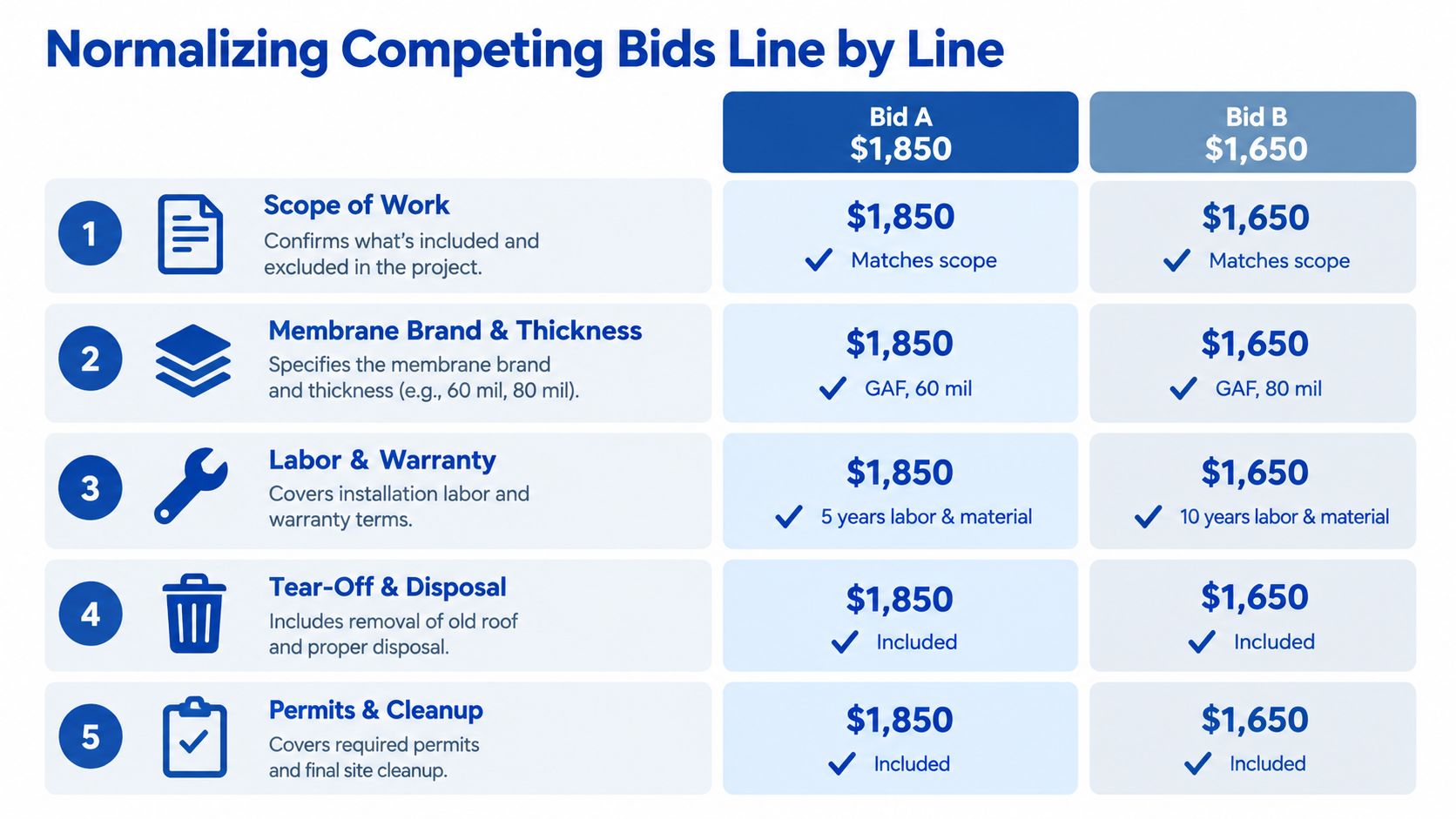
Place the proposals in adjacent columns. If one contractor includes tapered insulation while another lists it as an option, add that option to the second bid before comparing totals. If one includes edge metal and another leaves it unmentioned, mark the omission and request a revised price.
A contractor who refuses to itemize is not offering a proven lower price. The contractor is leaving the scope unknown.
Check local approval requirements with this roofing permit requirements guide. Then ask each contractor who obtains the permit, schedules inspections, and pays related fees. An exclusion can cause delays, added charges, or compliance problems after work begins.
Require a written change-order process before signing. It should explain how concealed deck damage is photographed, who authorizes repairs, and how added work is priced. No verbal promise should replace a written revision.
Climate, Ownership Length, and Lifetime Budgeting
Climate should influence the roof assembly before you compare totals. A rubber roof quote that ignores local heat, cold, sunlight, shade, and weather exposure leaves you comparing incomplete promises.
In a cooling-dominated region, a reflective membrane may make sense when the building's insulation and operating profile support it. On a shaded roof or a property where heating dominates, black EPDM may be the more practical choice. Color alone does not settle the decision. Require the contractor to explain how membrane color, insulation, roof orientation, and local weather affect the proposed assembly.
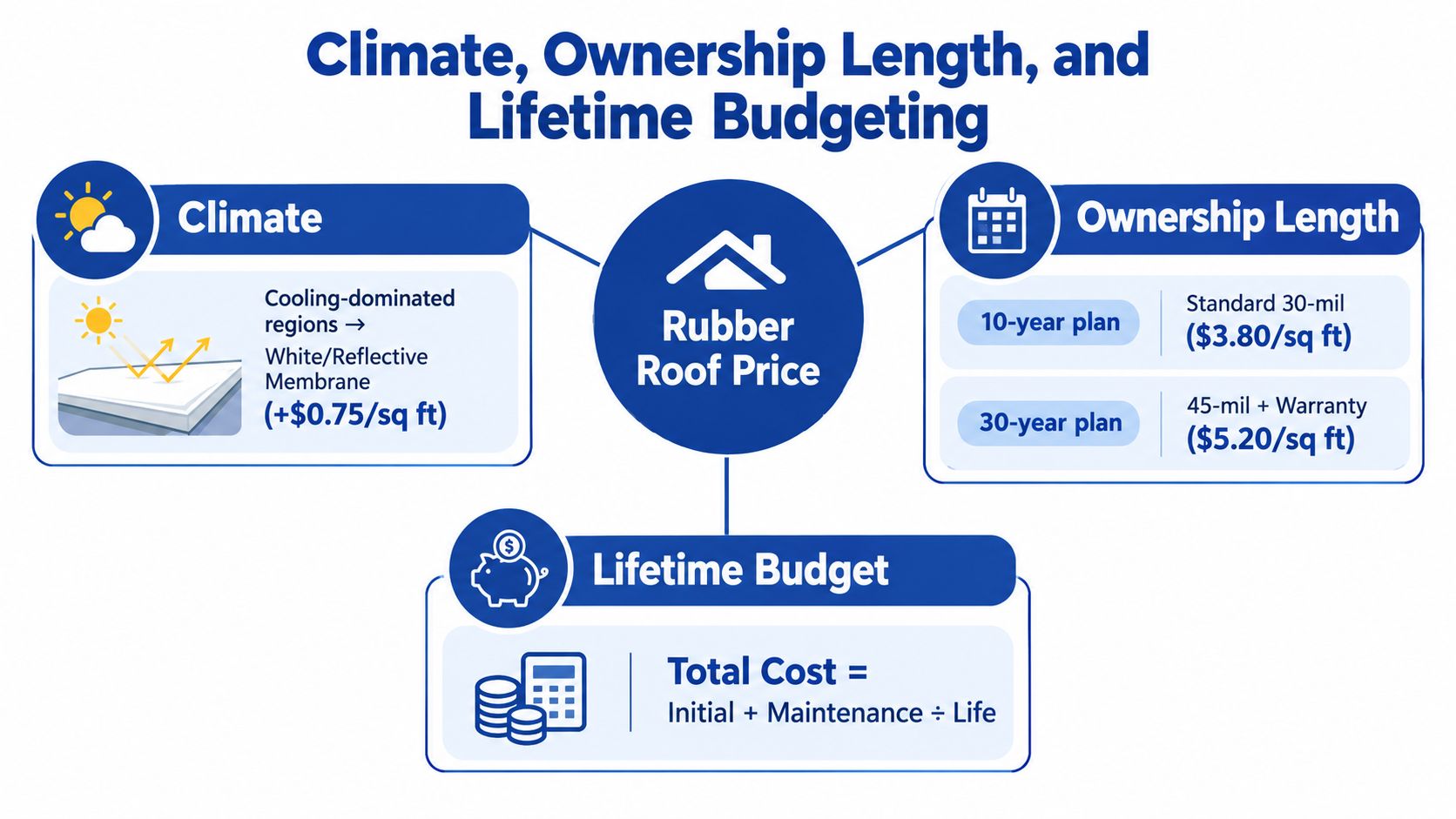
Your ownership horizon changes what deserves priority. If you may move within five years, focus on documented installation quality, transferable warranty terms, and records that can be shown to a buyer. A more expensive specification may not repay itself during that period, while missing documentation can weaken your resale position.
For a long-term home, examine membrane thickness, attachment method, insulation, drainage, maintenance access, and the contractor's repair process. A lower initial quote can become the weaker financial choice if the assembly needs earlier replacement or repeated attention.
Build the comparison around four written assumptions:
Then compare bids using those same assumptions. If one contractor prices a thicker membrane or stronger insulation while another does not, the totals are not comparable. Ask for the missing specification rather than choosing the lower figure.
A lifetime budget is only as sound as its inputs. Reject vague service-life language used to justify a premium. Require the proposal to state the assembly, maintenance expectations, warranty limitations, and responsibilities in writing. That turns a rubber roof quote from a sales figure into a commitment you can evaluate.
Two Realistic Rubber Roof Pricing Scenarios
Consider a 1,500-square-foot low-slope ranch roof with one existing membrane layer, easy staging, few penetrations, and a target ballasted 60-mil EPDM system with modest insulation. A defensible proposal would identify the measured area, membrane gauge, ballast approach, insulation, tear-off, disposal, perimeter details, seam treatment, cleanup, and warranty.
That roof fits the simpler end of the market because access and geometry reduce labor exposure. The estimate should still explain what happens if the deck is damaged beneath the existing membrane. A low total that excludes preparation and disposal isn't comparable to a complete replacement scope.
A more demanding roof
Now consider a 2,200-square-foot multi-level home with several penetrations, skylights, rooftop units, and difficult staging. The target is a fully adhered 90-mil EPDM system with tapered insulation and upgraded edge metal.
This roof carries more labor and detailing risk. Each penetration requires careful flashing, tapered insulation requires layout and fitting, and the fully adhered system requires more adhesive and preparation. The price should reflect those named requirements rather than appear as an unexplained premium.
EPDM has documented use dating back to the mid-1960s, with more than 30 years of field performance discussed in technical roofing literature, and one industry estimate attributes approximately 60% to 75% of project cost to materials and 25% to 40% to labor, according to IIBEC's discussion of EPDM long-term performance. Those proportions help explain why both the assembly and the crew's working conditions matter.
The first roof needs a clear, economical scope. The second needs a more engineered assembly and a stronger documentation trail. Mapping your roof to the right profile is more useful than applying one national average to every project.
Getting an Accurate Local Estimate Without Overpaying
Collect three itemized local bids and give every contractor the same written scope request. Look for relevant flat-roof experience, valid licensing where required, insurance documentation, manufacturer training when applicable, and a clear workmanship warranty.
Ask for completed project records that show the original scope, before-and-after photos, change orders, and final invoice. Those records reveal whether a contractor regularly completes the type of assembly they're proposing, not merely whether they can advertise EPDM.
One 2025 estimate places installed EPDM at $7.40 to $13.00 per square foot, compared with its cited 2024 baseline of $4.00 to $4.40 per square foot, reinforcing the need for current, local project evidence rather than old averages. You can also use this guide on how to choose a roofer when checking credentials and proposal quality.
FAQ Why does rubber roof price vary so widely? Membrane thickness, attachment method, insulation, access, tear-off, repairs, penetrations, drainage, and warranty scope all change the assembly. Is EPDM worth considering in 2026? It can be, especially when the specification matches the roof, climate, ownership horizon, and maintenance plan. What if a contractor refuses to itemize? Treat that as a warning and request a complete scope before considering the bid. How do I validate past work? Ask for comparable local projects with documented scope, photos, change orders, final invoices, and references you can verify.HomeProBadge helps homeowners find verified home-service professionals with credential checks and proof-of-work tied to real projects. Visit HomeProBadge to compare documented contractor histories before you choose a roofer.